

2-Minute Homemade Mayo Recipe (Seed Oil Free)
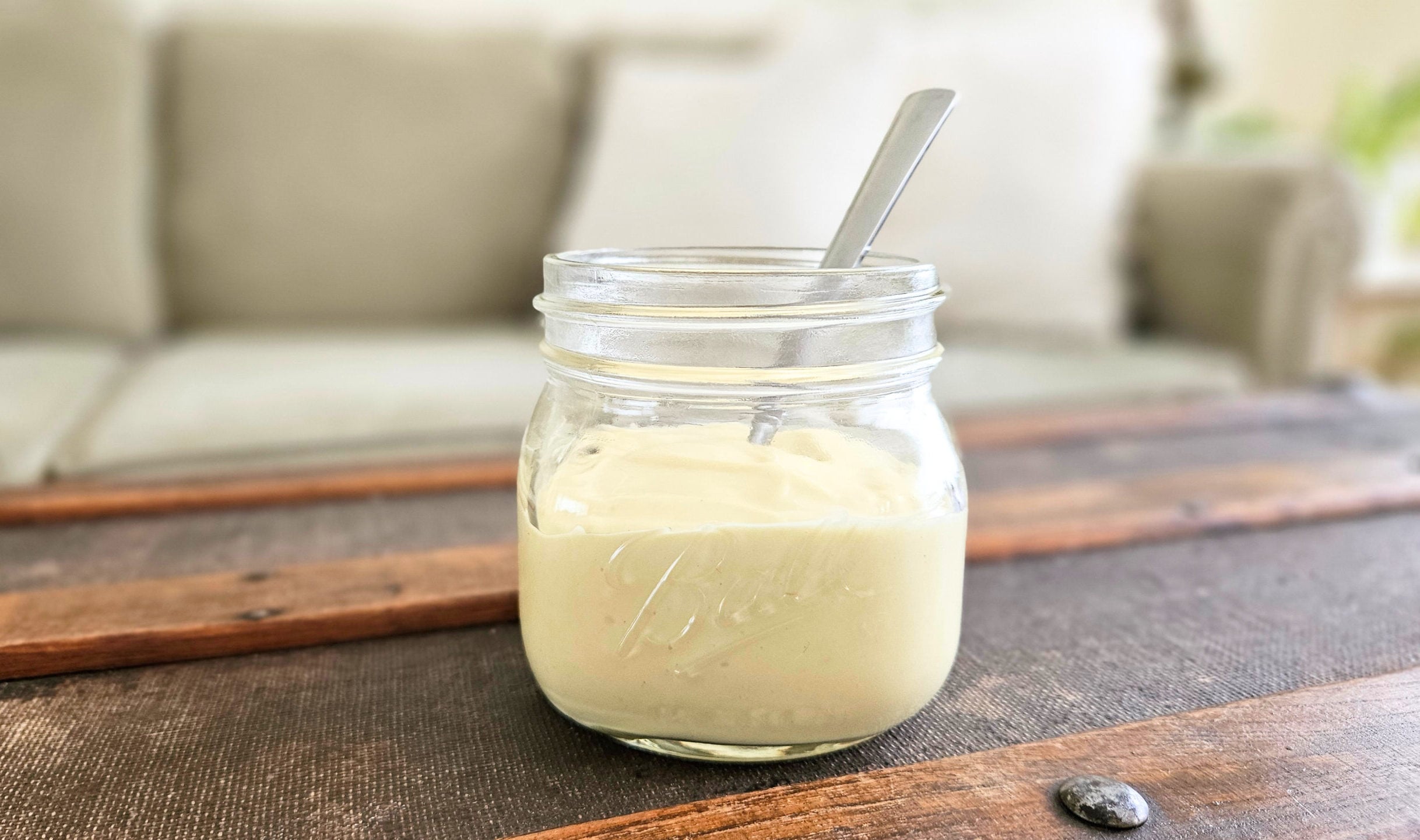
Whether you use it in your chicken salad or on your favorite sandwich, mayonnaise should be rich and creamy, and made with the best ingredients. Learn how to make your own homemade mayo with just a few simple ingredients.
This post may contain affiliate links. Please see our site disclosure for more information.
Shop the Post
Condiments are one of those food products that manufacturers, especially here in America unfortunately, add ingredients to that you may have never even heard of before. Even if you have heard of them before, you likely want to steer clear of them.
High fructose corn syrup and seed oils (i.e. soybean oil, canola oil, etc.) are two ingredients that I very much want to avoid. True mayonnaise doesn’t contain high fructose corn syrup (Miracle Whip does 🤢), but seed oils are unfortunately the norm for most mayo that can be bought at the store.
Lately, more brands have been using avocado oil, which is a good change to see happening. However, not every store has better options for mayo, and even if they do, there is definitely a price to pay for the good stuff.
Follow along and I’ll show you how to make your own mayonnaise from scratch with a few basic ingredients and *two minutes* of your time. Be sure to check out the cost-benefit analysis for store-bought options and the price differences.
Why Make Mayo from Scratch?
I love eating well and saving money. Best combination right?! This homemade mayo recipe offers numerous benefits.
Ingredient Control
If I’m being honest, if I could buy most of my food from the store and have it be the highest quality, I probably would! However, I currently have three in-person grocery stores, two online shops, and one farmer’s market where I have to get select items from each one just to have high-quality food.
Therefore, I end up making a lot of minor things like mayo from scratch. I get to choose exactly what goes into it, from the pasture raised egg, to the organic avocado oil, to the specific kind of salt that I like to use (yes, I am picky 😅). Instead of reading ingredient labels, I just simply buy the best ingredients.
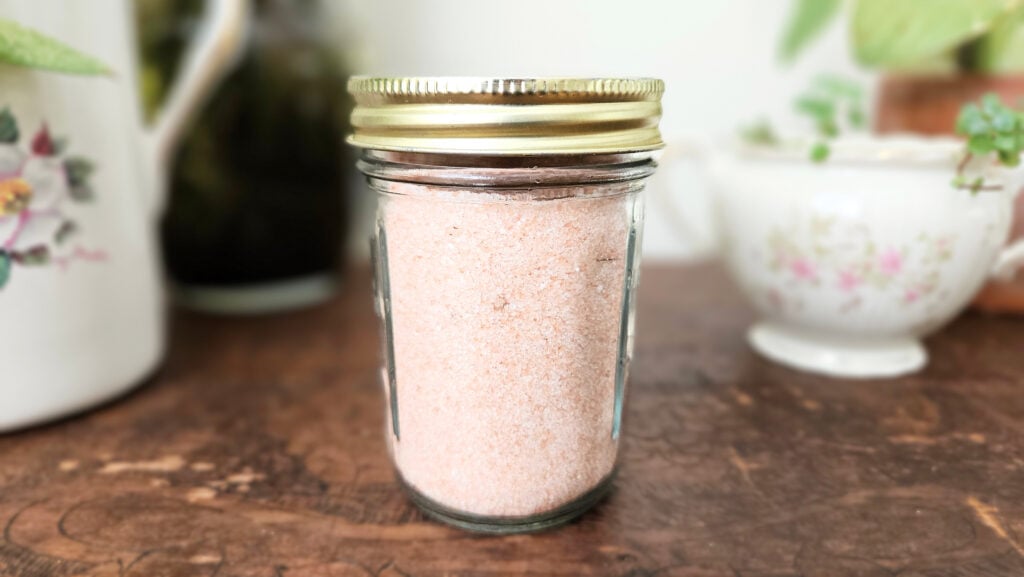
Terrasoul Himalayan Pink Salt
Himalayan pink salt is my preferred salt. It is made from natural salt crystals mined in the Himalayan mountains. This salt contains 84 essential trace minerals and a higher iron content than most salt. If you are worried about switching from iodized table salt to pink himalayan salt, don’t be! It tastes better, has a greater nutrient profile, and it…
Saves Money
I would say in today’s economy I am trying to not overspend on my groceries, but I’m fairly certain every generation has experienced the need to be mindful of their spending.
Managing a household requires wearing many hats. You have to be a cook, a cleaner, an organizer, landscaper, handyman, and financier, and that’s just a few of the roles! Money can be a source of stress and tension within a home though, so it’s important to have that managed well.
Whenever I make something from scratch in my kitchen, I know I am both gaining useful skills and spending less money than I could be otherwise. It may seem insignificant, but cooking from scratch with recipes like this homemade mayo all add up in managing my home well.
Please see the cost-benefit analysis for a full breakdown of the price comparison of homemade vs. store-bought.
Superior Taste
As someone who isn’t overly into mayonnaise, I can confidently say homemade mayo tastes a million times better than store-bought. Even if I buy avocado oil based mayonnaise from the store that is in a glass jar and the best that I can buy, I never want to taste too much mayo whenever I use it.
With homemade mayo, it tastes so good I can lick the spoon after I am done using it. It is rich, creamy, and actually tastes like real food.
As usual, the homemade version made with high-quality real food ingredients wins every time as far as taste goes!
Why Avoid Seed Oils?
Seed oils have become a dirty word these days, and for good reason!
Seed oils are any oil extracted from the seeds of plants. Some examples include canola oil, soybean oil, sunflower oil, corn oil, grapeseed oil, cottonseed oil, and safflower oil.
Extracting the oil from these seeds requires industrial processing which includes high pressure, chemical processing, and deodorization. Historically, seed oils were not originally used for human consumption. For example, canola oil was first used as an industrial lubricant for machinery.
Some of the problems associated with seed oils being used for human consumption include an imbalance of essential fatty acids (omega-3 and omega-6), oxidation that produces byproducts that can cause inflammation, and exposure to chemical solvents.
(source)
While I am not an expert, I do pay attention. Formal scientific research is wonderful, but I do put a lot of stock into simply evaluating the people around me. While seed oils aren’t the only variable, the people I know who mostly follow an organic whole-food diet are healthier in very obvious ways. When you follow an organic whole-food diet, seed oils are automatically eliminated 😉.
Just for peace of mind, coconut oil, avocado oil, and olive oil are NOT seed oils. So, there are options out there that you don’t have to worry about.
For a seed oil free certified product directory, please see the Seed Oil Free Alliance:
How to Make Homemade Mayo
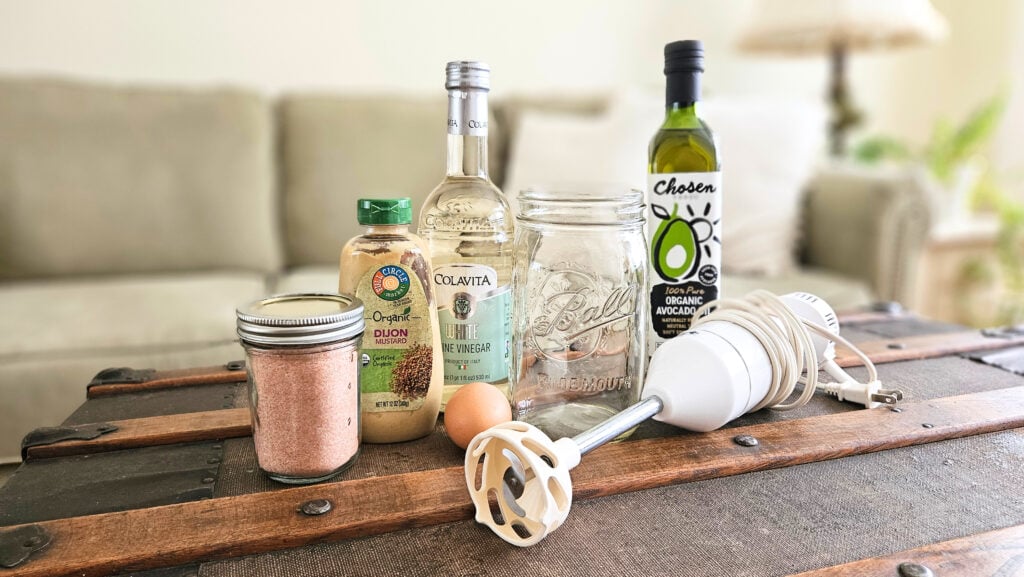
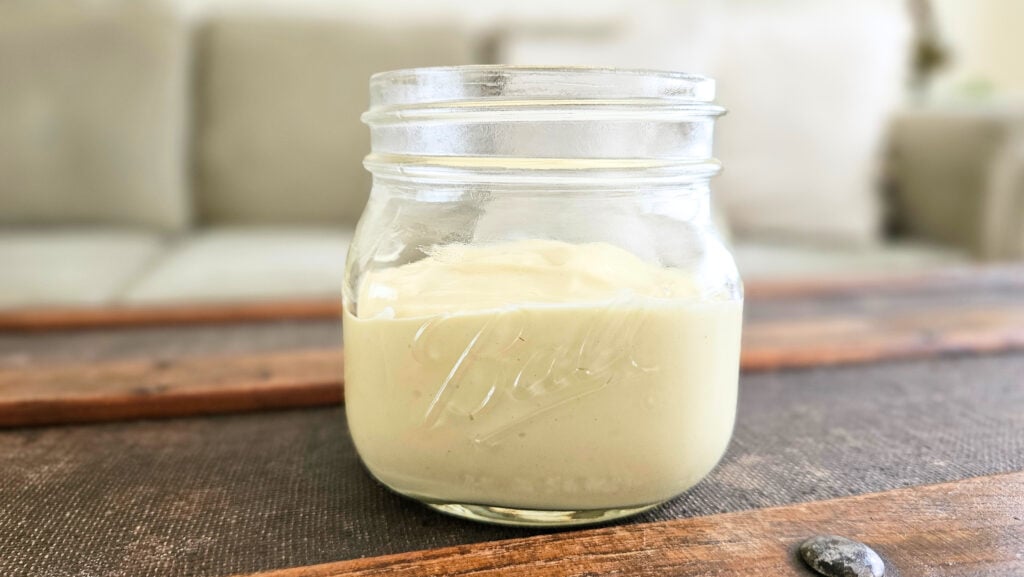
Homemade condiments, like this seed oil free mayo recipe, are easy to whip up and totally worth the extra effort.
Ingredients
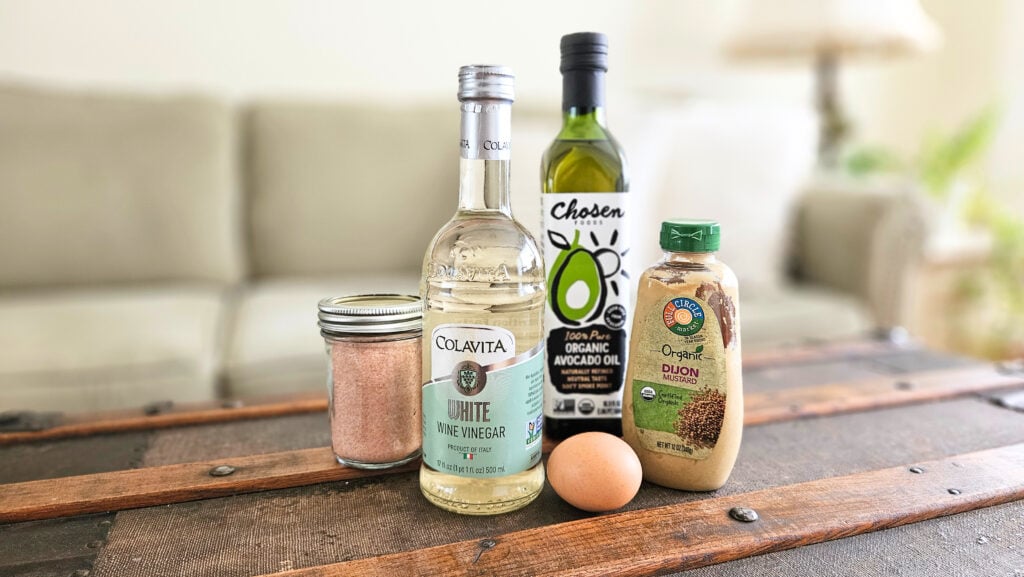
- 1 egg
- 1 tbsp white wine vinegar
- 1 tbsp Dijon mustard
- 1/4-1/2 tsp salt
- 1 cup avocado oil
Equipment
- 1 wide mouth quart size mason jar
- 1 immersion blender
Instructions
Tap/click the images for a description of each step ⬇️
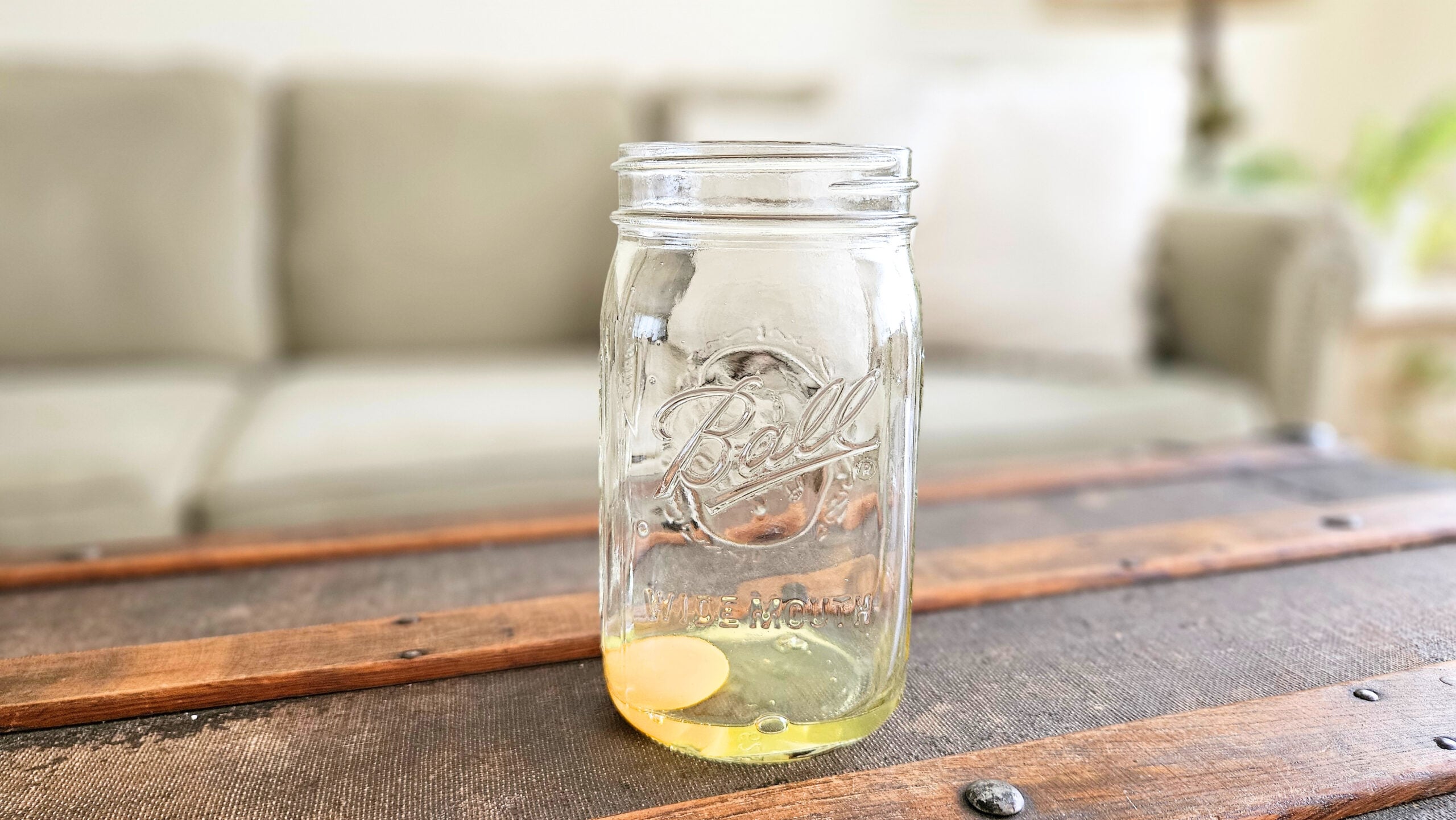
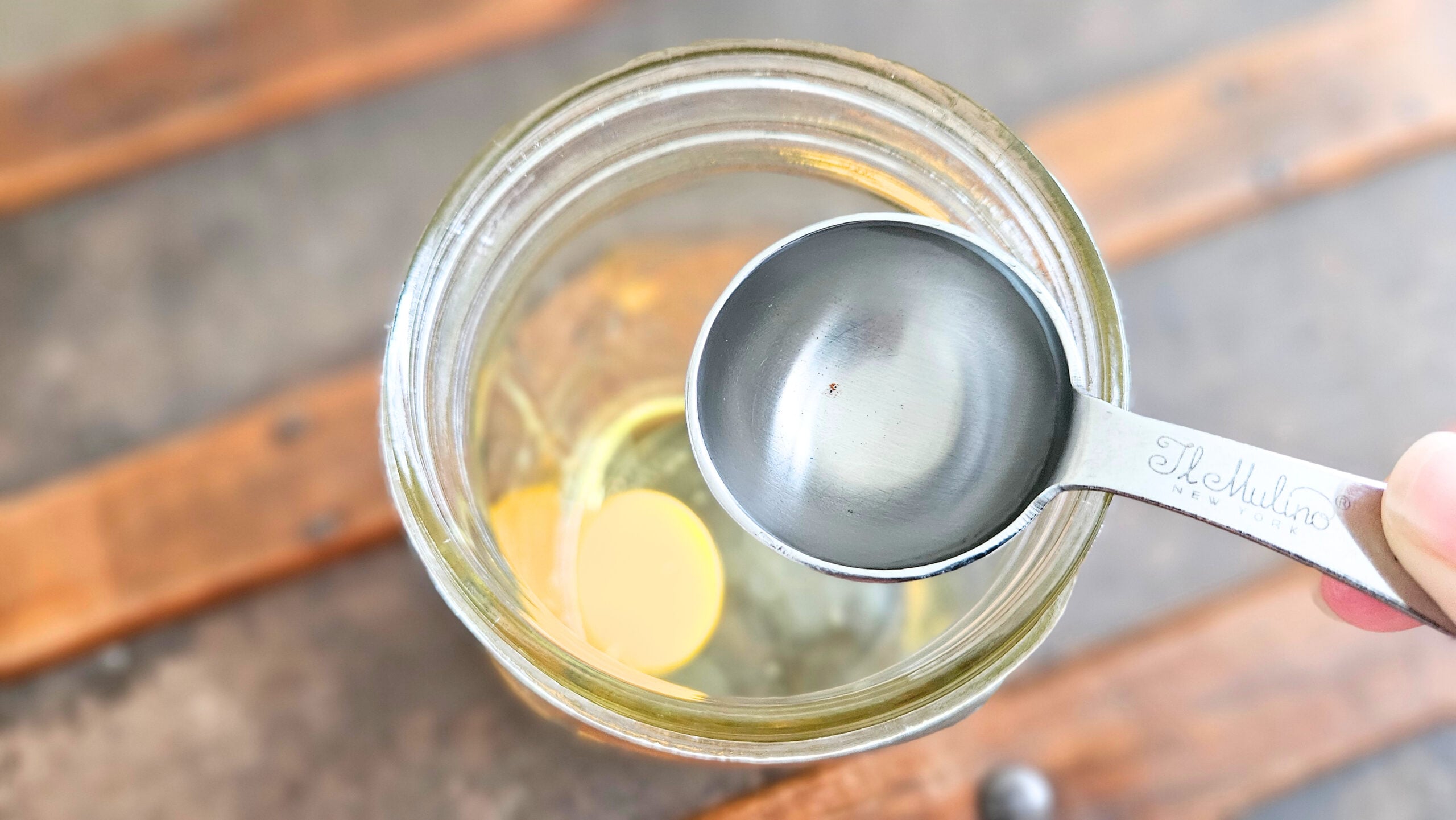
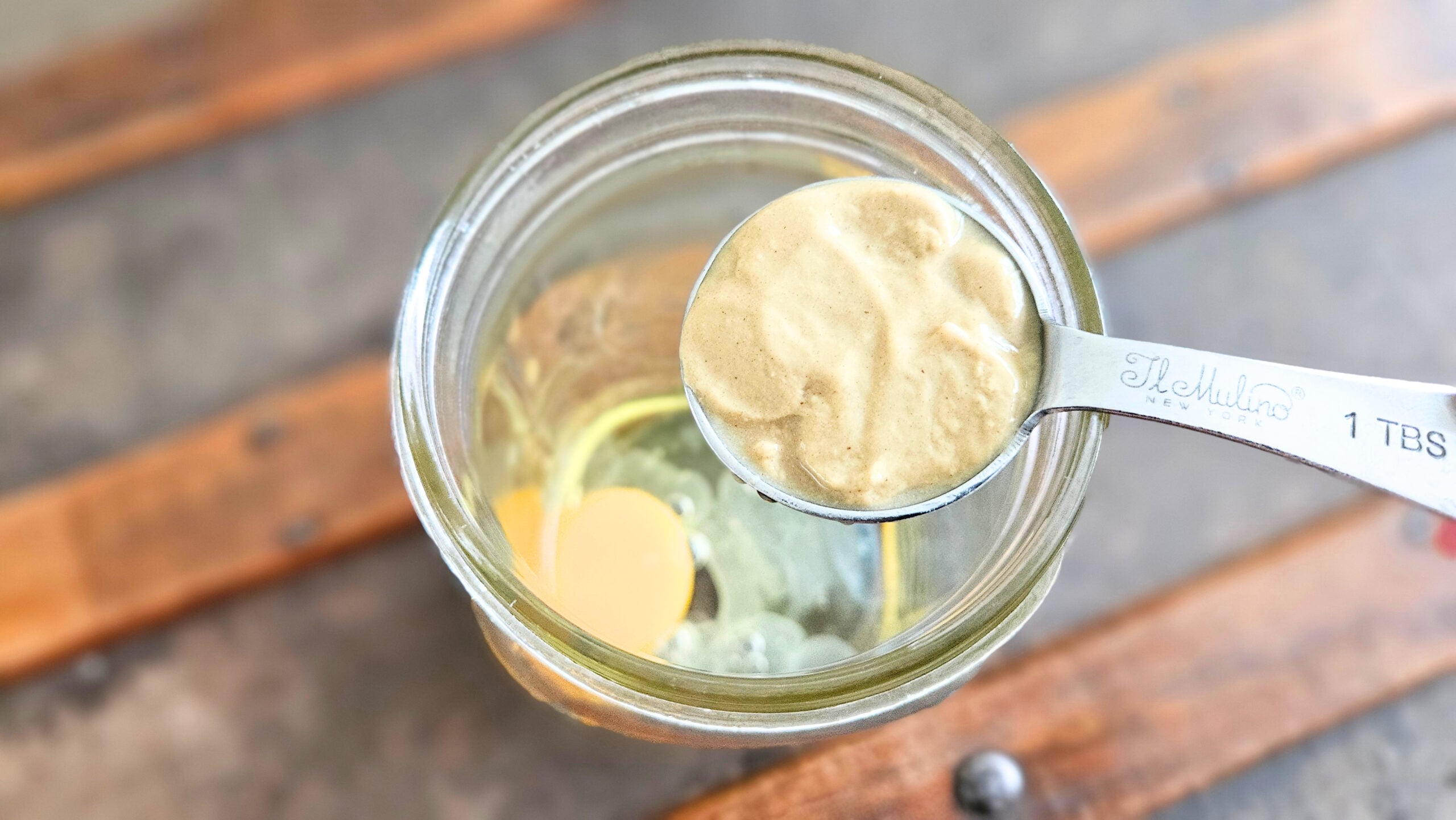
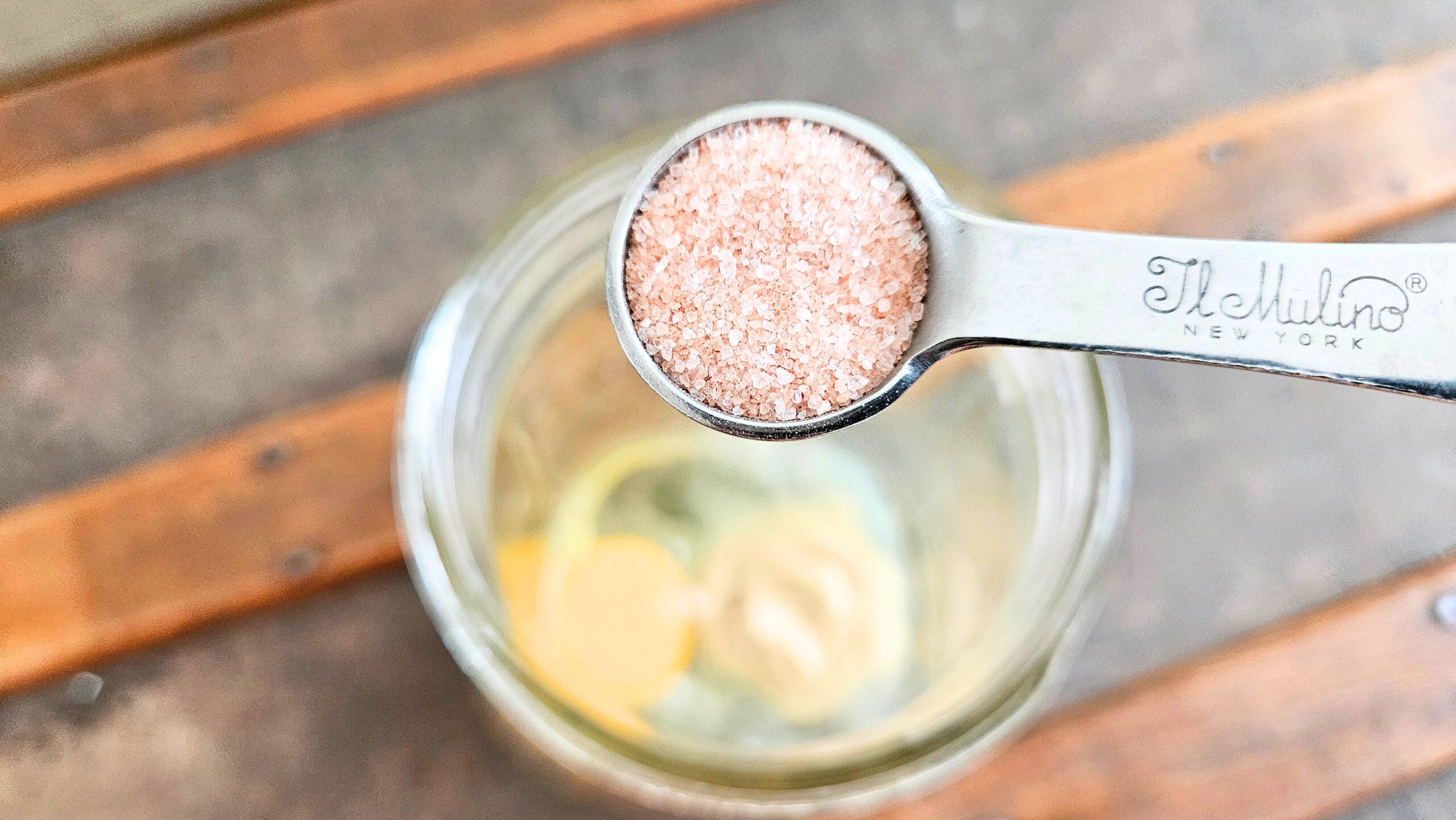
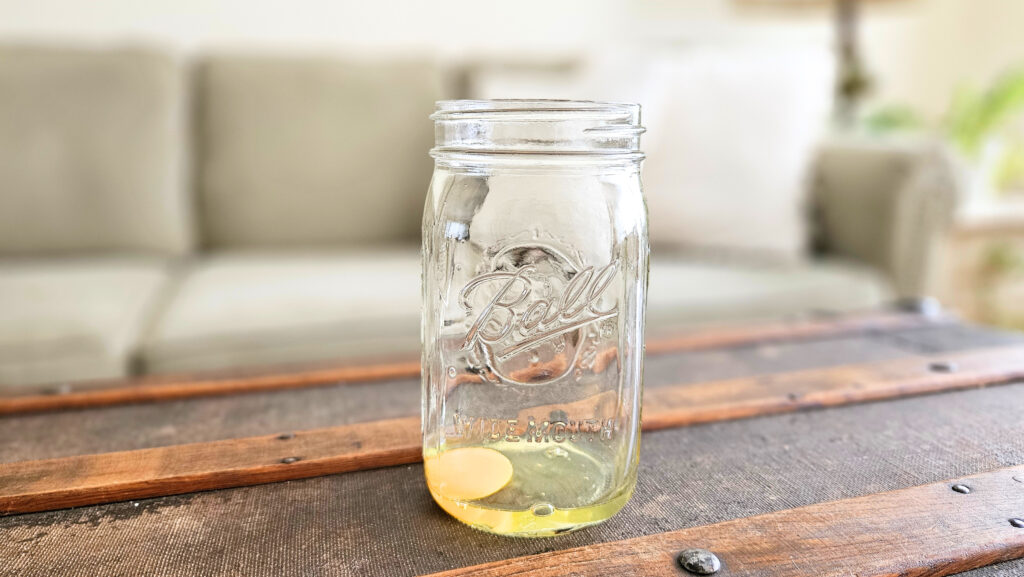
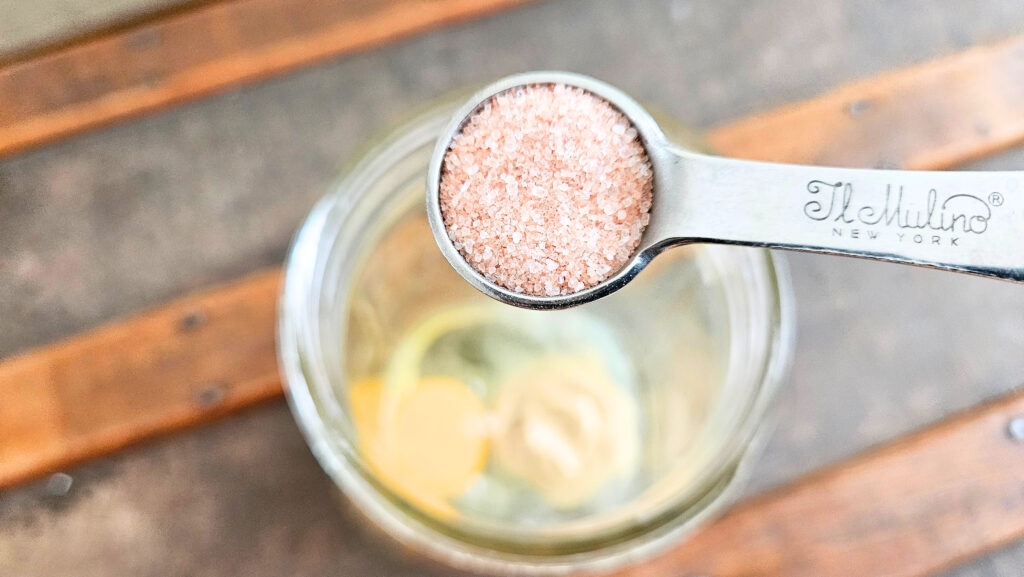
Step #1: You’ll want to start by adding all of your ingredients, except the avocado oil, to your mason jar. Add the egg, white wine vinegar, Dijon mustard, and salt.
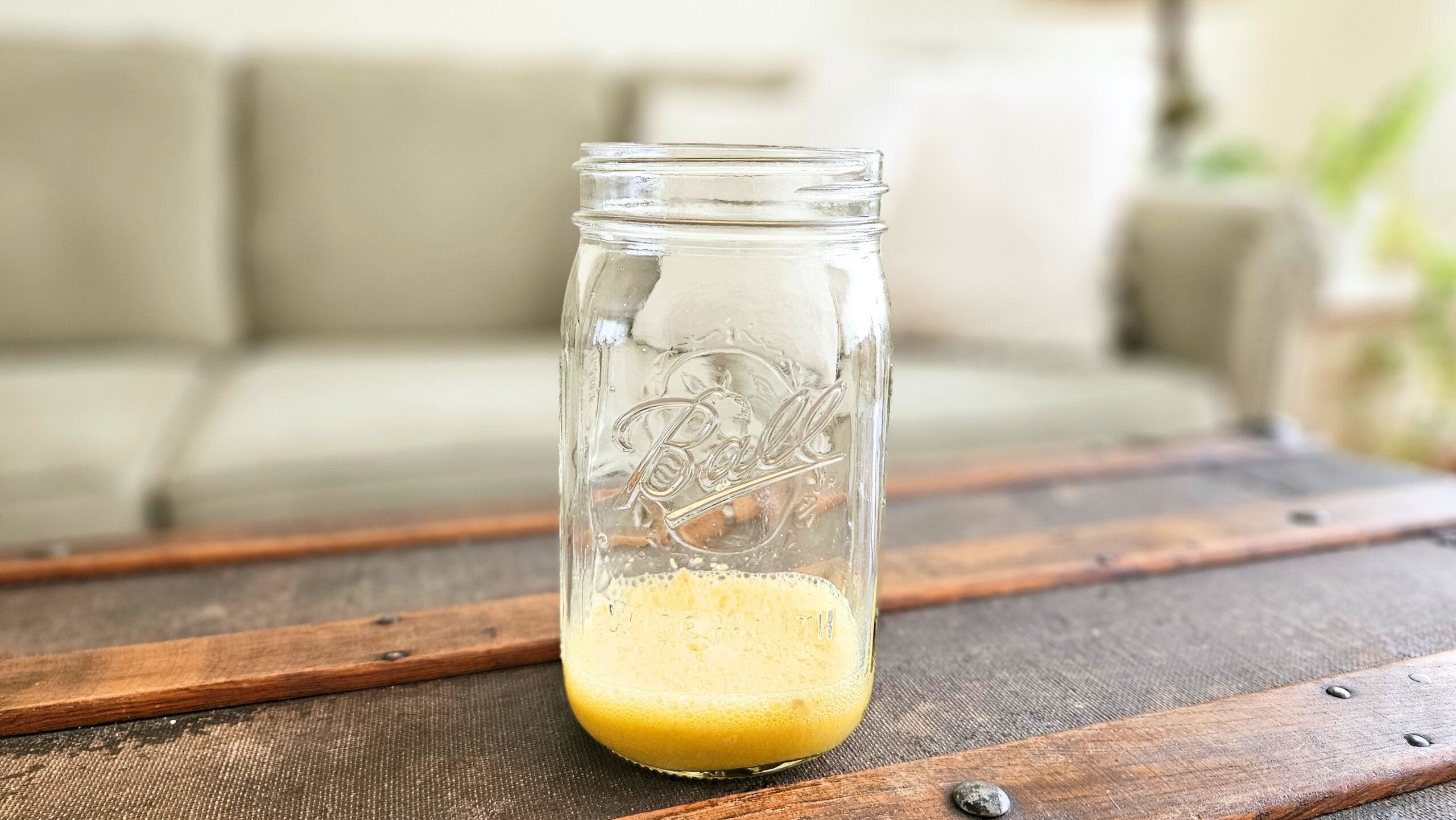
Step #2: Using your immersion blender, blend all of the ingredients together until you have a smooth yellow consistency. This usually only takes a few seconds. I use the low setting on my immersion blender.
Step #3: The last ingredient to add and blend is the avocado oil. For this step, you want to have the immersion blender going on low and slowly pour in the avocado oil. A liquid measuring cup works well here. Monitor the consistency as you slowly add the oil.
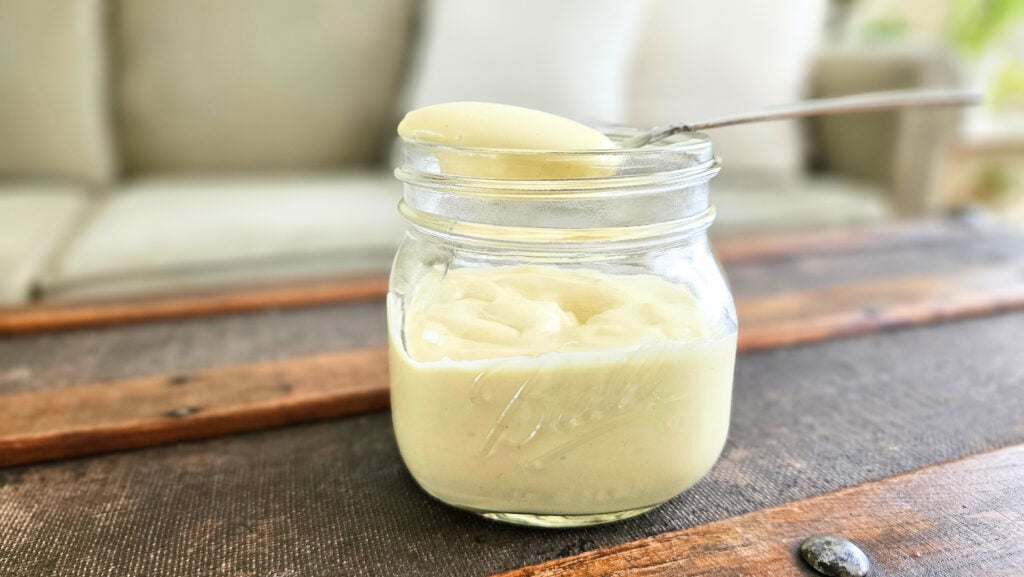
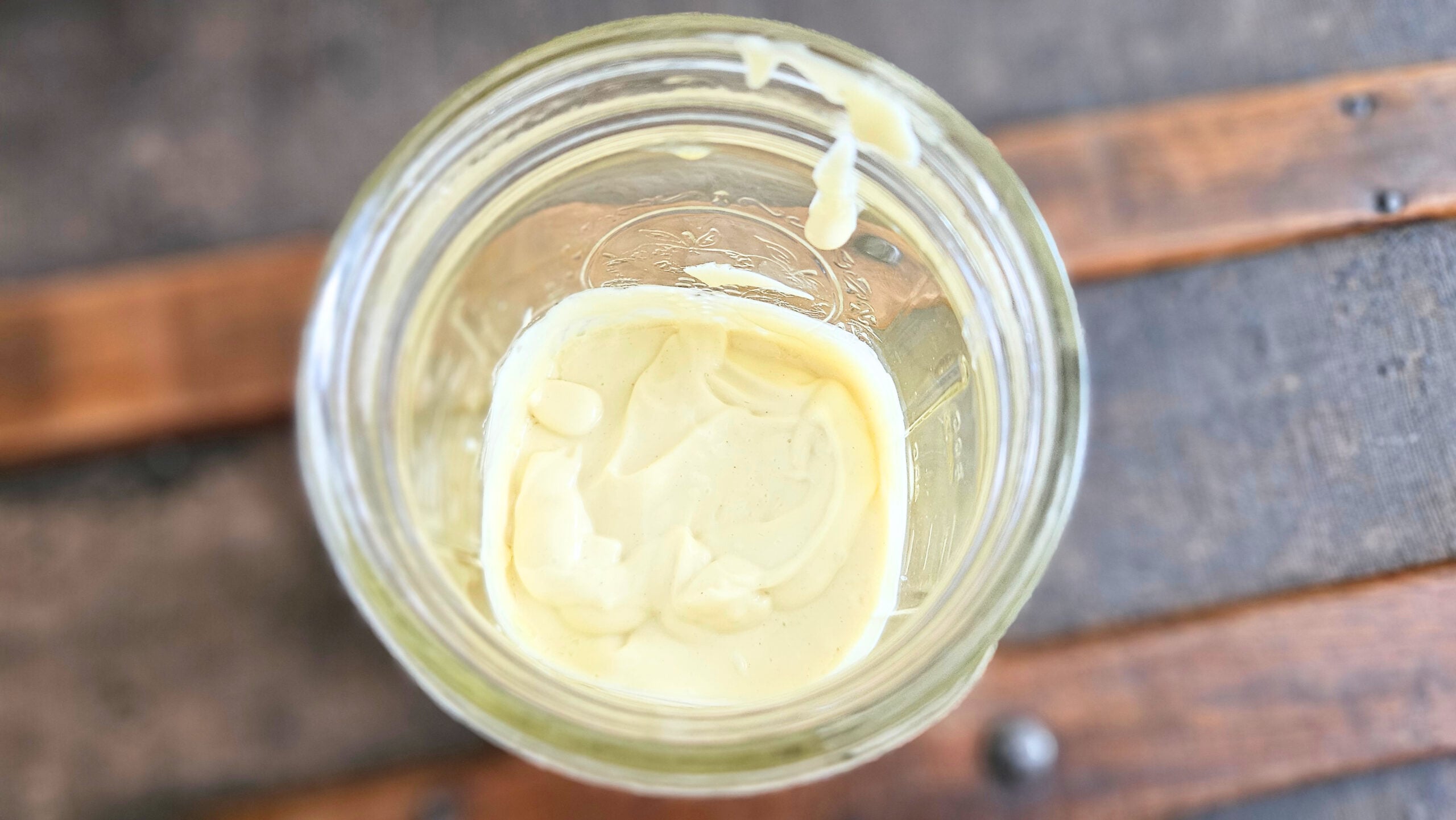
Step #4: Once everything is thick, creamy, and a uniform color and consistency, you have successfully made homemade mayo! Be sure to refrigerate.
Tips
- This hasn’t happened to me, but I have heard of homemade mayo not blending correctly and turning out oily. I suggest going in order of the instructions by blending everything except the avocado oil first, and then slowly blending in the avocado oil.
- You can use anywhere from ¼ tsp to ½ tsp of salt depending on your desired taste.
- A lot of people use lemon juice instead of white wine vinegar for their homemade mayo, but I find white wine vinegar to be much more convenient. White wine vinegar has a much longer shelf life than lemons, so I can buy a bottle and always have it on hand, instead of hoping I have lemons that particular day.
Ways to Enjoy
Homemade mayo can be enjoyed any way you use store-bought mayo, with the added benefit of making any recipe taste better.
- Chicken salad
- Egg salad
- Cucumber salad
- Sandwiches
- Burgers
- Sauces and dips
- Homemade salad dressing
- Coleslaw
- …and more!
Cost-Benefit Analysis
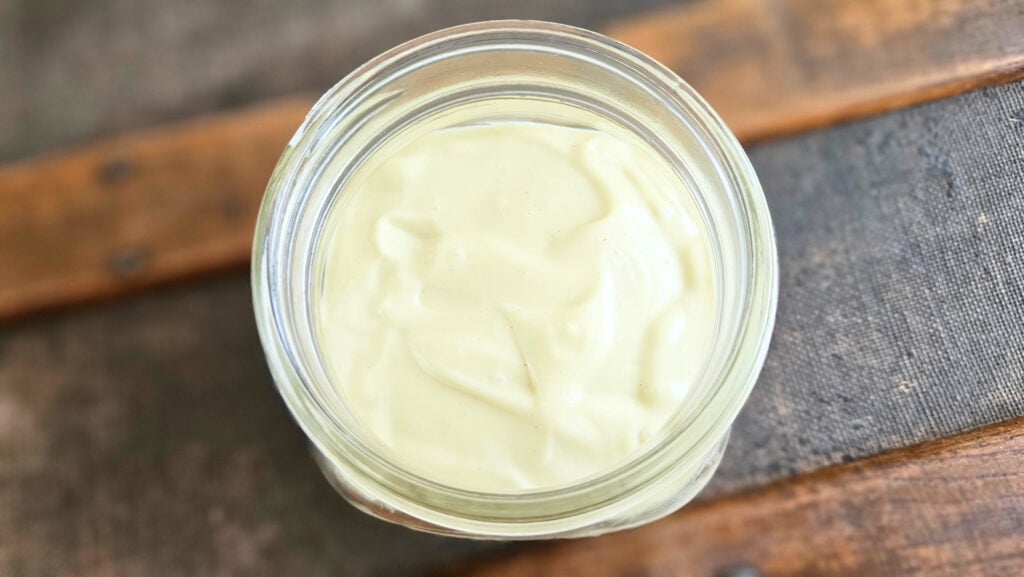
For this cost-benefit analysis, I will be comparing the costs of making homemade mayonnaise vs. buying seed oil free mayo at the store. For the store-bought options, I will be comparing Primal Kitchen and Chosen Foods.
As of July 2026 in Tennessee:
Homemade Mayonnaise
1 egg
- 1 dozen = $7.00 (pasture raised local eggs)
- $7.00 % 12 = $0.58
1 tbsp white wine vinegar
- 17 fl oz = $4.99
- 17 fl oz = 34 tbsp
- $4.99 % 34 = $0.15
1 tbsp Dijon mustard
- 12oz = $2.99
- 12oz = 24 tbsp
- $2.99 % 24 = $0.12
1/4-1/2 tsp salt
- 2.5lb = $12.49
- 2.5lb bag = approx. 230 tsp = $0.05/tsp
- $0.05 % 1/2 = $0.03
1 cup avocado oil
- 16.9 fl oz = $15.99
- 16.9 fl oz = 34 tbsp
- $15.99 % 34 = $0.47
Total: $1.35 (slightly over 1 cup homemade mayo)
Primal Kitchen Mayonnaise (Avocado Oil)
- 12 fl oz = $8.98
- 12 fl oz = 1.5 cups
- $8.98 % 1.5 = $5.99
Total: $5.99 per 1 cup of Primal Kitchen Real Mayonnaise
Chosen Foods Classic Mayo (Avocado Oil)
- 24 fl oz = $11.99
- 24 fl oz = 3 cups
- $11.99 % 3 = $4.00
Total: $4.00 per 1 cup of Chosen Foods Classic Mayo
As you can see, homemade mayo costs me $1.35, Chosen Foods Mayo costs me $4.00, and Primal Kitchen Mayo costs me $5.99. As I said earlier about finances being a major part of managing a household, making food from scratch really does pay off 😊.
FAQs
Related Posts
If you were never overly a fan of mayonnaise like myself, I hope this tasty recipe has changed your mind!
Homemade Mayo (Seed Oil Free)
Ingredients
Equipment
Method
- Add the egg, white wine vinegar, Dijon mustard, and salt to your wide mouth mason jar.
- Using your immersion blender on low, blend all of the ingredients together until you have a smooth yellow consistency. This usually only takes a few seconds.
- With the immersion blender on low, slowly pour in the avocado oil. Monitor the consistency as your pour.
- Once everything is thick, creamy, and a uniform color and consistency, you have successfully made homemade mayo! Be sure to refrigerate.
Notes
- This hasn’t happened to me, but I have heard of homemade mayo not blending correctly and turning out oily. I suggest going in order of the instructions by blending everything except the avocado oil first, and then slowly blending in the avocado.
- You can use anywhere from ¼ tsp to ½ tsp of salt depending on your desired taste.
- A lot of people use lemon juice instead of white wine vinegar for their homemade mayo, but I find white wine vinegar to be much more convenient. White wine vinegar has a much longer shelf life than lemons, so I can buy a bottle and always have it on hand, instead of hoping I have lemons that particular day.
Shop the Post
This is a personal blog. All posts, recipes, recommendations, and how-tos are for informational use and personal viewing pleasure only. Blog posts are not written by AI.

subscribe