

How to Make Bone Broth from Chicken
Homemade chicken bone broth is a supremely nourishing broth your body will thank you for. It is full of vital nutrients and many health benefits.

This post may contain affiliate links. Please see our site disclosure for more information.

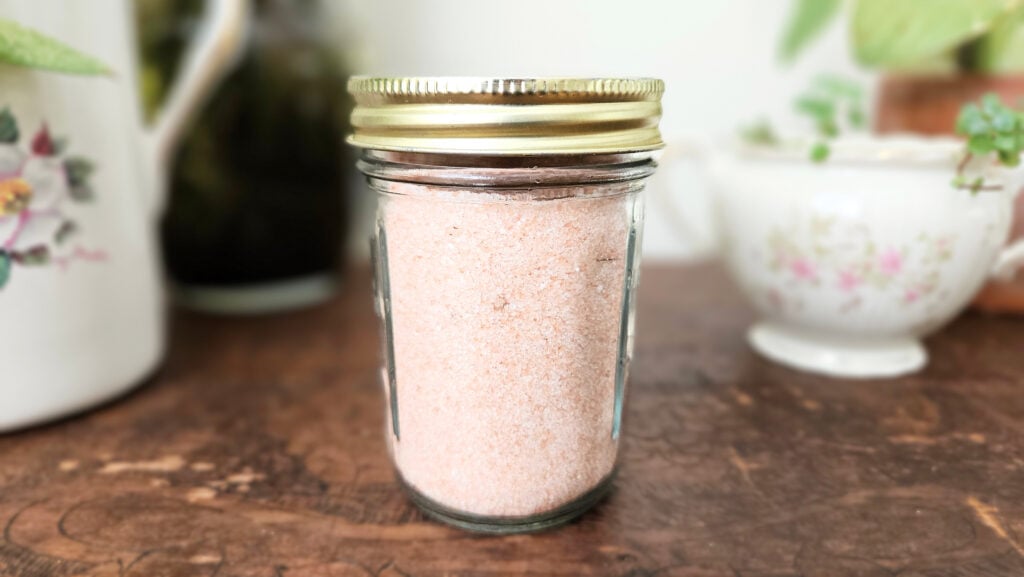
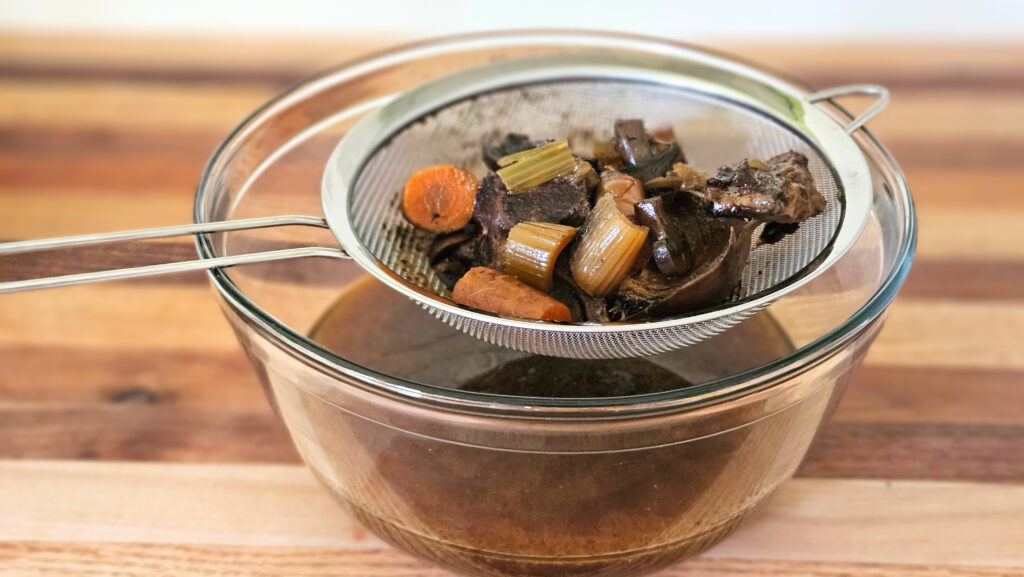

With the colder weather months approaching, now is the time to stock up on homemade bone broth. It is great for making soups, stews, sauces, and gravies, and it can also be enjoyed as a warm and comforting drink.
What is Bone Broth?

Bone broth is made by simmering bones and connective tissues, usually along with vegetables, herbs, vinegar, and spices. You can use any bones to make bone broth, such as chicken, beef, pork, turkey, lamb, bison, elk, venison, and fish.
A long, slow simmer allows the vitamins, minerals, electrolytes, protein, collagen and amino acids to be released into the liquid.
Additional animal parts such as meat, skin, feet, beaks, gizzards, and fins can also be used. Certain animal parts, such as chicken feet, will result in a more gelatinous bone broth, due to a higher collagen content.
Two great books on this topic are:

Nourishing Broth by Sally Fallon
Homemade chicken bone broth and beef bone broth are my two favorite nourishing broths! They are both so easy to make and very nutritionally dense. With a wealth of other broths to make and implement in your daily life, this book is definitely a valuable resource to have on hand.
For this recipe, I’ll be using chicken bones. However, this can be easily customized to whatever bones you have on hand or prefer to use.
Check out this post for beef bone broth:
Why Make Bone Broth?

Bone broth is a versatile and easy broth to make, packed full of benefits.
Ancestral Eating
Following an ancestral diet has become more common in recent years in America. Eating whole, unprocessed foods, fermented foods, and eating both locally and seasonally, are common aspects of ancestral eating.
Another component of following an ancestral diet is nose-to-tail eating. Nose-to-tail eating involves utilizing the entire animal, instead of just select cuts of meat. This includes organs, bones, fat, and connective tissues.
This approach to eating reduces waste, increases nutrient availability, and preserves the knowledge of traditional cooking skills.
Health Benefits
Nutrient content will vary batch to batch, especially depending on which type of bones you use. However, here is a general breakdown of some of the health benefits of bone broth. (source)
- Bone Health
- calcium, magnesium, and other vitamins and minerals can help build and strengthen your own bones
- Marrow
- provides calcium, phosphorus, vitamins A, B, K, and E
- Collagen
- supplies the body with amino acids
- Gut Health
- easy to digest
- may reduce digestive tract inflammation
- gelatin may heal and protect the mucosal lining of the digestive tract
- gelatin contains glutamic acid which converts to glutamine and helps maintain the function of the intestinal wall
- may prevent or even heal leaky gut
- Anti-Inflammatory
- amino acids glycine and arginine have anti-inflammatory properties
- Joint Health
- collagen, the main protein found in bones, tendons, and ligaments, breaks down into gelatin when cooked.
- gelatin contains amino acids proline and glycine, which help your body build its own connective tissue.
- Improved Sleep and Brain Function
- glycine, an amino acid, may help with relaxation and improve sleep
- Hair, Skin, and Nails
- collagen can increase skin elasticity and reduce wrinkles
- hair and nails can be strengthened
- the nutrients present in bone broth support cell regeneration, which aids in a healthy complexion.
A great product to get even more collagen into your diet is:
Less Waste
Making bone broth is one of the best ways to reduce food waste in your home. I buy one whole organic chicken at the store and use the entire thing.
I first cut the chicken into the pieces I want to cook with, and place the remaining carcass in a Ziploc bag in the refrigerator. Then, after my cut chicken pieces have been cooked and eaten, I add the remaining bones to that Ziploc bag.
The carcass will usually have the gizzards stuffed inside of it. I save that as well in the Ziploc bag. Absolutely everything gets used.
In addition to the entire chicken being used, this is a great recipe for vegetable scraps and skins. What do I mean by that?
Instead of tossing the ends and peelings of vegetables, you can save those in a Ziploc bag in your freezer until you are ready to make a batch of bone broth. You can keep adding to that Ziploc bag with each meal you cook, and you’ll have plenty for when you want to make your own bone broth.
Additionally, garlic and onion skins can be used when making bone broth, thus reducing food waste even more. Garlic and onion skins are good sources for vitamins A, C, and E, potassium, calcium, phosphorus, antioxidant, flavonoids, quercetin, organosulfur compounds, allyl cysteine, alliin, allicin, and allyl disulfide.
To read more about garlic and onion skins, please see this article on the Dr. Axe website:
Easy to Follow Recipe
Making bone broth at home truly isn’t difficult at all. You simple combine all the ingredients in one large stockpot, bring the heat up to a simmer, and allow it to do the work for you for the next 24 hours. When the bones have cooked long enough, simply strain the liquid from the ingredients and pour into mason jars. You can then either use the broth immediately, refrigerate or freeze for later, or can the broth for a shelf-stable product.
Simple Ingredients
Bone broth requires very basic ingredients, which means no hunting around the store to find obscure items you’ll use once and forget about. Most people probably have these items on hand in their kitchen regularly, or they can be easily found in your local grocery store or farmer’s market.
Versatility
Bone broth truly is a staple item to have on hand in your kitchen. It can be used for so many recipes such as soups, strews, sauces, gravies, and soaking and cooking rice and other grains.
Bone broth is also great to be consumed as a warm drink.
How to Make Bone Broth

Follow along and I’ll show you how to make a super simple and healthy homemade bone broth.
Ingredients
- 1 whole chicken carcass
- ¼ C apple cider vinegar
- 3 carrots chopped
- 5 celery stalks chopped
- 1 onion chopped
- 2 bay leaves
- 1 tsp salt
- 1 tsp peppercorns
- Onion and garlic skins (optional)
- 18 C filtered water
Equipment
- Large stockpot
- Fine mesh strainer
- Bowl
- Quart size mason jars
Instructions
Tap/click the images for a description of each step ⬇️
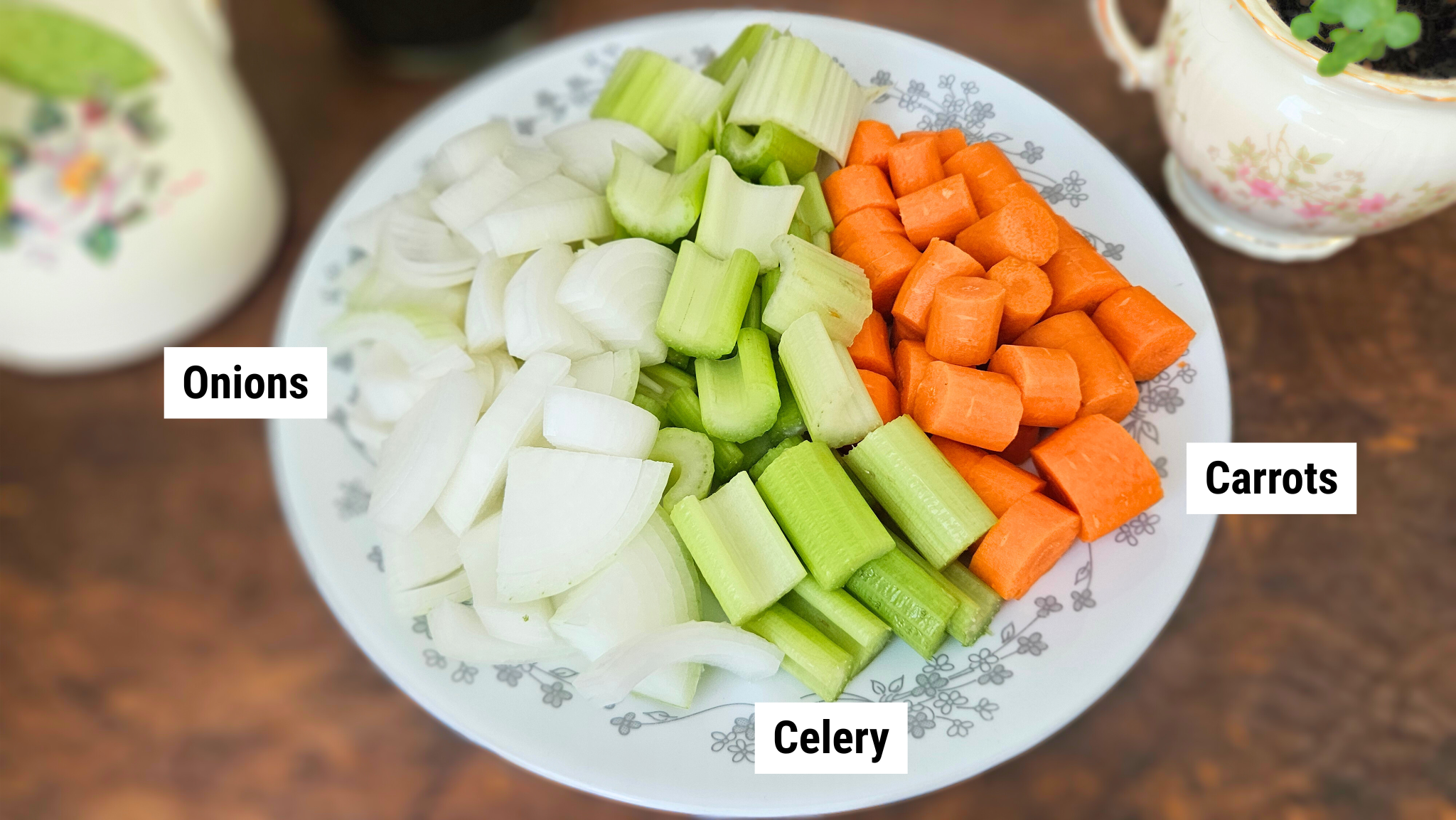
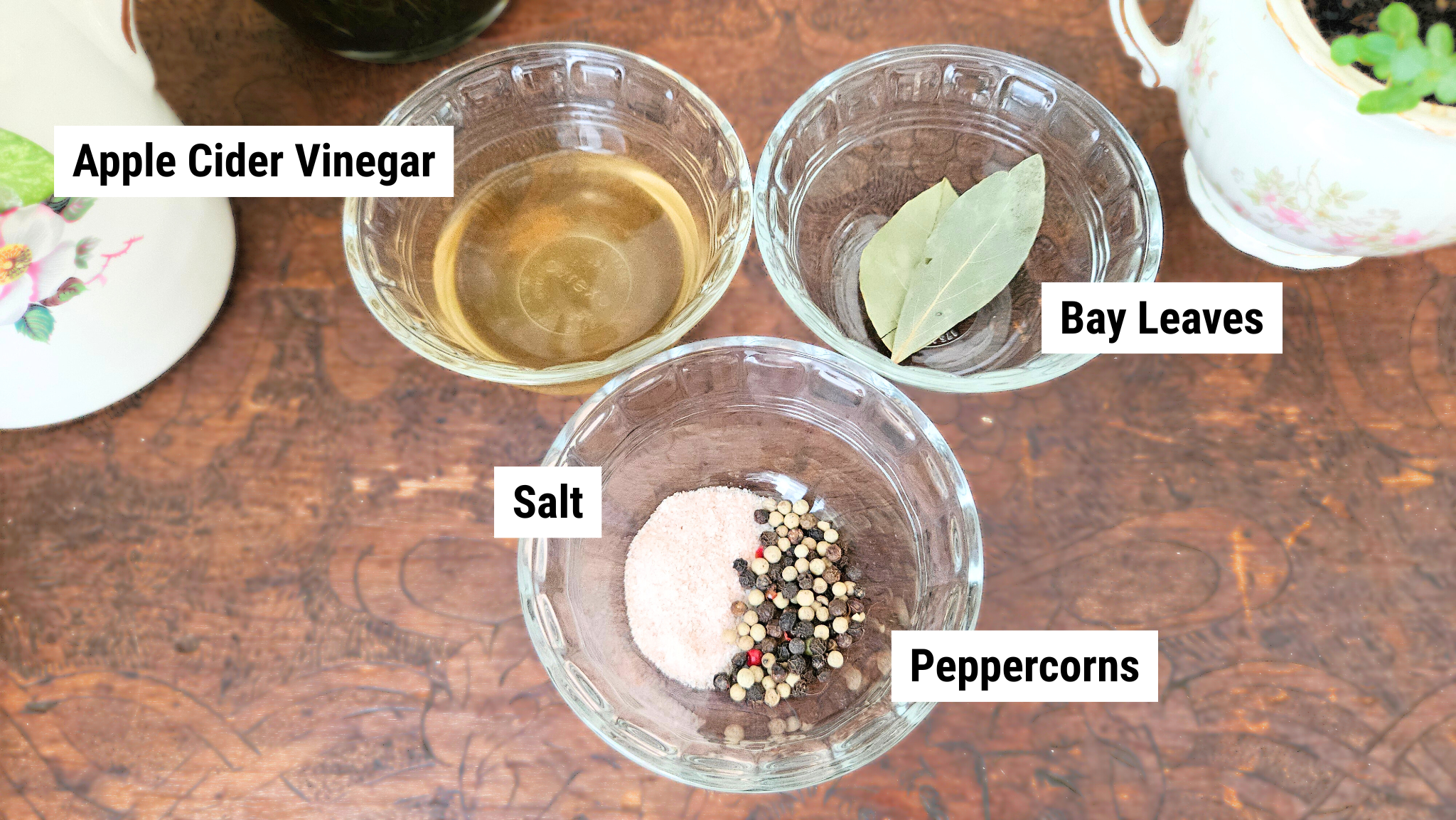
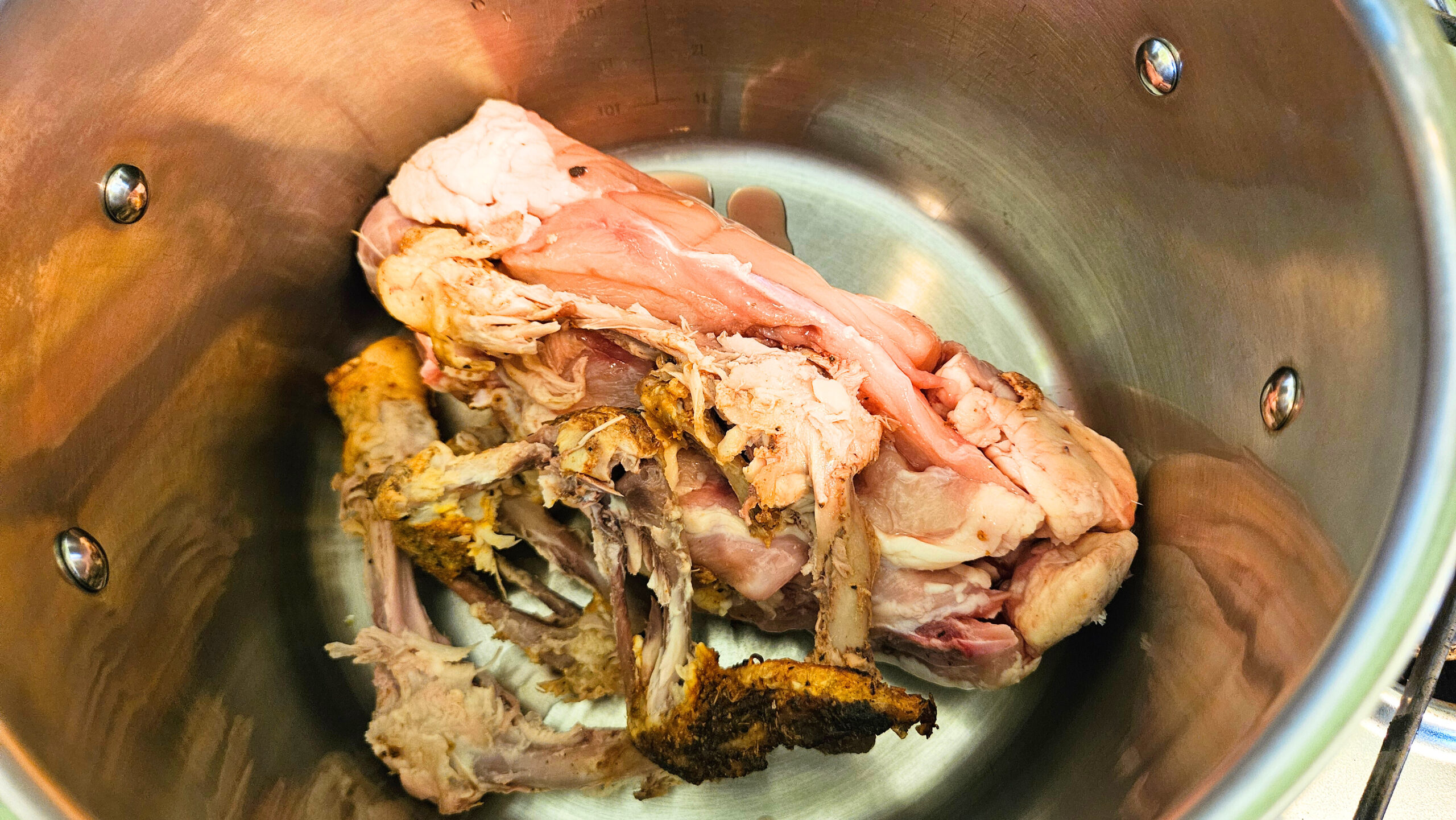
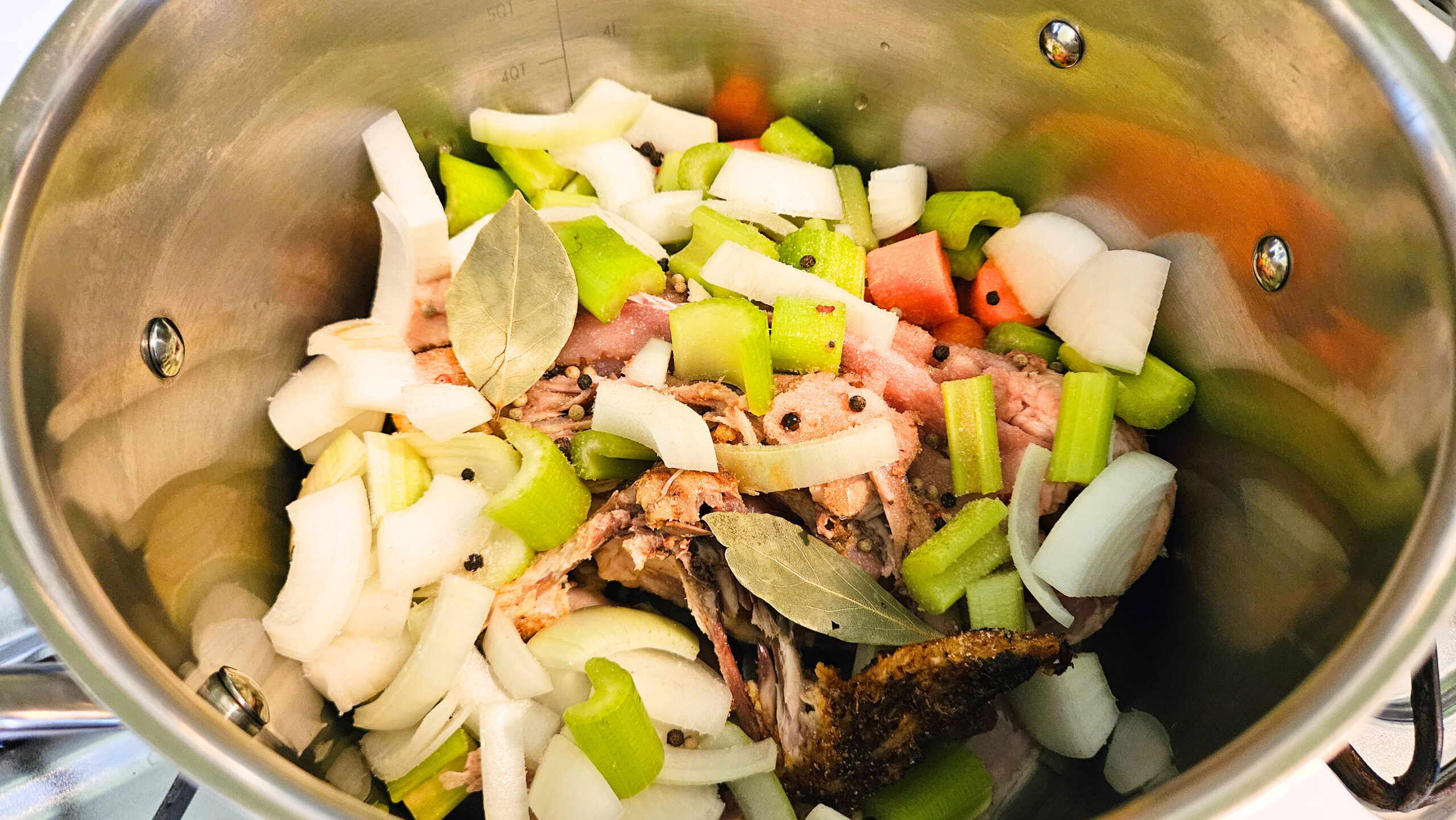
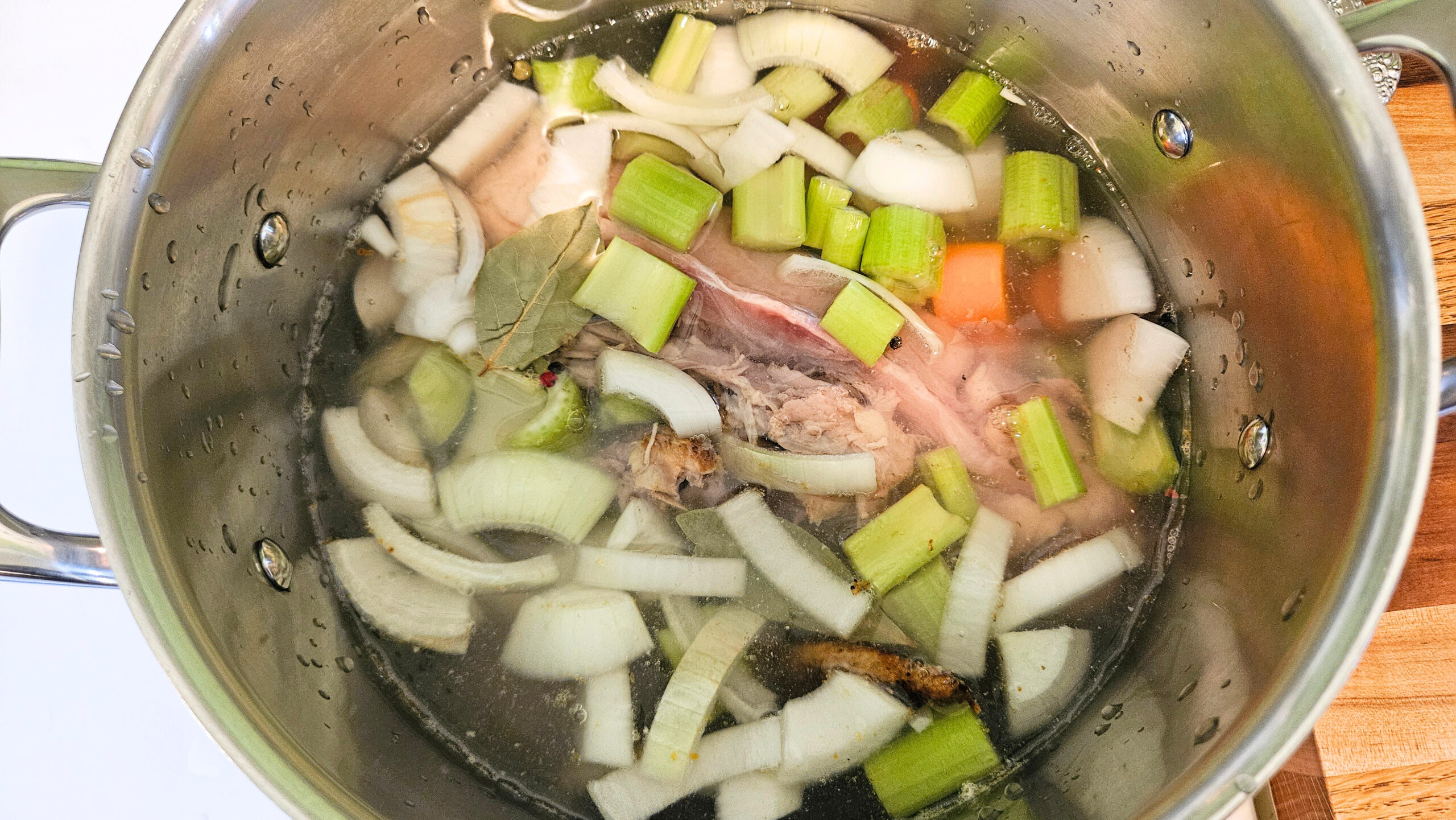
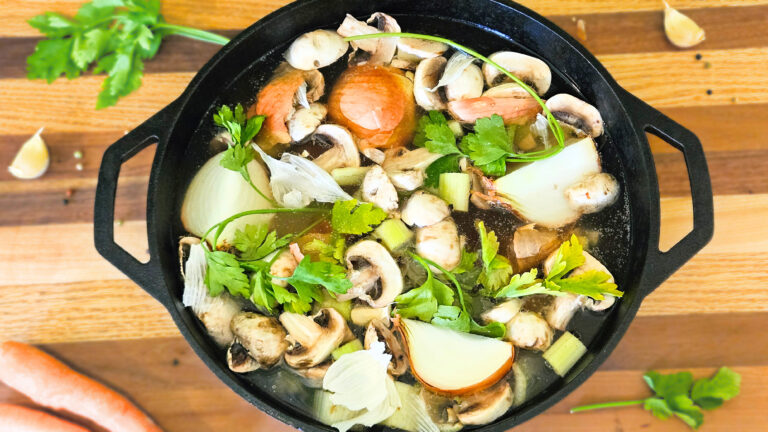
- Add the chicken carcass and all the bones you have saved to a large stockpot. Add in the apple cider vinegar, chopped vegetables, bay leaves, salt, peppercorns, and onion and garlic skins. I don’t measure the onion and garlic skins. I have a basket in which I store my onions and garlic, so when I make bone broth, I just grab some skins that have fallen off in that basket.
- Add the filtered water and let everything sit for about 30 minutes. I have read that the apple cider vinegar helps to draw out nutrients from the bones, hence letting it sit for 30 minutes. I have no proof to back this up, but I figure it can’t hurt!
- Place a lid on the pot and turn the heat to high. It will probably take 15-20 minutes to start boiling. Once it’s boiling, turn the heat to low, just to maintain a simmer.
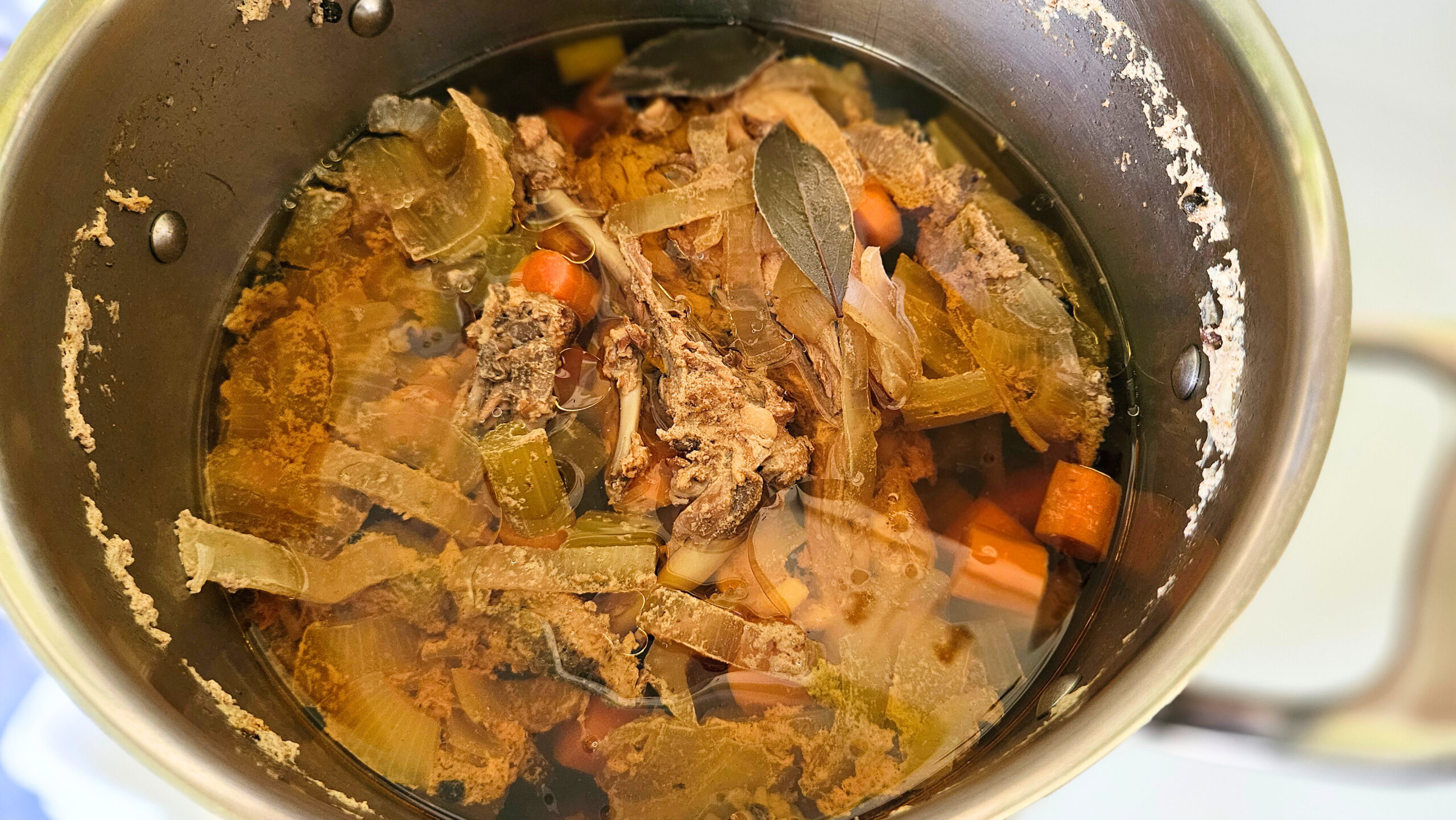
- Simmer on the stovetop for 24 hours. Yes, I know that might make you nervous. I usually do this during a time frame in which I know I’ll be home the whole time, and I know my smoke detectors are working! If I have to leave for any reason, I turn off the burner and restart it when I get home. I have never had any problems with this method.
- Alternatively, you can use a Crock-Pot, cooking on low for 24 hours.
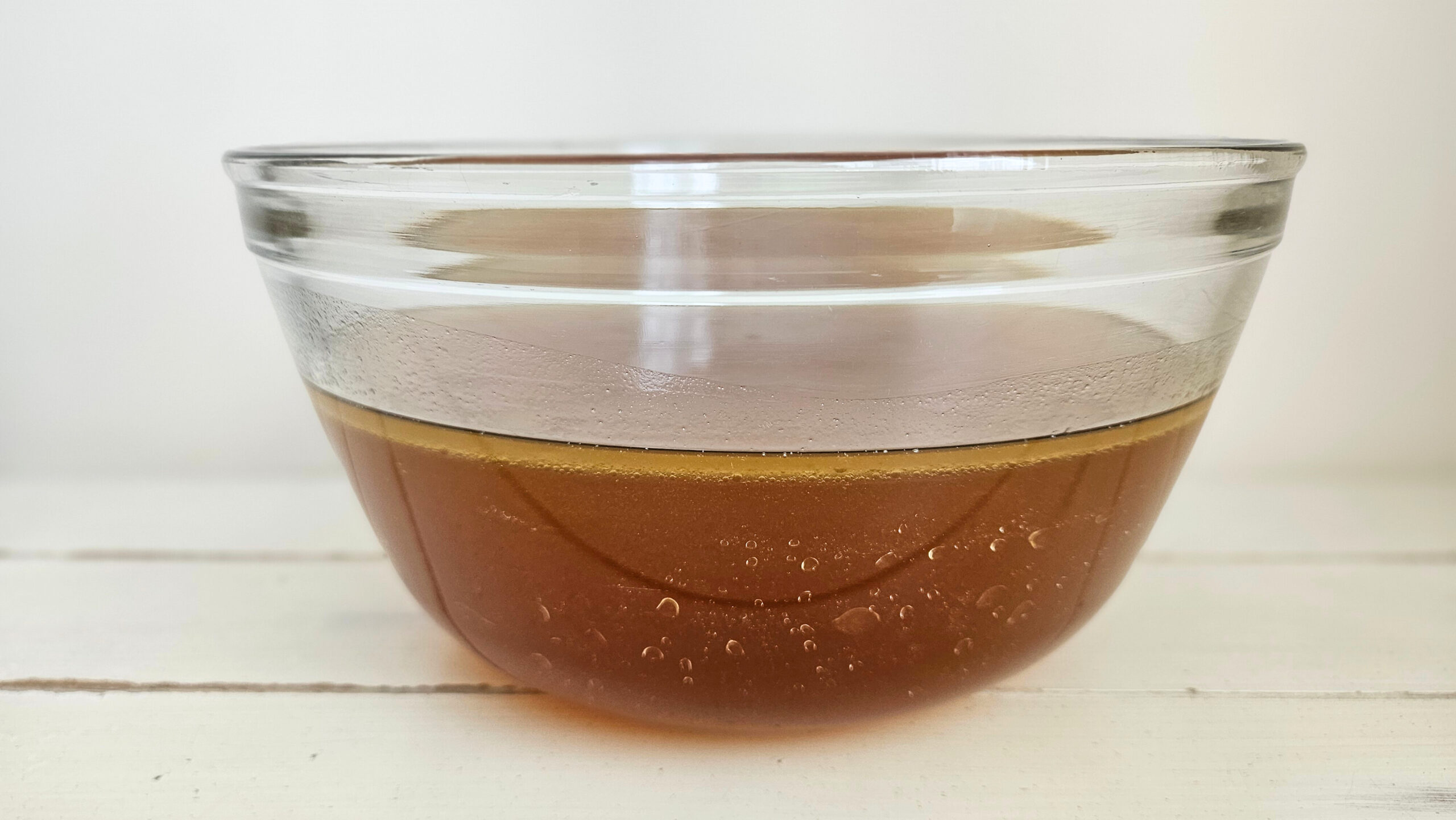
- After 24 hours, you’ll want to use a fine mesh strainer to separate the liquid, now bone broth, from the ingredients. I usually place the strainer over a large bowl and ladle everything onto it.
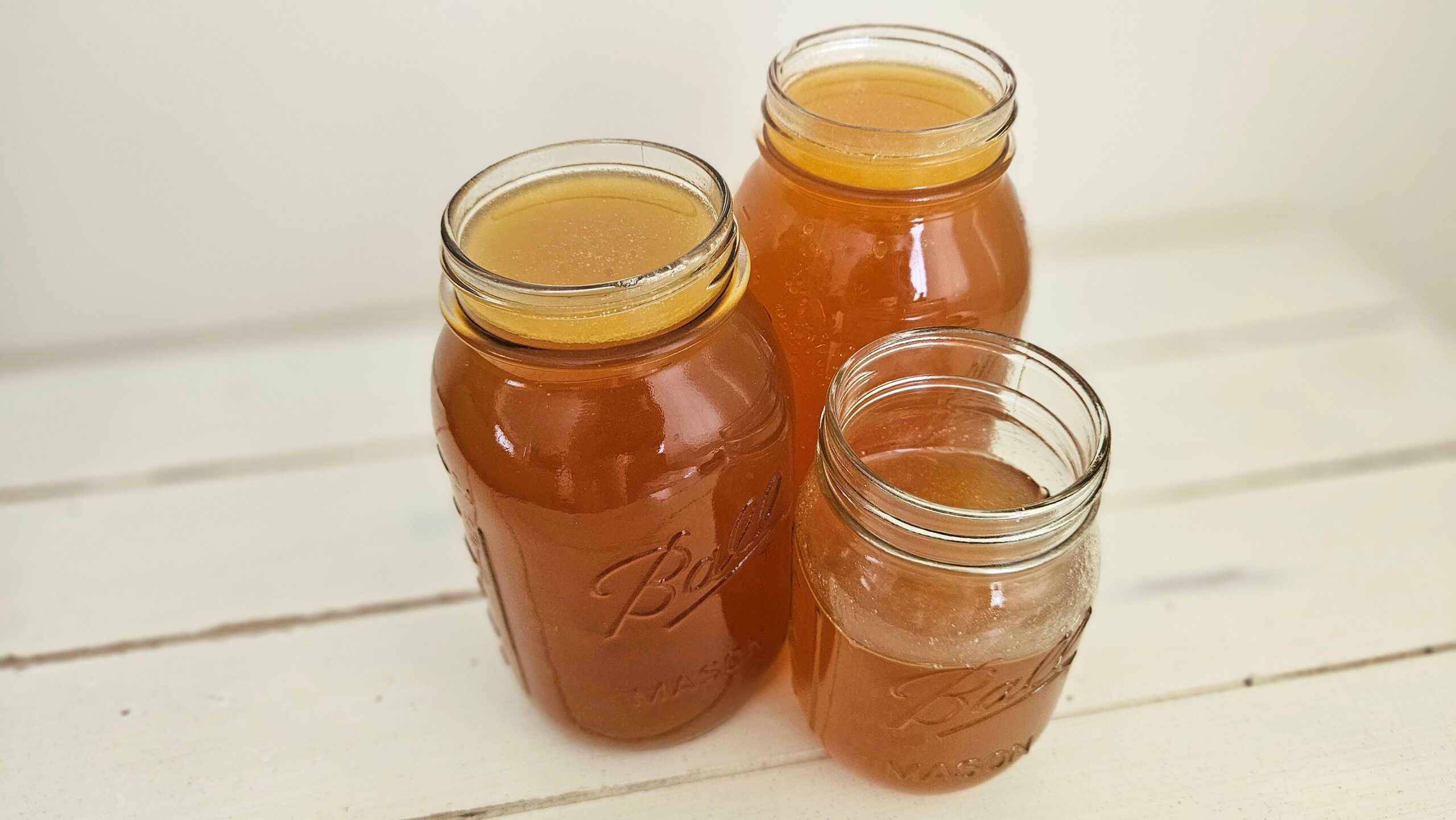
- Once you have your strained bone broth, you’ll want to transfer it to mason jars.
- Refrigerate or freeze until ready to use.
Tips
- You can use the vegetable amounts listed in the recipe, or you can use about 4 cups of vegetable scraps that you have saved, such as ends and peelings.
- Whether or not you let the ingredients sit for 30 minutes prior to turning the stove on will not impact the flavor or consistency.
- Alternatively to cooking on the stovetop, you can use a Crock-Pot or Instant Pot. You may have to adjust the water amount if using a Crock-Pot, depending on the size of your Crock-Pot. I have never used an Instant Pot, so I can’t give any advice for making bone broth in one.
- Please see Farmhouse on Boone for an Instant Pot Bone Broth Recipe.
- For freezing the bone broth in mason jars, please be sure to keep the liquid level a few inches below the top of the jars. If the jars are filled too high, the liquid will expand and cause the jars to crack in the freezer.
- This recipe yields approximately 10 cups. This amount will vary per batch depending on the ratio of bones and vegetables to water. It will also vary depending on how much steam escapes from the stockpot. I have found more steam escapes from a Crock-Pot, resulting in a reduced yield.
Ways to Enjoy
- Soups
- Stews
- Sauces
- Gravies
- Water replacement for rice, quinoa, etc.
- Warm, comforting drink
Cost-Benefit Analysis
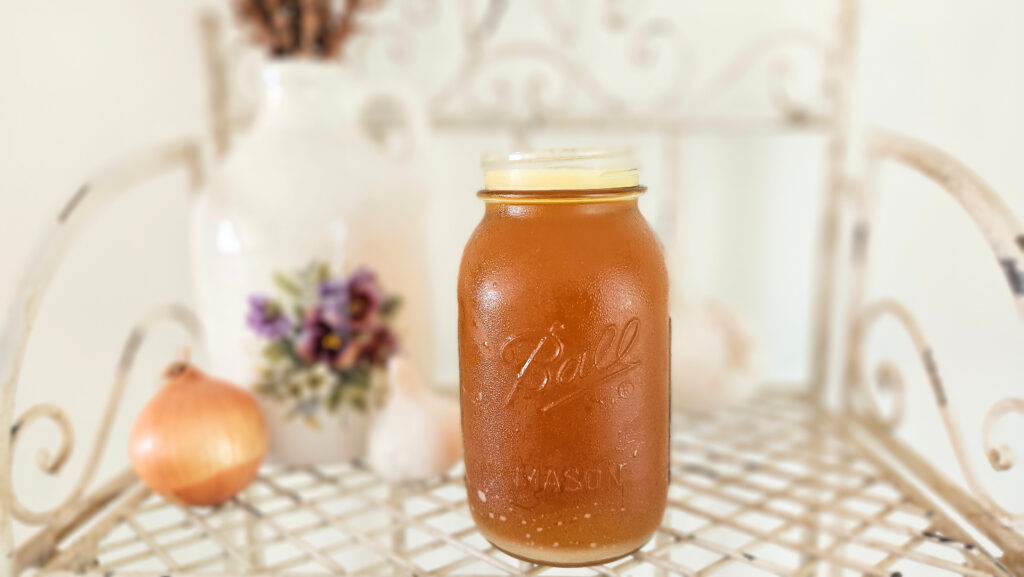

This cost-benefit analysis will compare my homemade bone broth recipe using all store-bought organic ingredients vs. store-bought organic bone broth purchased at my local grocery store.
As of September 2025 in Tennessee:
Homemade Chicken Bone Broth
Ingredient Estimates
- 1 whole organic chicken: $14.51
- ¼ C apple cider vinegar: $0.31
- 3 carrots: $0.70
- 5 celery stalks: $1.34
- 1 onion: $1.12
- 2 bay leaves: $0.25
- 1 tsp salt: $0.05
- 1 tsp peppercorns: $0.49
Total: $18.77 for 10 cups of bone broth + 2 chicken breasts, 2 chicken thighs, 2 chicken drumsticks, and 2 chicken wings
Store-Bought Organic Bone Broth
$5.99: Pacific Foods Organic Chicken Bone Broth with Sea Salt (32oz)*
- 32oz = 4 cups
- 2.5 boxes = 10 cups
- $5.99 x 2.5 = $14.98
It may seem like the store-bought version is cheaper, but in purchasing a whole chicken, it must be factored in that chicken meat was received as well, even though it wasn’t used in this recipe.
These are chicken prices when bought as pre-cut meat, and divided according to how much is in the package vs. how much is needed to match the whole chicken cuts.
- 2 organic chicken breasts: $5.79
- 2 organic chicken thighs: $2.80
- 2 free-range chicken drumsticks**: $1.16
- 2 organic chicken wings: $1.00
Total: $10.75
Store-bought total: $14.98 + 10.75 = $25.73
$25.73 (store-bought broth plus chicken meat) – $18.77 (homemade broth plus meat) = $6.96
$6.96 may not seem like a large savings, but it is a savings either way!
*Ingredients: Organic Chicken Bone Broth (Water, Organic Chicken, Organic Onions, Organic Spices, Organic Carrots, Organic Celery, Organic Rosemary Extract [Antioxidant]), Sea Salt, Organic Apple Cider Vinegar
**Was unable to find organic chicken drumsticks by me. The best option was free-range.
FAQs
Related Posts
I hope you feel confident in making your own bone broth at home! If you have any of your own tips, please leave them in the comments below 🙂.
Homemade Chicken Bone Broth
Ingredients
Equipment
Method
- Add the chicken carcass and all the bones you have saved to a large stockpot. Add in the apple cider vinegar, chopped vegetables, bay leaves, salt, peppercorns, and onion and garlic skins.
- Add the filtered water and let everything sit for about 30 minutes.
- Place a lid on the pot and turn the heat to high. Once it’s boiling, turn the heat to low, just to maintain a simmer.
- Simmer on the stovetop for 24 hours.
- After 24 hours, you’ll want to use a fine mesh strainer to separate the liquid, now bone broth, from the ingredients. I usually place the strainer over a large bowl and ladle everything onto it.
- Once you have your strained bone broth, you’ll want to transfer it to mason jars.
- Refrigerate or freeze until ready to use.
Notes
- You can use the vegetable amounts listed in the recipe, or you can use about 4 cups of vegetable scraps that you have saved, such as ends and peelings.
- Whether or not you let the ingredients sit for 30 minutes prior to turning the stove on will not impact the flavor or consistency.
- Alternatively to cooking on the stovetop, you can use a Crock-Pot or Instant Pot. You may have to adjust the water amount if using a Crock-Pot, depending on the size of your Crock-Pot. I have never used an Instant Pot, so I can’t give any advice for making bone broth in one.
- Please see Farmhouse on Boone for an Instant Pot Bone Broth Recipe.
- For freezing the bone broth in mason jars, please be sure to keep the liquid level a few inches below the top of the jars. If the jars are filled too high, the liquid will expand and cause the jars to crack in the freezer.
- This recipe yields approximately 10 cups. This amount will vary per batch depending on the ratio of bones and vegetables to water. It will also vary depending on how much steam escapes from the stockpot. I have found more steam escapes from a Crock-Pot, resulting in a reduced yield.
This is a personal blog. All posts, recipes, recommendations, and how-tos are for informational use and personal viewing pleasure only. Blog posts are not written by AI.

subscribe