



Homemade All-Purpose Cleaner with Vinegar
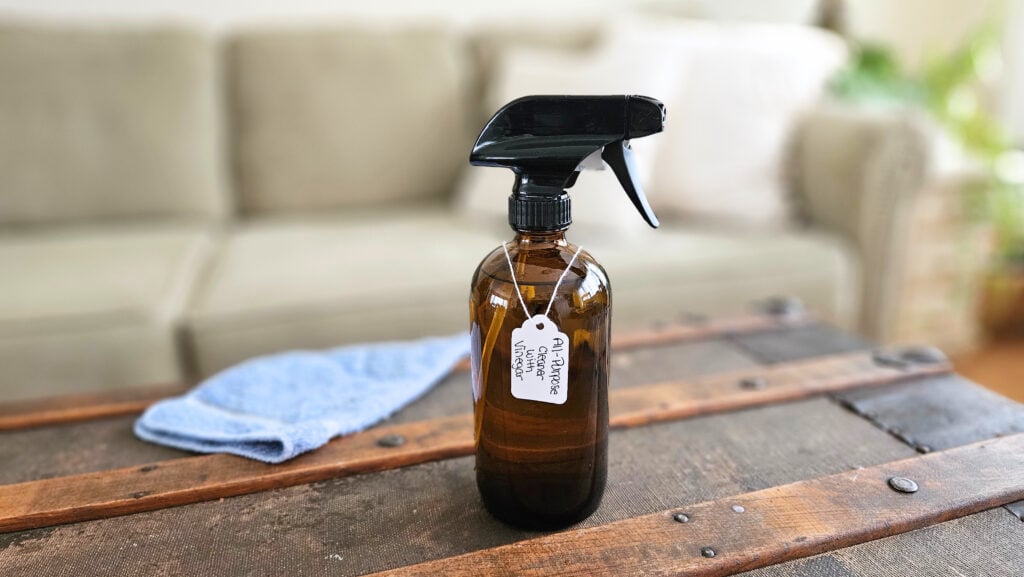
It’s time to level up your cleaning supplies! Making your own all-purpose cleaner with vinegar is one of the best places to start when reducing toxin exposure in your home.
This post may contain affiliate links. Please see our site disclosure for more information.
When I moved into my first apartment after graduating from college, I loved everything about having my own home to care for. I loved cleaning, organizing, and decorating. I would go to thrift stores on the weekends, and slowly but surely I was able to create a cozy place to call my own.
I also had a cleaning routine that I would do once per week. I would clean every room from top to bottom in a systematic way. Unfortunately, I sprayed everything with Lysol and Windex 😬.
Even though I had good intentions and wanted to make sure I took care of my apartment well, I didn’t realize at the time that it was a little overboard to disinfect my whole apartment with harsh chemicals. I apparently thought I was running a hospital 😅.
I still prioritize living in a clean environment, but I now take a different approach in how I achieve that cleanliness. Follow along and I’ll show you common chemicals that I avoid, how to read ingredients labels, and how to make your own all-purpose cleaner with vinegar.
Don’t forget to check out the cost-benefit analysis! If the chemicals present in most household cleaning products won’t convince you to switch to homemade, the price difference sure will! 🥳
Why are Most Household Cleaning Products Not Good?
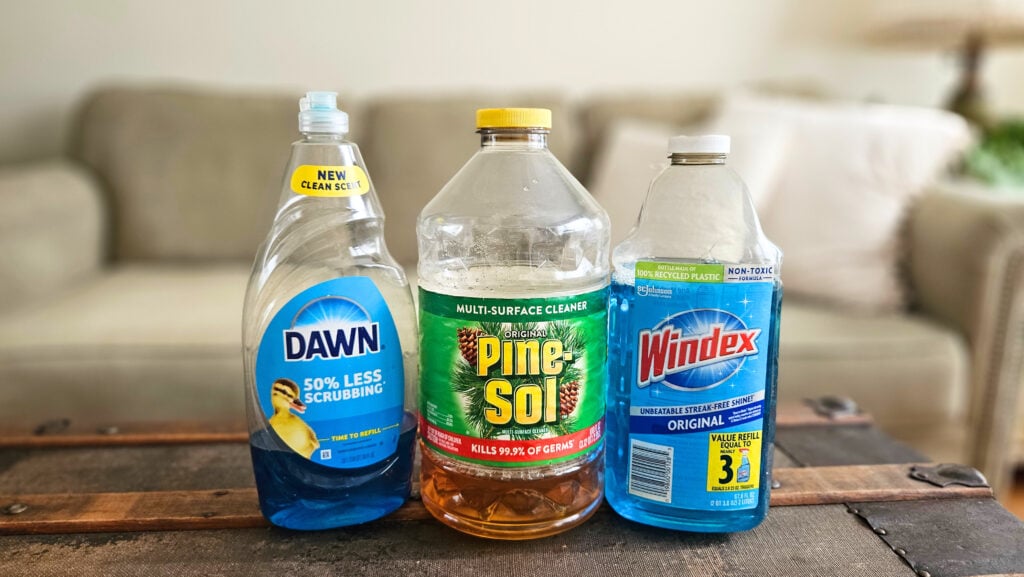
For starters, I think I tend to be a pretty reasonable person. Back when I was a dental hygienist, I never once petitioned the dentist I worked for the throw out all of the disinfectant wipes and switch to my homemade all-purpose cleaner with vinegar 🙃. For the environment that we were in, it made sense to use medical-grade disinfectants. That doesn’t mean there are no potential harmful consequences to the people who are regularly exposed to those chemicals, but for the purpose of having the dental office be as clean as possible, they made sense to use.
However, for everyday household cleaning, those medical-grade cleaners would be WAY over the top. Additionally, I would argue that most regular household cleaning products are also WAY over the top. Unless the plague breaks out in your house, natural cleaning solutions that have been used for generations will work just fine.
The problems associated with many regular household cleaning products are the chemicals that touch your skin, the residue left behind throughout your house, and the VOCs that are released in the process. If we want our homes to be clean so that we can live healthy lives, why are we saturating our homes with man-made chemicals that didn’t even exist 100 years ago? Shouldn’t we be asking about the potential risks associated with this and evaluating everything through a risk-benefit analysis?
What Chemicals Should Be Avoided?
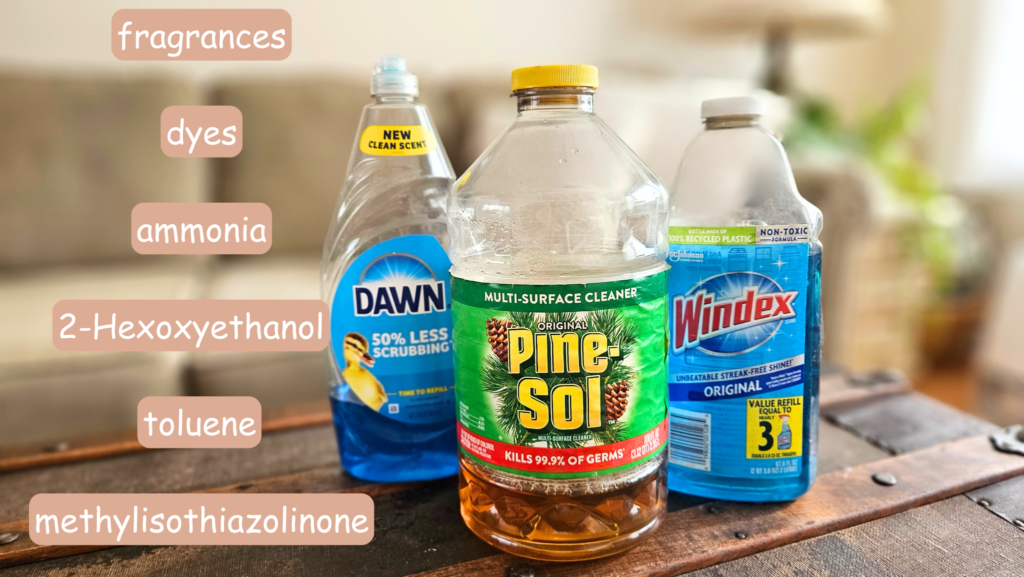
The word “chemical” can be tricky. Chemicals exist in nature all around us. Some chemicals such as oxygen and water are necessary, good, natural chemicals. Some chemicals such as essential oils are extracted from plants and can be used in many beneficial ways. Hormones, which flow through us every day, are also naturally occurring chemicals produced by our bodies.
Then there are “chemicals” that are natural, but harmful. Some examples include mercury, arsenic, and snake venom. They are all produced by nature, but can have toxic effects.
Finally, there are “chemicals” that are neither natural nor harmless. Throughout this post, and blog as a whole, whenever you see the word “chemical” this is likely what I am referring to. The following is a snapshot of some common chemicals found in regular household cleaning products, and the negative effects that they can exert.
This is nowhere near an exhaustive list of chemicals that are found in common household cleaning products. These are just a few that are easily pronounced 😆. In making your own all-purpose cleaner with vinegar, these chemicals are easily avoided.
For a list of common chemicals found in laundry detergents, please see these two posts:
How to Read Ingredient Labels on Cleaning Products

If you aren’t into making your own homemade cleaning products, it’s important to know how to read the ingredients labels on cleaning products. The Environmental Working Group (EWG) is a great resource for learning how to understand labels.
Here are a few labels to look for and what they mean:
For a more comprehensive list with great explanations on how to read labels, please see this guide:
Once again, if you are making your own all-purpose cleaner with vinegar, you don’t have to worry about reading labels and figuring out what’s safe and what is better to avoid.
Why Make Your Own All-Purpose Cleaner with Vinegar?

If I haven’t convinced you yet on why you should make your own all-purpose cleaner with vinegar, here are some more reasons!
Is Vinegar Safe for All Surfaces?
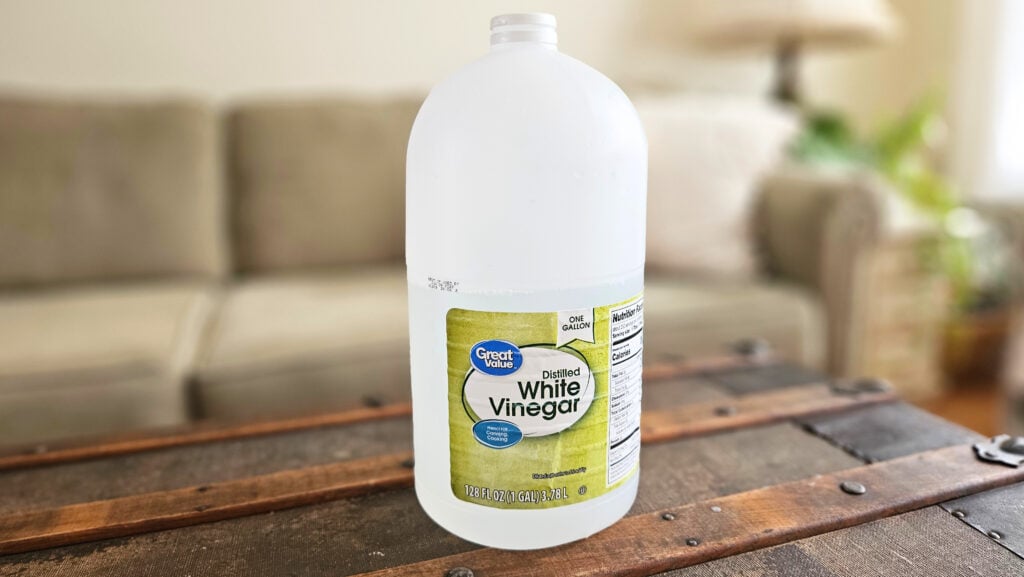
Vinegar based DIY cleaners are safe for most surfaces, but not all. Some surfaces that you may want to avoid using vinegar on are:
- Stone (countertops and floors) such as marble and granite
- A soap based cleaner is usually recommended
- Grout (especially unsealed grout)
- It can eat away at the calcium carbonate in grout over time
- Wood floors
- Some people say all wood floors and some people say unfinished wood in general
- Cast iron cookware
- Acid left too long on cast iron can strip the non-stick seasoning and lead to rust
I honestly use this all-purpose cleaner with vinegar on both my granite countertops and my wood floors. I don’t use it daily on either surface, and I do wipe it dry so that the vinegar isn’t sitting on the surface for long.
It’s also important to know what shouldn’t be mixed with vinegar. Here are some things you want to avoid when cleaning with vinegar:
- Bleach
- Ammonia
- Hydrogen peroxide
If cleaning with vinegar just isn’t your thing, or you want an all-purpose cleaner that has fewer restrictions on what it can be used on, check out this post:
What Essential Oils Can Be Used? What are the Benefits?
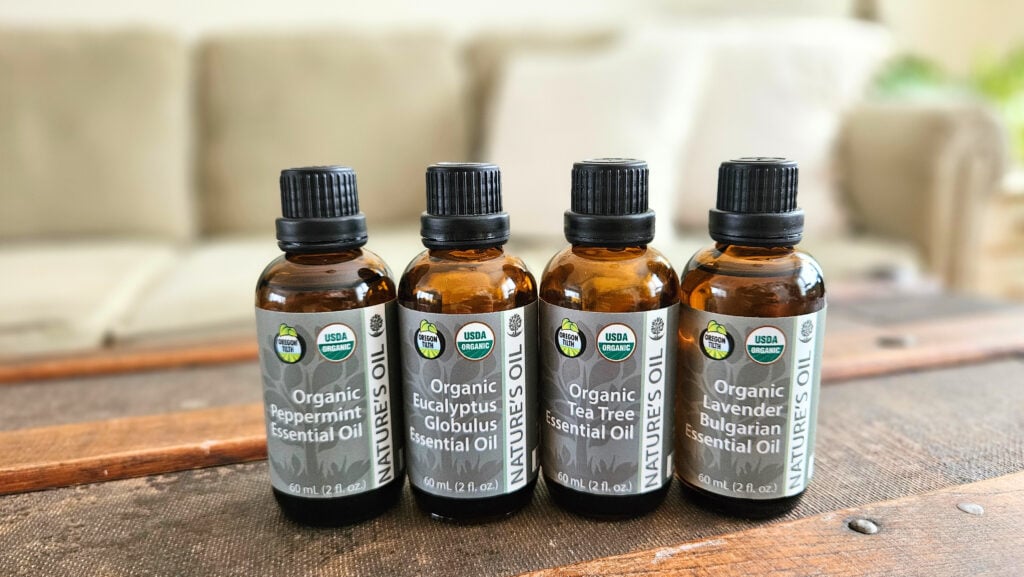
I personally have no aversion to the smell of vinegar. I actually kind of like it because I think it smells very clean. However, not everyone is a huge fan. While the smell does dissipate very quickly after cleaning with it, if you’d rather smell something a little bit more fragrant while you are in the process of cleaning, you can scent your all-purpose cleaner with vinegar with essential oils.
Listed below are some common essential oils that have both a pleasant smell and good cleaning abilities.
- Lemon: antibacterial, antiviral, antifungal, degreaser
- Orange: antimicrobial, degreaser
- Tea Tree: antibacterial, antiviral, antifungal
- Eucalyptus: very antifungal
- Pine Needle: improve air quality, guard against airborne pathogens, antibacterial, antifungal, deodorizing
- Lavender: antimicrobial
- Peppermint: antimicrobial, antifungal, spider repellent
- Grapefruit: antimicrobial, degreaser
- Basil: antibacterial, antiviral, antifungal, decrease food-borne pathogens
- Lemongrass: very antimicrobial, very antifungal, pest repellent
favorite scent combo
If I use essential oils in this all-purpose cleaner with vinegar, I like to add 5-10 drops of lavender essential oil and 5-10 drops of eucalyptus essential oil.
How Can I Make Scented Vinegar Without Essential Oils?
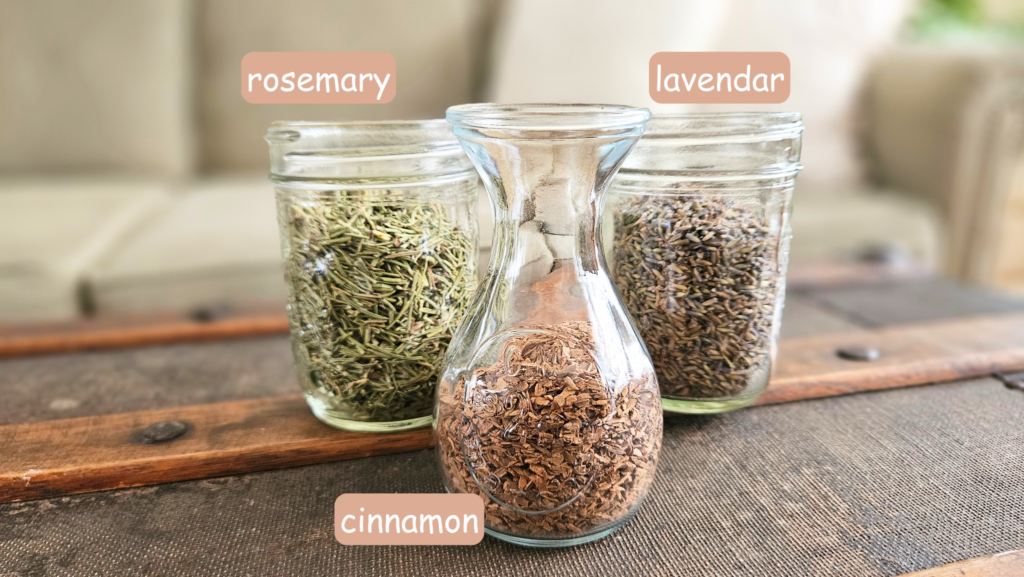

If you either aren’t into all the hype surrounding essential oils or you simply don’t have any to use when making this homemade all-purpose cleaner with vinegar, there are other ways you can have scented vinegar without the use of essential oils.
Herbs and Spices
The first way is to infuse your vinegar with herbs. My favorite herb to use is lavender. I like both the scent and the historic use as natural cleaner.
Check out this recipe to make your own lavender vinegar which can then be mixed with water to make your own all-purpose cleaner with vinegar:
Some other herbs and spices that can be used to infuse your distilled white vinegar are mint, thyme, rosemary, sage, oregano, basil, cinnamon, cloves, and many more. Please see the recipe for lavender vinegar and apply the same process to whichever herb or spice you use.
Get creative with the options and put everything to good use!
Citrus Fruits
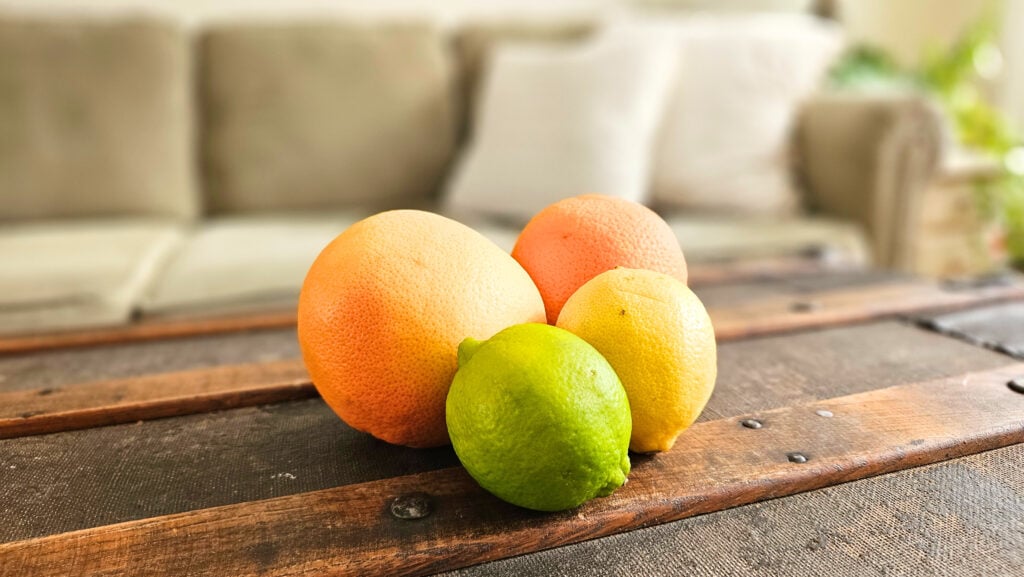
Another way you can scent your vinegar without the use of essential oils is by infusing it with fruit scraps from lemons, limes, oranges, and/or grapefruits. I like this method because it is a no-waste recipe that puts even scraps to good use.
The next time you are in the kitchen and you have an orange or grapefruit as a snack, you squeeze some lime into your homemade guacamole, or you start the day with warm lemon water, save all of those rinds!!
This method allows you to have a naturally fragranced DIY cleaner, and you literally don’t have to spend ANY extra money. You simply use what is already in use in your home.
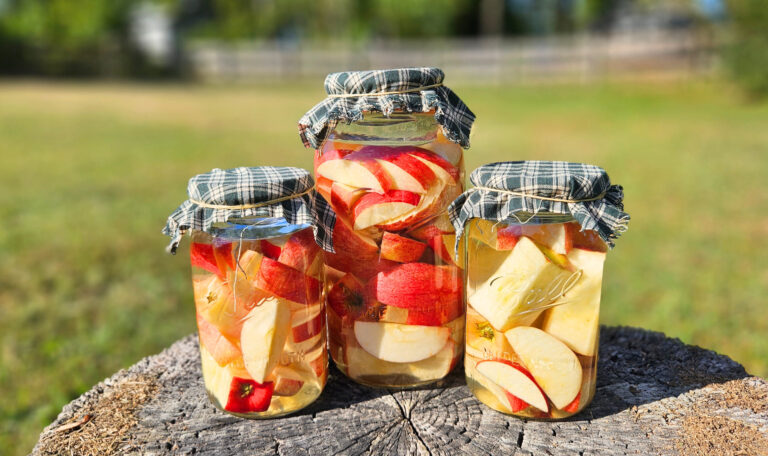
If you don’t have any citrus fruits on hand, you can even do a 1:1 ratio of water and apple cider vinegar to create an effective all-purpose cleaner with vinegar. See how to make your own ACV:
Pine Needles
Remember the days when pine sol was made with real pine? Me neither 😂. To make your own pine scented all-purpose cleaner with vinegar, simply follow the same instructions as up above with herbs and spices, except substitute pine needles. If you get a real Christmas tree, snip off some branches before you toss it out! 🎄
How to Make an All-Purpose Cleaner with Vinegar

Ingredients
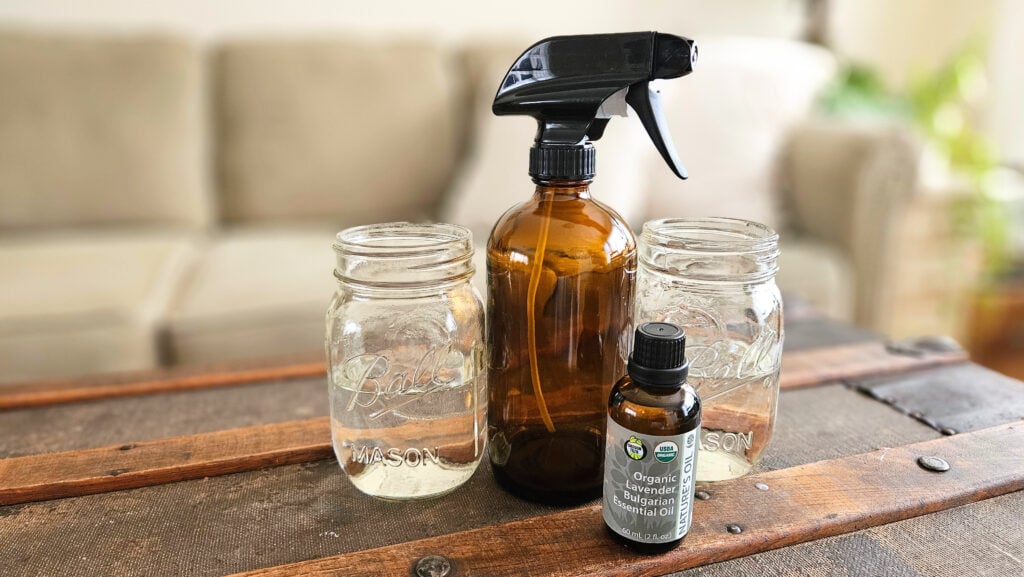
- 1 cup (8oz) water
- 1 cup (8oz) distilled white vinegar OR scented vinegar
- 15-20 drops essential oils of choice (optional)
Equipment
- 1 16oz glass spray bottle
- 1 measuring cup
- 1 funnel (optional)
Instructions
Tap/click the images for a description of each step ⬇️
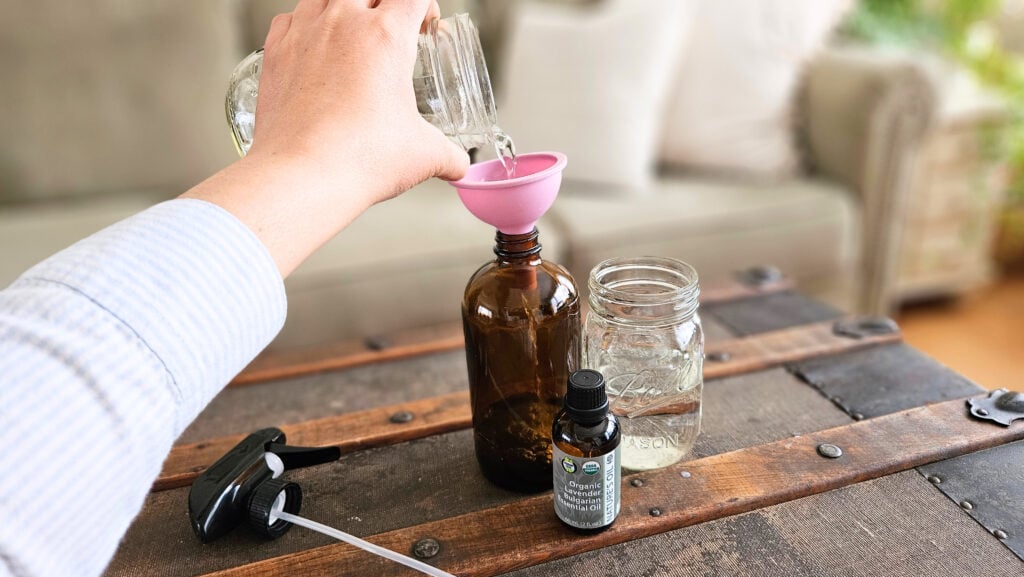
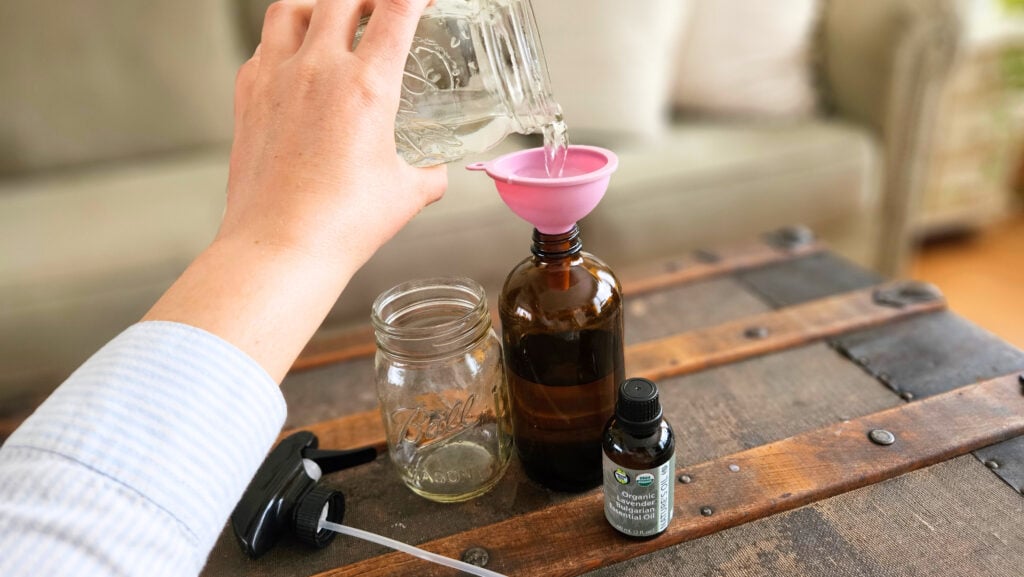
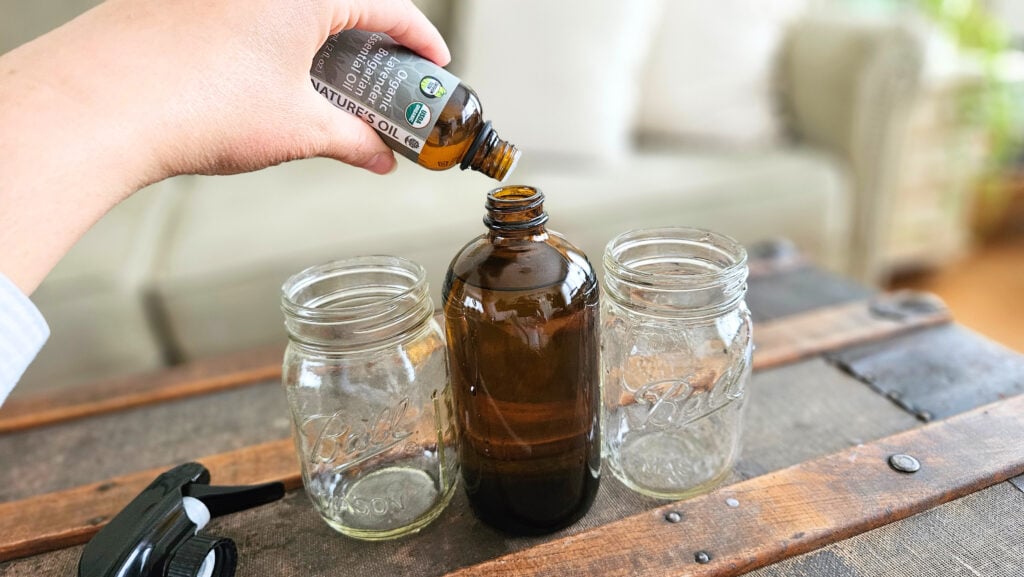
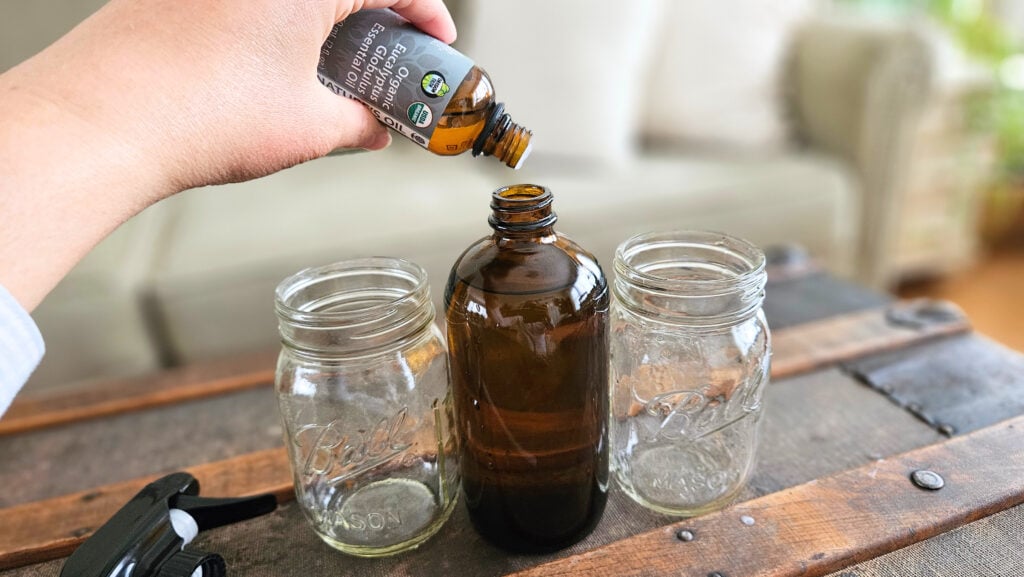
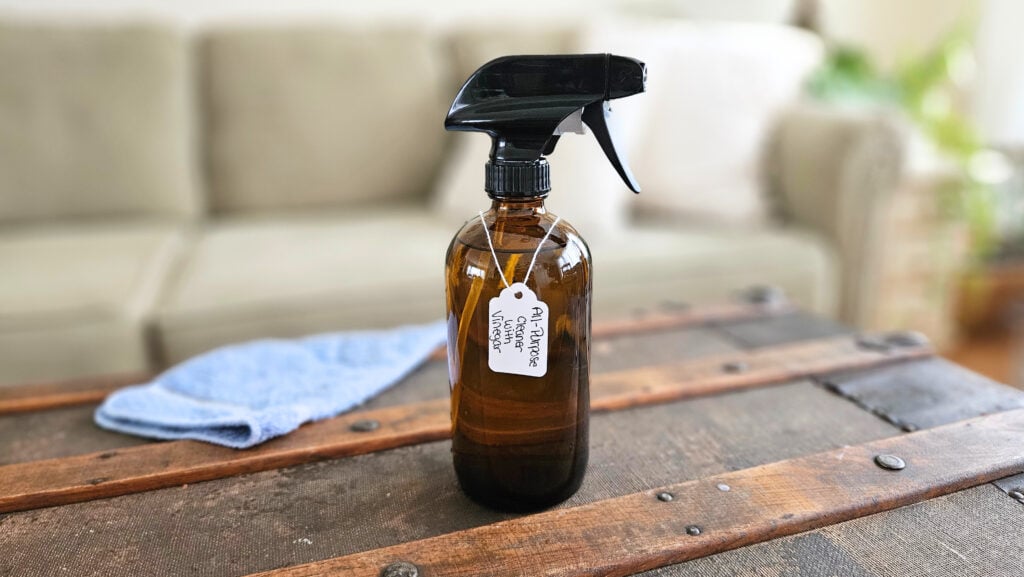
- Pour 1 cup of water and 1 cup of distilled white vinegar or scented vinegar into a 16oz glass spray bottle.
- Add essential oils if desired. See description above for essential oils that are beneficial for cleaning.
- Shake to combine and start cleaning!
Tips
- Always dilute vinegar with water prior to routine household cleaning.
- You can make more or less than 16oz. The ratio of water to vinegar is usually 1:1, but can you make this weaker or stronger depending on what you are cleaning.
- Be sure to never mix vinegar with the substances listed earlier.
Ways to Use
The BEST glass spray bottles for homemade cleaning products:
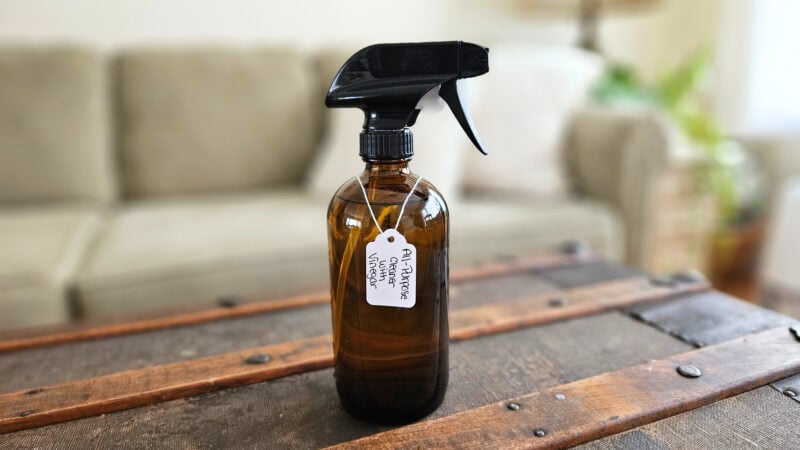
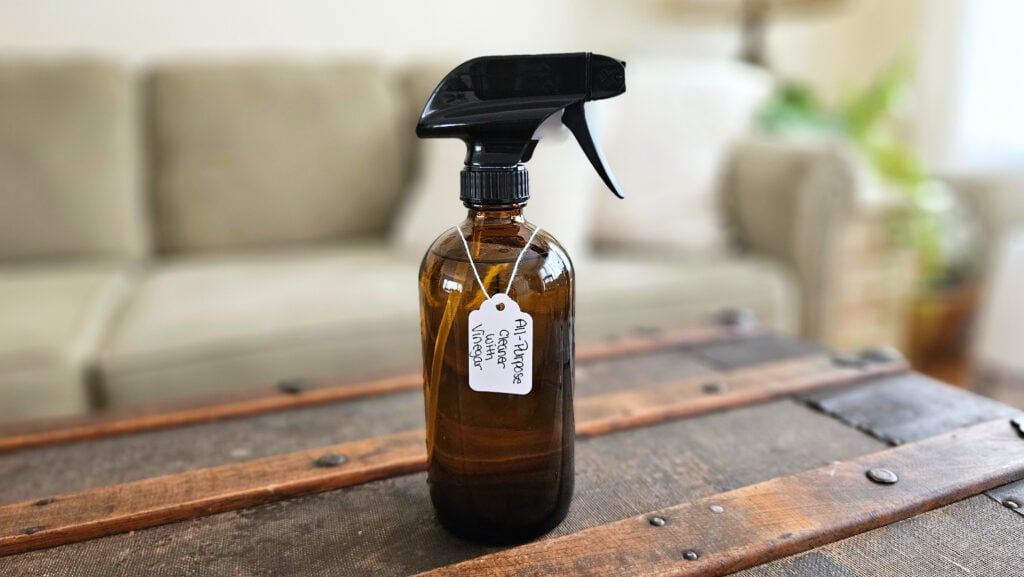
Amber Glass Spray Bottles
Glass spray bottles are a must-have for anyone who makes their own homemade cleaning products. You’ll definitely want to use glass over plastic, so that plastic doesn’t leech into your cleaning solutions over time. Also, the amber glass is great for anyone who uses essential oils as a means to protect your essentials from degradation over time. These bottles are well-made, meaning you won’t have to keep buying them!
Cost-Benefit Analysis
I couldn’t find an all-purpose cleaner with vinegar that was simply just vinegar and water, but I guess that makes sense! Manufacturers likely won’t mass produce a product that can be made at home as easily as this vinegar based DIY cleaner can be.
With that being said, the most simple vinegar based all-purpose cleaner I came across was Aunt Fannie’s All-Purpose Cleaner. Since not everyone is into homemade cleaning products, let’s evaluate the cost breakdown between the DIY cleaner and Aunt Fannie’s.
As of December 2025 in Tennessee:
Homemade All-Purpose Cleaner with Vinegar (Fragrance Free)
1 cup water
- FREE
1 cup distilled white vinegar
- $3.94 for 1 gallon
- 1 gallon = 16 cups
- $0.25 per cup
- 1 cup = $0.25
Total: $0.25
- Yield: 16oz (2 cups)
Aunt Fannie’s All-Purpose Cleaner (find here)*
- $11.99 for 16.9oz
- $0.71 per oz
- 16oz = $11.36
Total: $11.36
- Yield: 16oz (2 cups)
*Ingredients: distilled white vinegar, surfactant (caprylyl/myristyl glucoside)
This is one of those times where there is a STARK difference in price between what you can buy and what you can make. You can argue that the surfactant present in Aunt Fannie’s has the ability to clean better than vinegar and water. However, I have never used this all-purpose cleaner with vinegar and looked around my house and thought it was still dirty. It works great at a great price! 🙌
FAQs
Related Posts
I hope you enjoy having a clean home, the natural way 🌿.
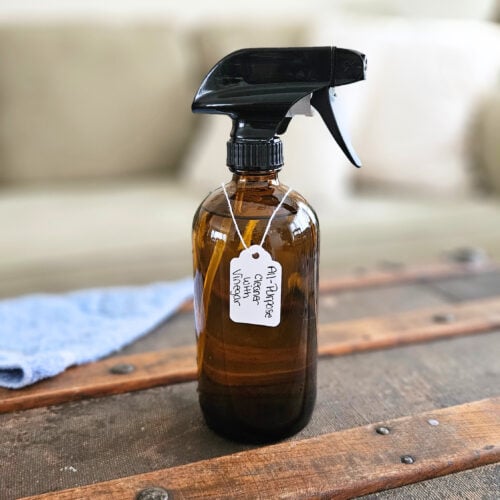
All-Purpose Cleaner with Vinegar
Equipment
- 1 16oz glass spray bottle
- 1 measuring cup
- 1 funnel (optional)
Ingredients
- 1 cup water
- 1 cup distilled white vinegar or scented vinegar
- 15-20 drops essential oils of choice (optional)
Instructions
- Add 1 cup of water and 1 cup of vinegar (plain or scented) to a 16oz glass spray bottle.
- Add 15-20 drops of essential oils if desired.
- Shake to combine and start cleaning!
Notes
- Always dilute vinegar with water prior to routine household cleaning.
- You can make more or less than 16oz. The ratio of water to vinegar is usually 1:1, but can you make this weaker or stronger depending on what you are cleaning.
- Be sure to never mix vinegar with the substances listed earlier.
- See surfaces that vinegar is not recommended to use on.
- Mountain Rose Herbs is a great resource for both herbs and essential oils.
- Rocky Mountain Oils is a great resource for purchasing essential oils.
This is a personal blog. All posts, recipes, recommendations, and how-tos are for informational use and personal viewing pleasure only. Blog posts are not written by AI.



subscribe