

DIY Powder Laundry Detergent (Easy + Affordable)
Making your own powder laundry detergent is a great first step in switching your household products from synthetic to natural.
This post may contain affiliate links. Please see our site disclosure for more information.


After you finally make the switch from the standard American diet, to a whole-food organic diet, you feel great and you don’t know how you ever lived otherwise.
Then, when you realize that your skin is your body’s largest organ and it absorbs everything you put on it, your newly found confidence may be dampened by the overwhelm of the synthetic chemicals that seem to be lurking everywhere.
No need to stress about it! Follow along and I’ll walk you through an easy homemade powder laundry detergent recipe that will boost your confidence yet again, with clean, chemical-free clothes.
What is the Difference Between Detergent and Soap?
Even though I have labeled this recipe “DIY Powder Laundry Detergent” for common language purposes, this recipe is not really a “detergent”. It is technically a cleaner with soap.
Soap and detergent are both surfactants designed to clean. Surfactants help water mix with oil and dirt, allowing it all to be rinsed away.
Even though they serve the same purpose, there are differences in how they are made, how they perform, and their environmental impact.
Soap
How It’s Made
Soap is made through the process of saponification. Saponification occurs when you take a natural fat or oil and combine it with an alkali such as sodium hydroxide. The reaction produces soap, glycerin, and water. Soapmaking has been around for thousands of years.
How It Performs
Soap performance depends on the quality of the soap. The quality of the soap is determined by the quality of the fat and/or oil used to make the soap. Short-chain oils can be rough on the skin.
One of the downsides of soap is that it doesn’t always perform well in hard water.
Environmental Impact
Soap has the lowest environmental impact when compared to most detergents. Soap that is made from renewable plant-based oils and/or animal fat is biodegradable. Biodegradable means that a substance can break down naturally over time, without leaving any pollution or toxic residue behind.
Detergent
How It’s Made
Detergents are a relatively new invention. When oils were in short supply during World War I and World War II, scientists discovered how to make cleaning agents that didn’t rely on plant-based oils.
Detergents can be derived from either natural substances or synthetic substances. Most synthetic detergents are derived from petroleum.
How It Performs
Detergents are usually considered more versatile than soaps.
They tend to work better in hard water, because they stay stable and effective. Soap tends to form films or deposits.
Detergents are also most customizable than soap, because they can range from grease-fighting to gentle for delicate fabrics.
Environmental Impact
Detergents made from natural sources can be biodegradable, which has a positive environmental impact. However, most detergents available are petroleum based, which causes a negative environmental impact.
(source)
Is Laundry Detergent Toxic?
Unless you are using a detergent that is naturally derived, such as Dr. Bronner’s Sal Suds*, most conventional laundry detergents do contain ingredients deemed “toxic”. Chemicals are labeled toxic if they can cause harm to human health when they enter the body. Even though it is impossible to avoid all synthetic chemicals and toxic substances, I think it is very wise to reduce exposure as much as possible, in order to reduce your personal toxic load.
*Dr. Bronner’s Sal Suds does contain sodium lauryl sulfate (SLS). However, it also contains lauryl glucoside, which can counteract SLS. Since Sal Suds is not a body care product, this may be a time where it is okay to compromise on SLS. (source)
8 Common Chemicals in Laundry Detergent
This is by no means an exhaustive list with every detail explained, but it is a good snap shot of some ingredients to keep in mind when reading labels.
- Purpose: soften hard water, which can allow the detergent to clean better
- Negative Impact: can promote algae growth, resulting in oxygen depletion in bodies of water exposed to wastewater. This harms aquatic life and ecosystems.
- Caring about aquatic life and ecosystems is playing the long game. If the earth in which we live is harmed, there will be a trickledown effect to all living creatures, including humans.
- Purpose: solvent
- Negative Impact: likely a carcinogen according to the EPA. It can be absorbed through the skin or inhaled.
- Unfortunately, your laundry detergent can have this ingredient without it being listed. Full transparency does not exist with ingredient labels for food or products.
- Purpose: whiten clothes and kill germs
- Negative Impact: possible skin and respiratory irritation, especially in a poorly ventilated area. It can react with other substances when washed down the drain, forming compounds such as chloroform and dioxins. These compounds are harmful to our water systems.
- Purpose: surfactants that help water mix with oils and dirt, allowing them to be washed away.
- Negative Impact: possible skin irritation, especially if you have sensitive skin. Can be harmful to aquatic life due to not breaking down easily in the environment.
- Purpose: help fragrances last longer
- Negative Impact: endocrine disruptors that can interfere with hormone production. Endocrine disruption can lead to reproductive and other health issues. Associated with increased risk of asthma and allergies. Can also accumulate in the environment, harming wildlife and ecosystems.
- Purpose: surfactant
- Negative Impact: break down into nonylphenol, which is highly toxic to aquatic organisms. Due to presence in the environment, it can accumulate in the food chain.
- Purpose: make clothes appear whiter and brighter
- Negative Impact: can cause skin irritation and allergic reactions. They also accumulate in the environment and contribute to water pollution due to not being biodegradable.
- They do not actually clean the fabric, they create an illusion of cleanliness by reflecting light.
- Purpose: make fabrics smell good
- Negative Impact: most synthetic fragrances come from petrochemicals, which are known carcinogens, neurotoxins, asthamagens, obesogens, edocrine disruptors, allergens, and can be linked to birth defects
- There is so much that can be said on the topic of synthetic fragrance! It is in so many conventional products and it is consistently shown to be harmful. Synthetic fragrance is a hard no for me and my household.
- When you switch to natural sources of fragrance like essential oils, flowers, and spices, synthetic fragrances don’t even smell good anymore.
Benefits of Homemade Powder Laundry Detergent
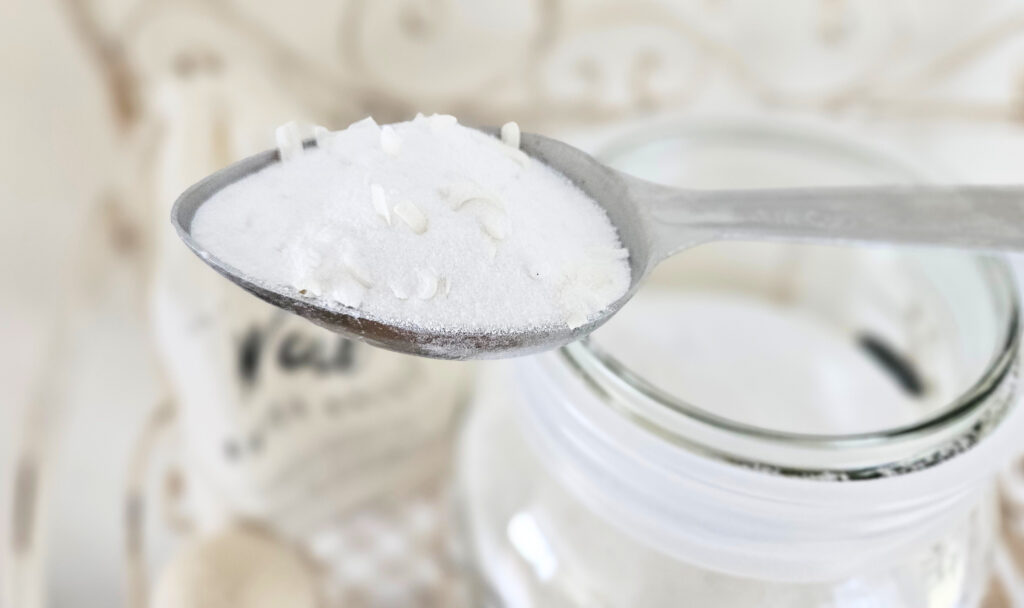
Making your own powder laundry detergent is a simple way to make the step towards are more natural home.
Reduced Chemical Exposure
By making your own homemade powder laundry detergent, you will be avoiding the 8 common chemicals found above, plus many more! Our bodies are designed to detoxify, but I believe they do get bogged down and overwhelmed when they have to filter too much at once.
Easy to Source Ingredients
This DIY powder laundry detergent recipe requires only 4 ingredients (5 if you want to get creative with essential oils). Borax, washing soda, baking soda, and castile soap bars can be found easily online and in most stores. They are also very affordable and can be used for other cleaning projects in your home as well.
Effective Cleaning
Ever since switching to my own homemade powder laundry detergent, I have never thought that my clothes were never fully cleaned. Outside of any stains that needed extra attention, I have been very satisfied with the cleaning power of this powder laundry detergent. My clothes come out looking and smelling clean!
Cost Effective
Making my own powder laundry detergent is definitely worth the time, which is minimal, when you calculate the savings. Please see the cost-benefit analysis for more information.
Powder vs. Liquid Laundry Detergent
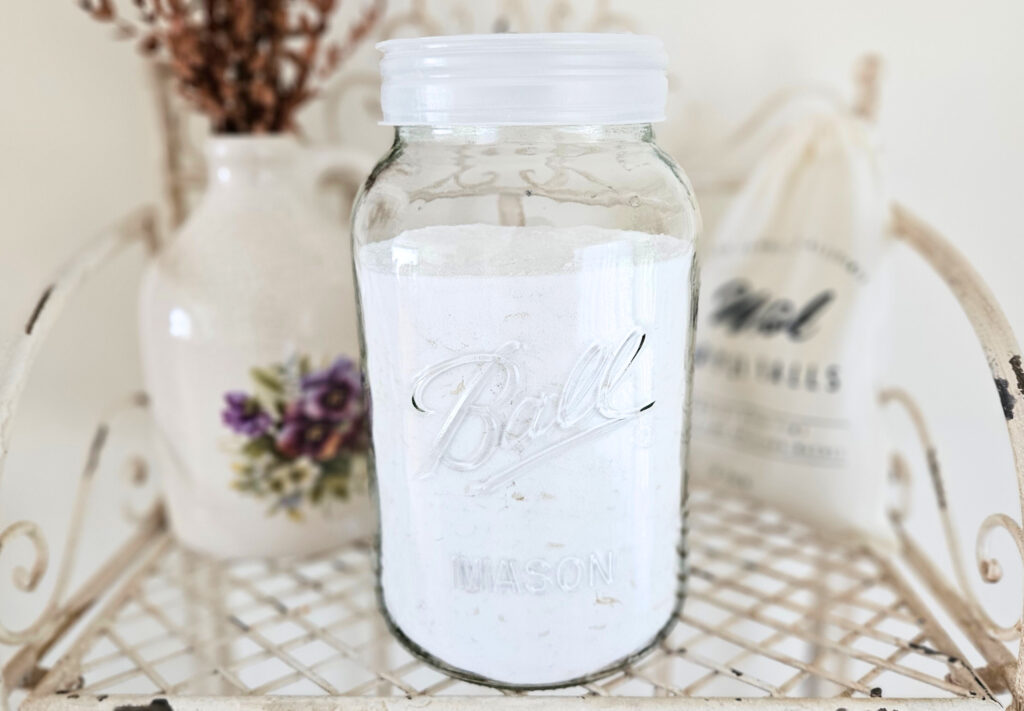
Nowadays, the options for how to do your laundry have expanded beyond just powder or liquid laundry detergent. Laundry options now include pods, tablets, and sheets. For this post, we’ll discuss the pros and cons of powder laundry detergent vs. liquid laundry detergent, since they are still the most popular.
To make your own liquid laundry detergent, check out this DIY recipe:
Powder Laundry Detergent
Pros
- Usually more cost-effective
- Highly concentrated- less is needed for effective cleaning
- Lightweight and space-efficient due to lack of water
- No plastic jugs
- Preservatives are not required due to lack of water- water based products can grow mold and bacteria
- Best for mud or clay stains
Cons
- Doesn’t dissolve as well in cold water
- Residue can be left on clothing due to undissolved particles
- Undissolved powder can clog the washing machine
- Not as good for spot treating stains
- Less effective on grease or oil stains
Liquid Laundry Detergent
Pros
- Dissolves easily in any water temperature
- Better for grease and oil stains
- Easy application for spot treating stains
- Performs better in hard water than powder
- Less likely to leave behind residue on clothes
- Less likely to clog the washing machine
Cons
- Usually higher cost per wash
- Usually plastic packaging
- Heavier and less compact due to water content
- Less effective on mud
- Can lose cleaning strength over time
- Preservatives due to water content
How to Make DIY Powder Laundry Detergent
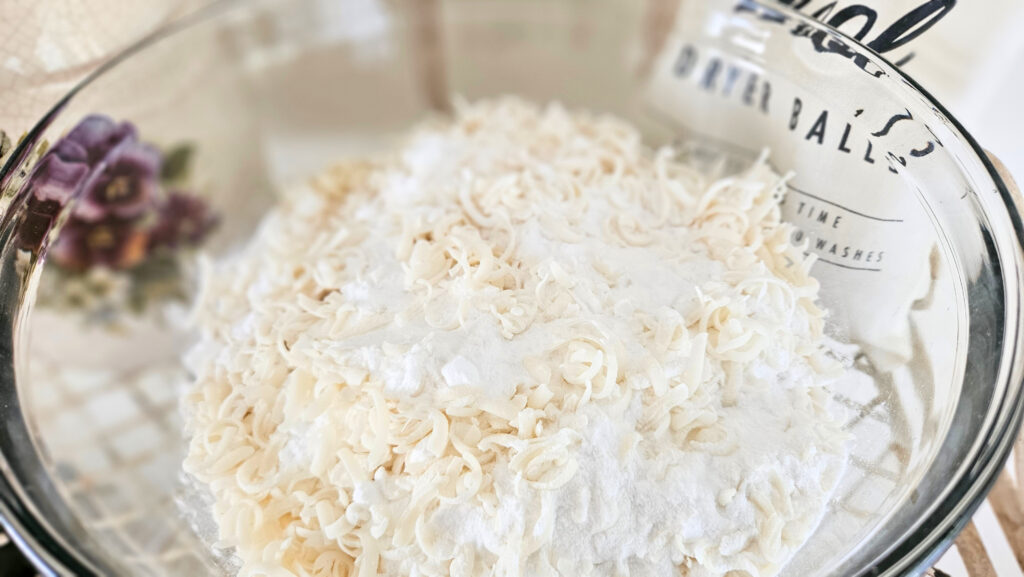
Learn how to get started in making your own homemade powder laundry detergent, enabling you to clean your home naturally and effectively.
Ingredients
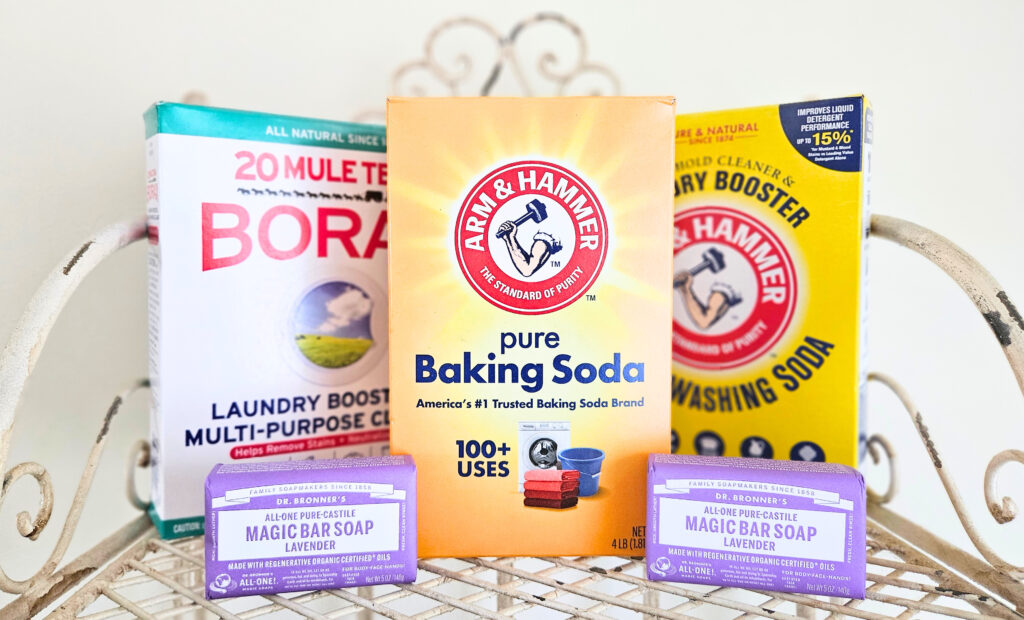
- 4 C borax
- 4 C washing soda
- 4 C baking soda
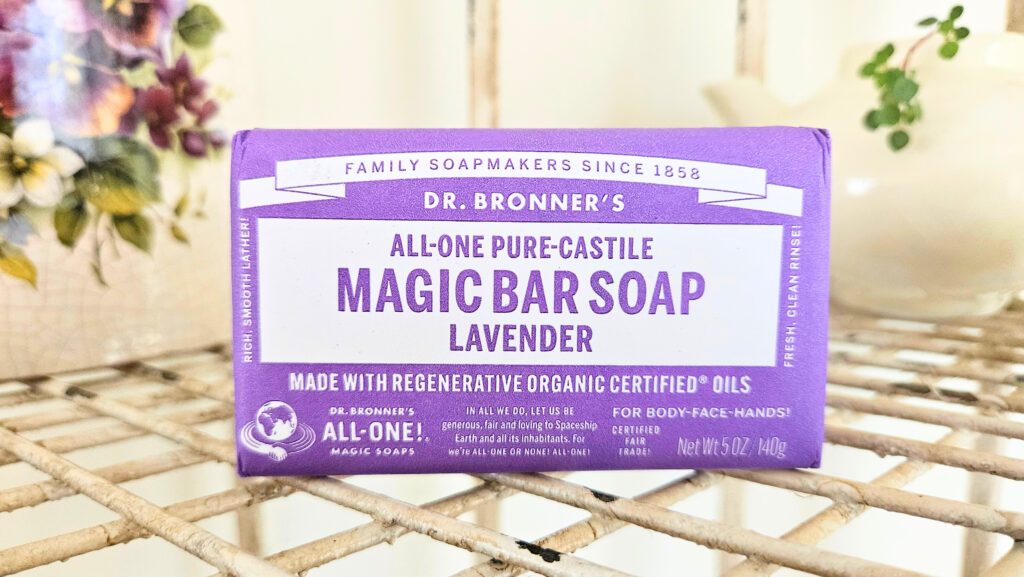
- 2 bars castile soap grated
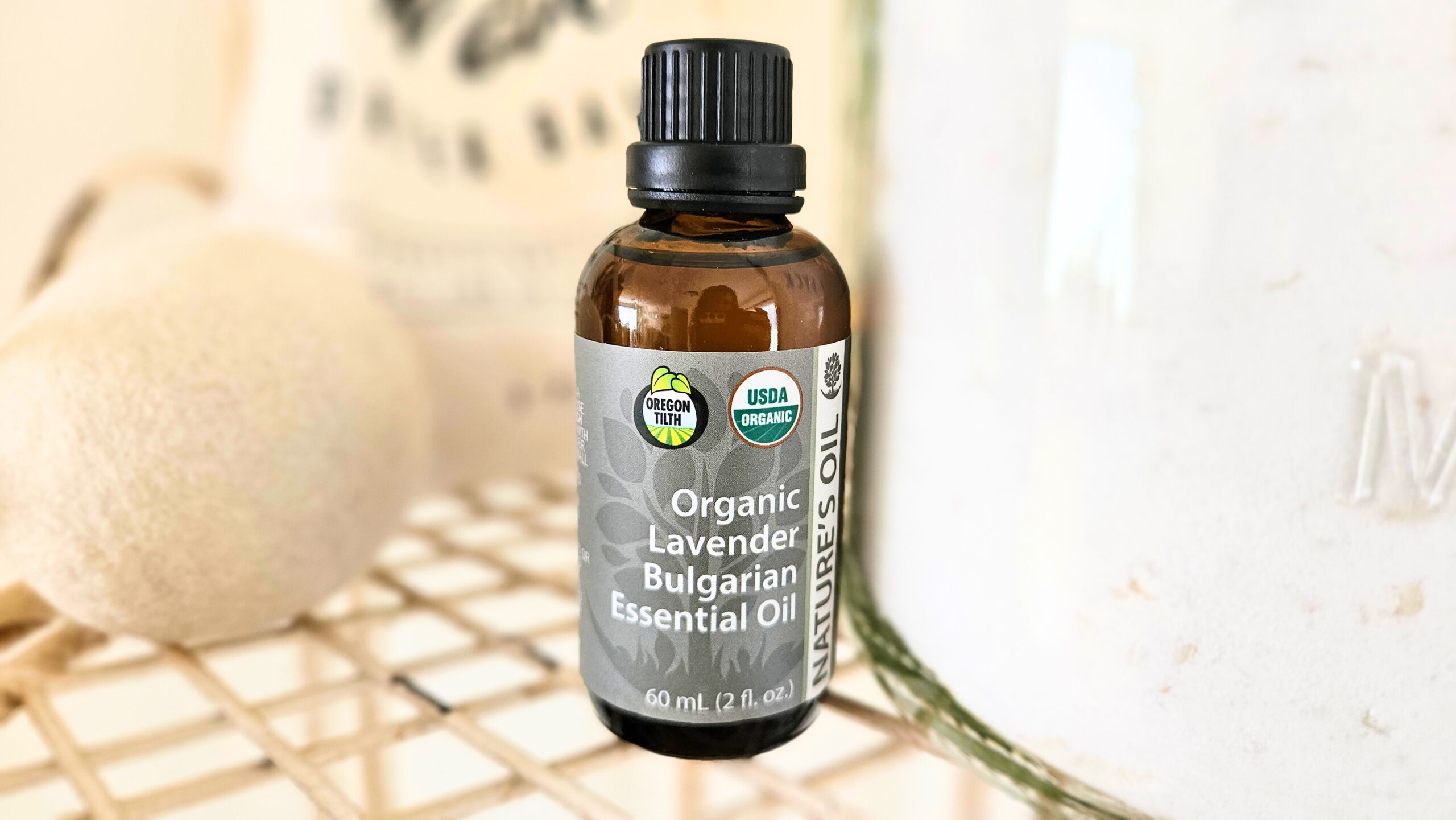
- 30-60 drops of essential oil (optional)
Borax
Borax is a powdery white substance made of boron, sodium, and oxygen. It is commonly found in dry lake beds, where the water has evaporated and mineral deposits are left behind.
It is commonly used for laundry, household cleaning, deodorizing, mildew removal, rust removal, stain removal, insect repellent, and more.
Washing Soda
Washing soda is sodium carbonate. It is similar to baking soda, but chemically different. It is commonly referred to a “soda ash” and has a pH of 11. It comes in a powdery white form, and it is both odorless and water-soluble.
It is commonly used for laundry, household cleaning, softening hard water, and breaking down grease and stains.
Baking Soda
Baking soda is sodium bicarbonate. It is a fine white alkaline powder found in natural deposits in the United States, Botswana, Kenya, Uganda, Turkey, and Mexico. One of the most versatile ingredients, it has a wide range of uses.
Some common uses for baking soda are laundry, household cleaning, teeth whitening, leavening agent, odor neutralizer, deodorant, stain remover, pesticide remover (produce wash), and more!
Castile Soap Bars
Castile soap is made from plant-based oils, making it a vegan and biodegradable soap. Since castile soap is plant-based, it is not corrosive and can effectively be used on your body, your home, and your pets.
Some common uses for castile soap include laundry, dishes, mopping, all-purpose cleaning, produce cleaning, hair washing, body washing, hand washing, shaving, and more!
Essential Oils
I always buy scented castile soap bars for this powder laundry detergent, so it has the smell of whichever soap I purchase.
However, if you prefer to purchase unscented soap bars so that you can make your own scent combination with essential oils, that would be a fun way to customize this recipe.
A few great essential oils for powder laundry detergent are:
favorite scent combo
I actually skip the essential oils most of the time! I use lavender castile soap bars and call it a day 😊.
Equipment
- Grater
- Large bowl
- Large storage container
- Measuring spoon
Instructions
Tap/click the images for a description of each step ⬇️
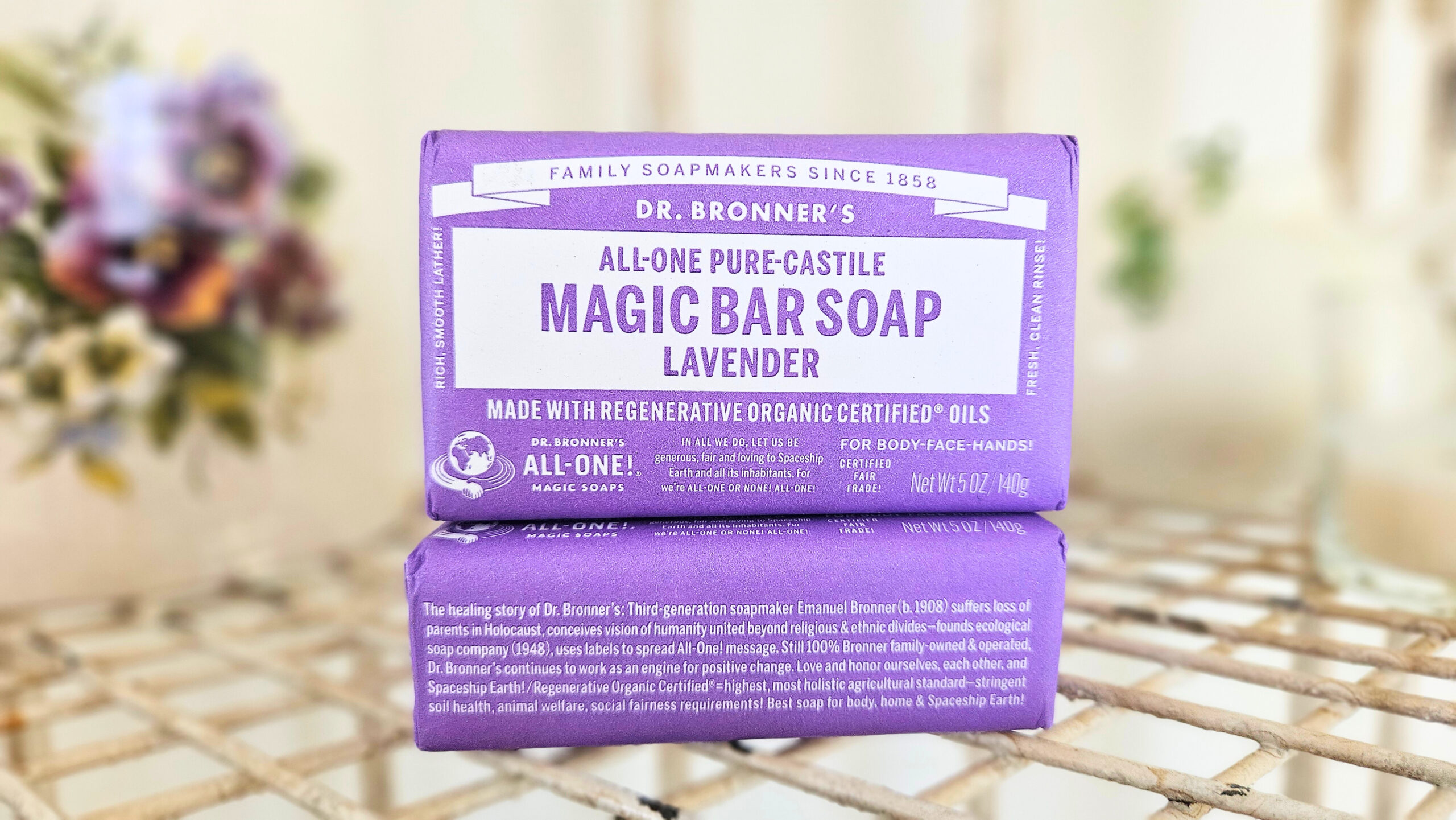

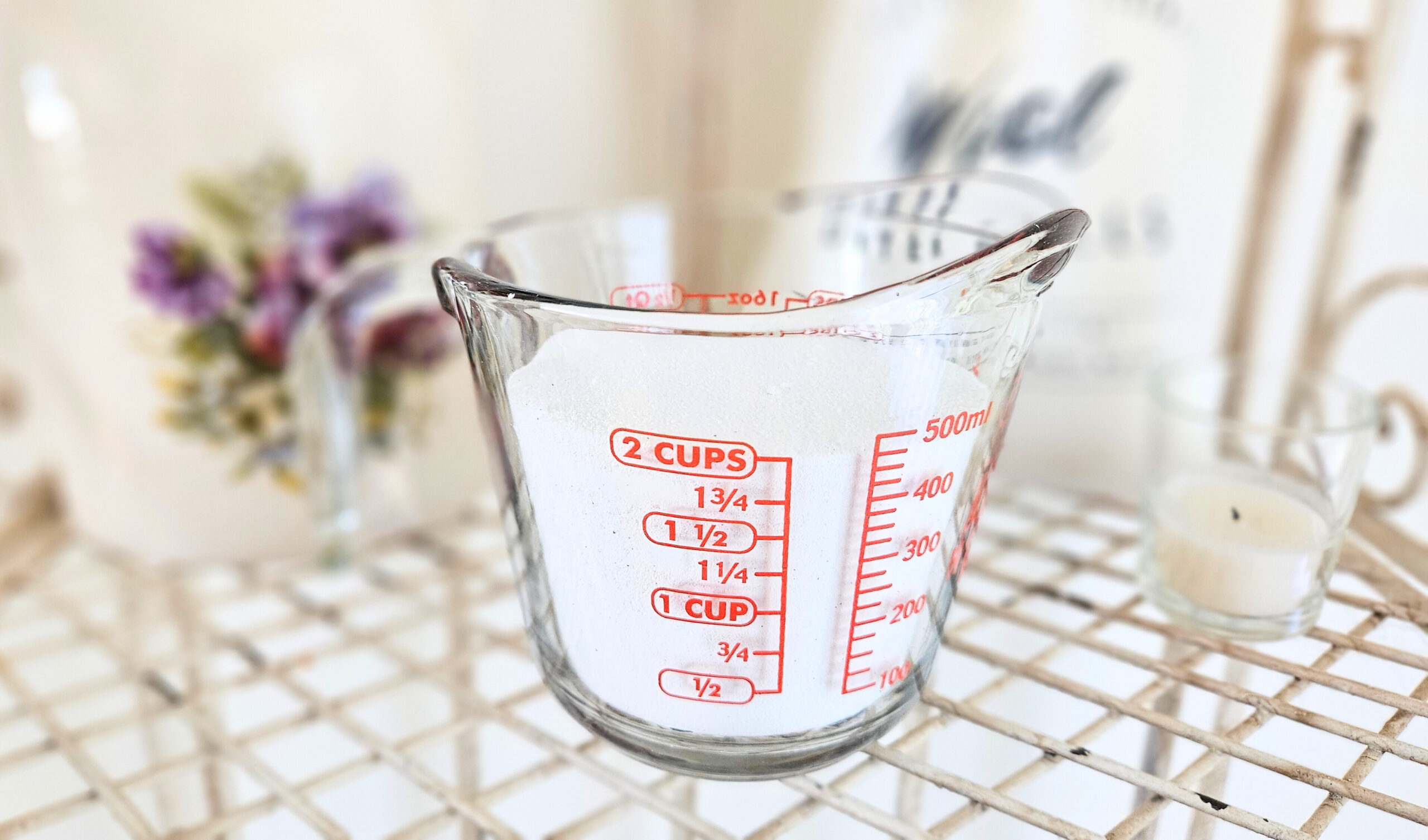
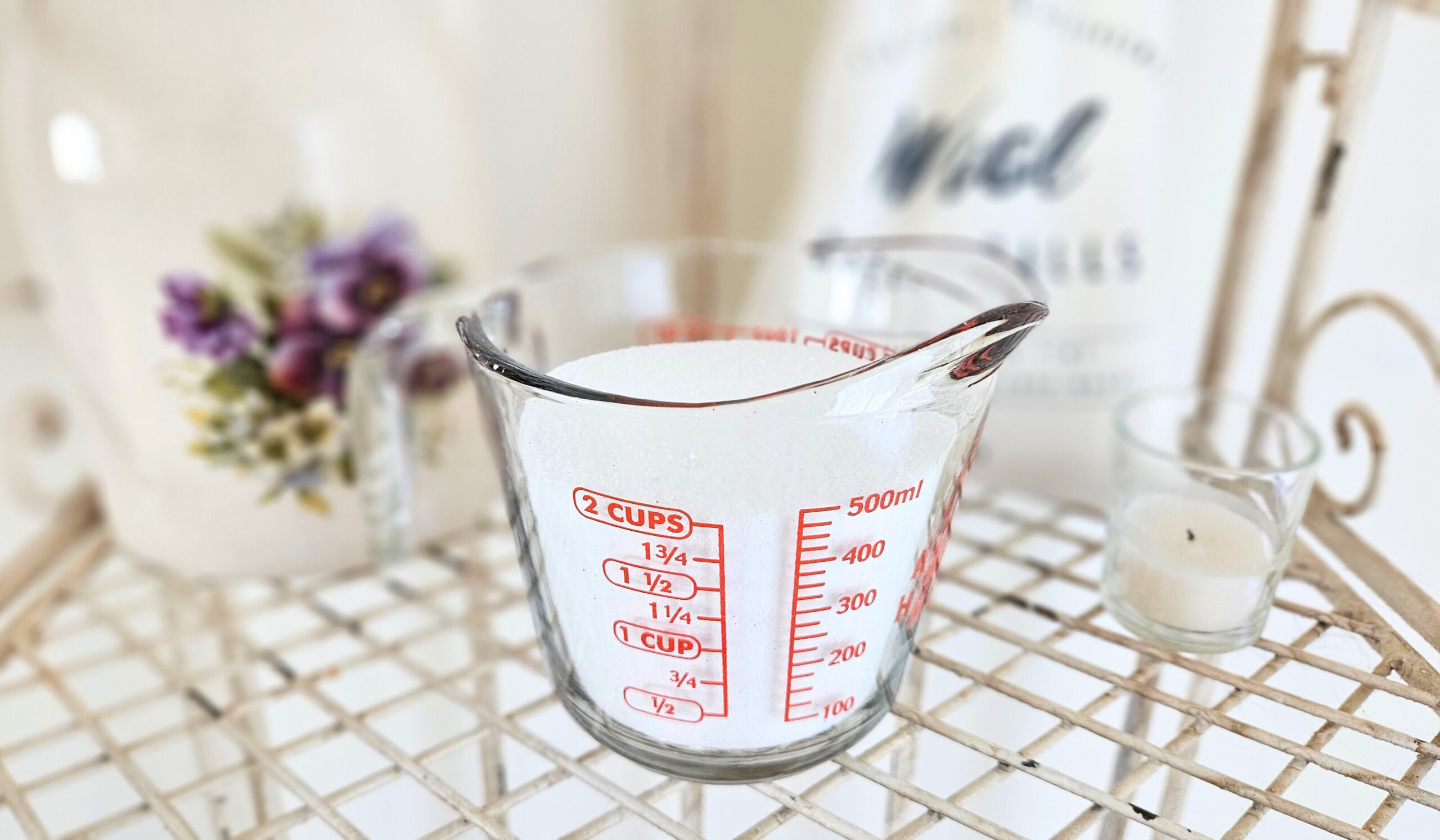
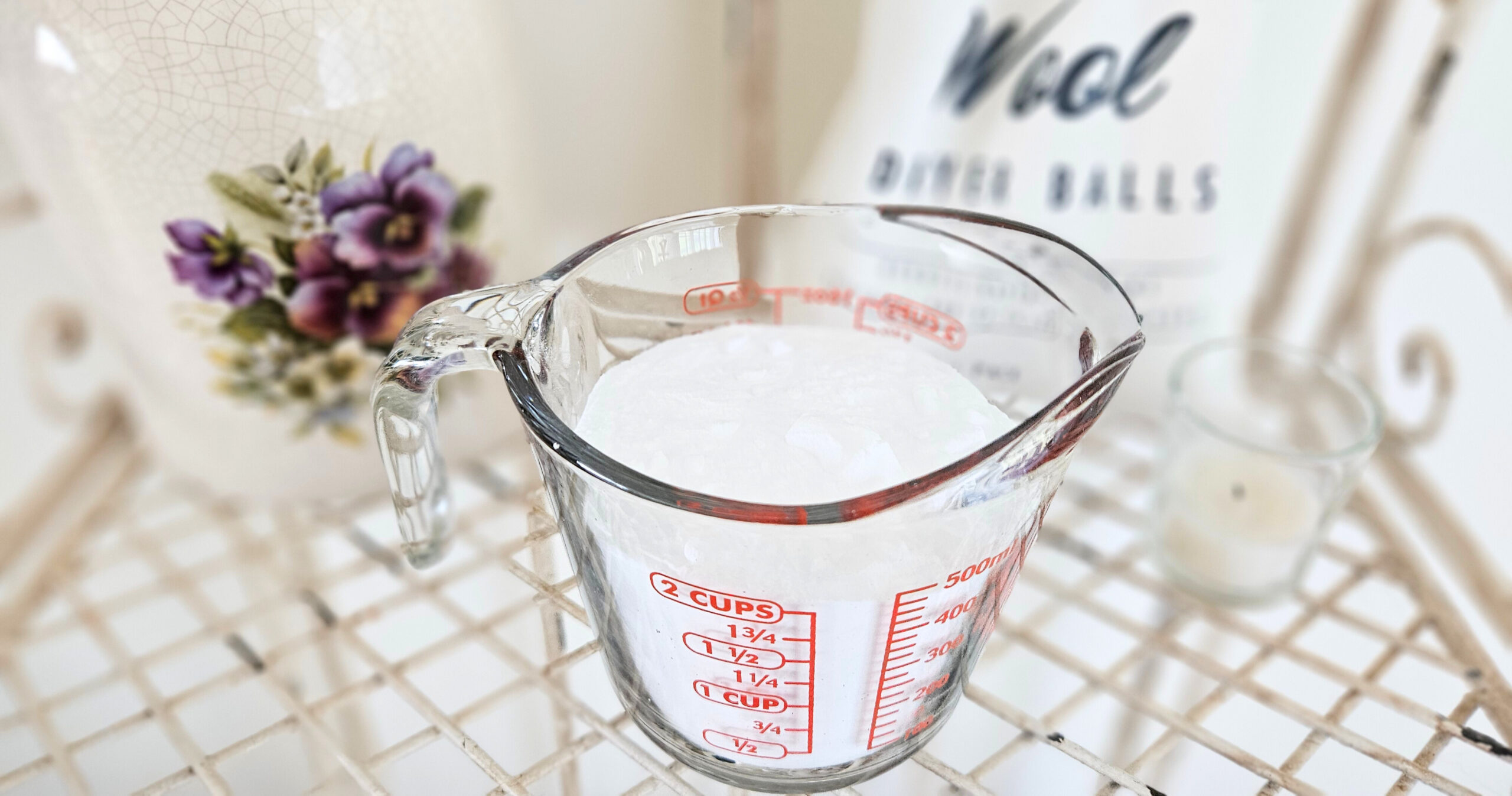
- You’ll want to start by grating both bars of soap finely. The smaller the grated pieces, the easier they will dissolve in the washing machine.
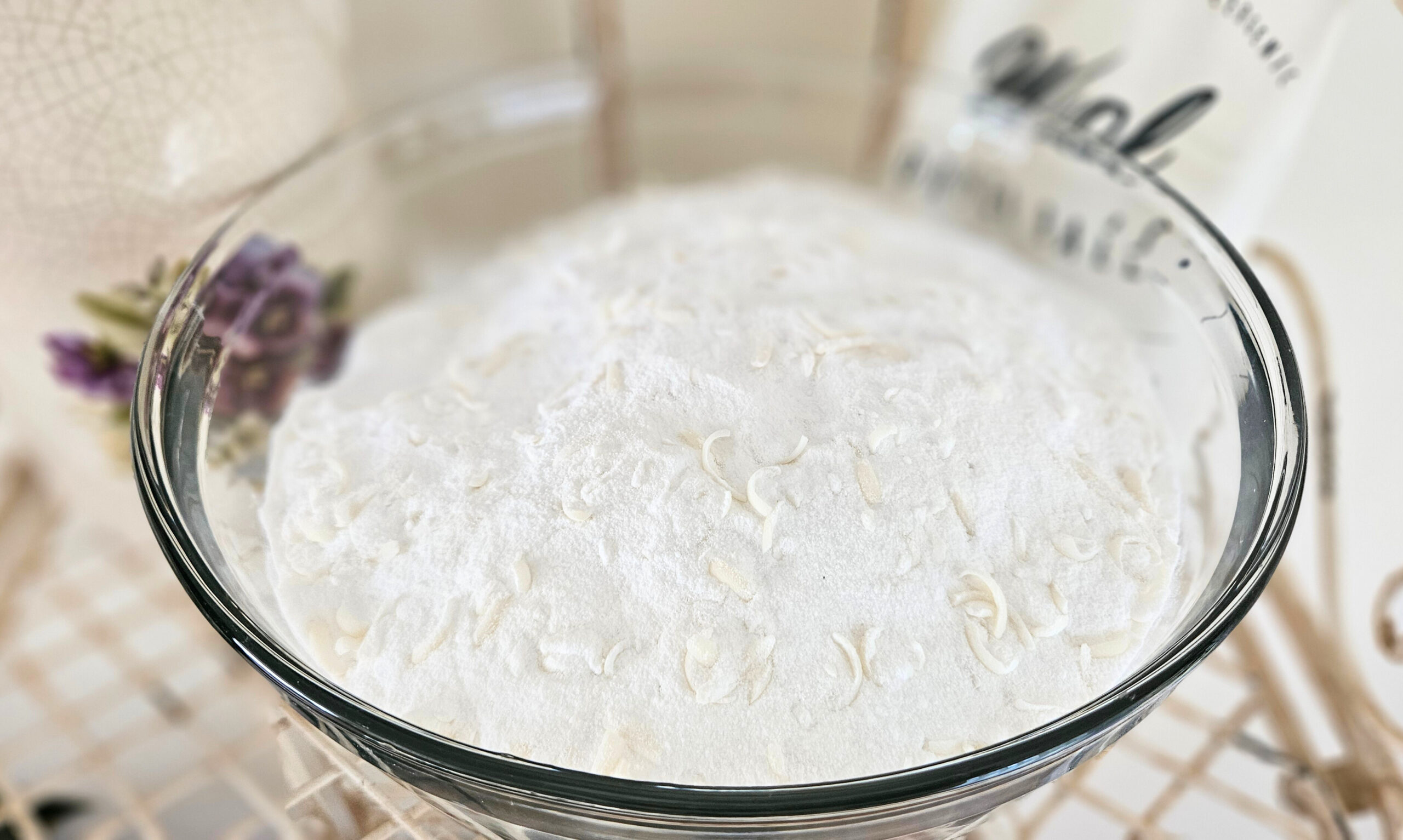
- Next, you want to combine your grated soap with the borax, washing soda, and baking soda in a large bowl. Mix everything together thoroughly, so that the ingredients will be well distributed with each scoop.
- If you’d like to add essential oils, now would be the time to drop in your essential oil directly onto the soap and powder mixture. Mix thoroughly again.
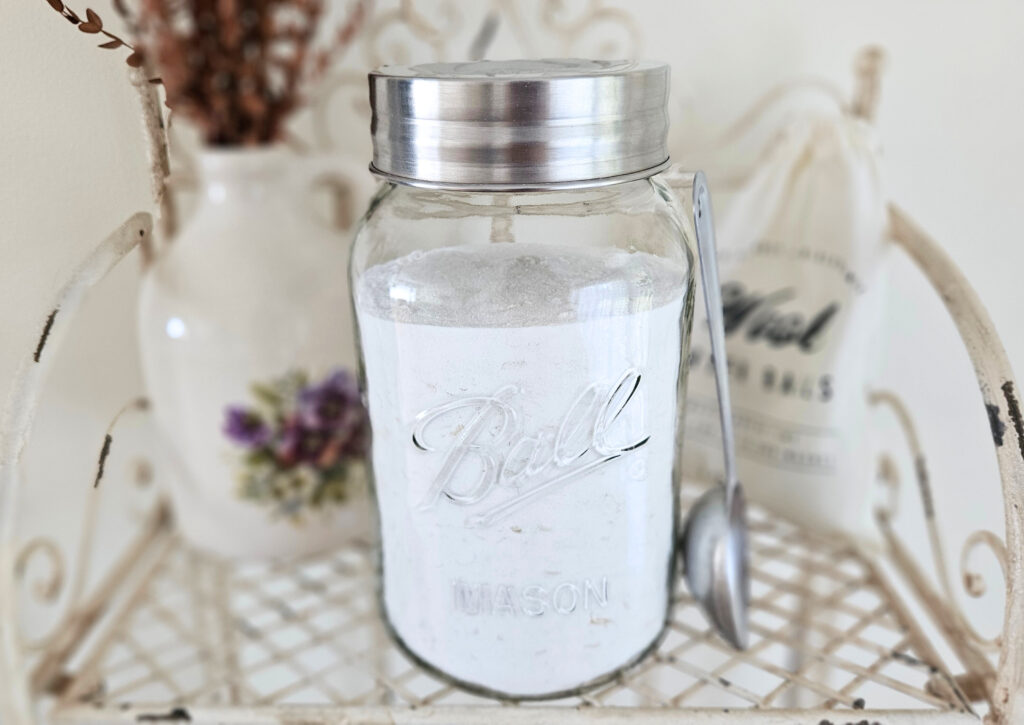
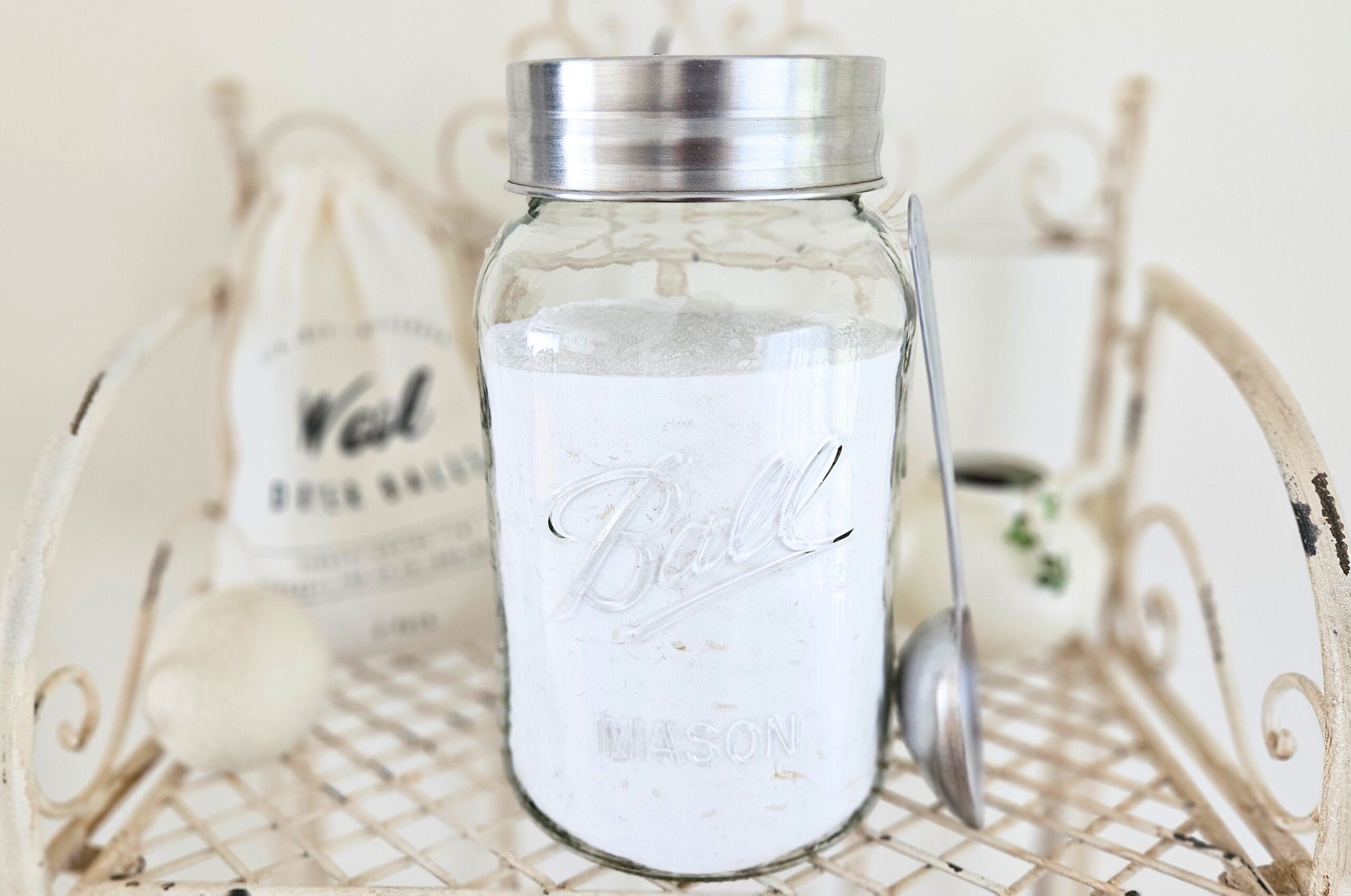
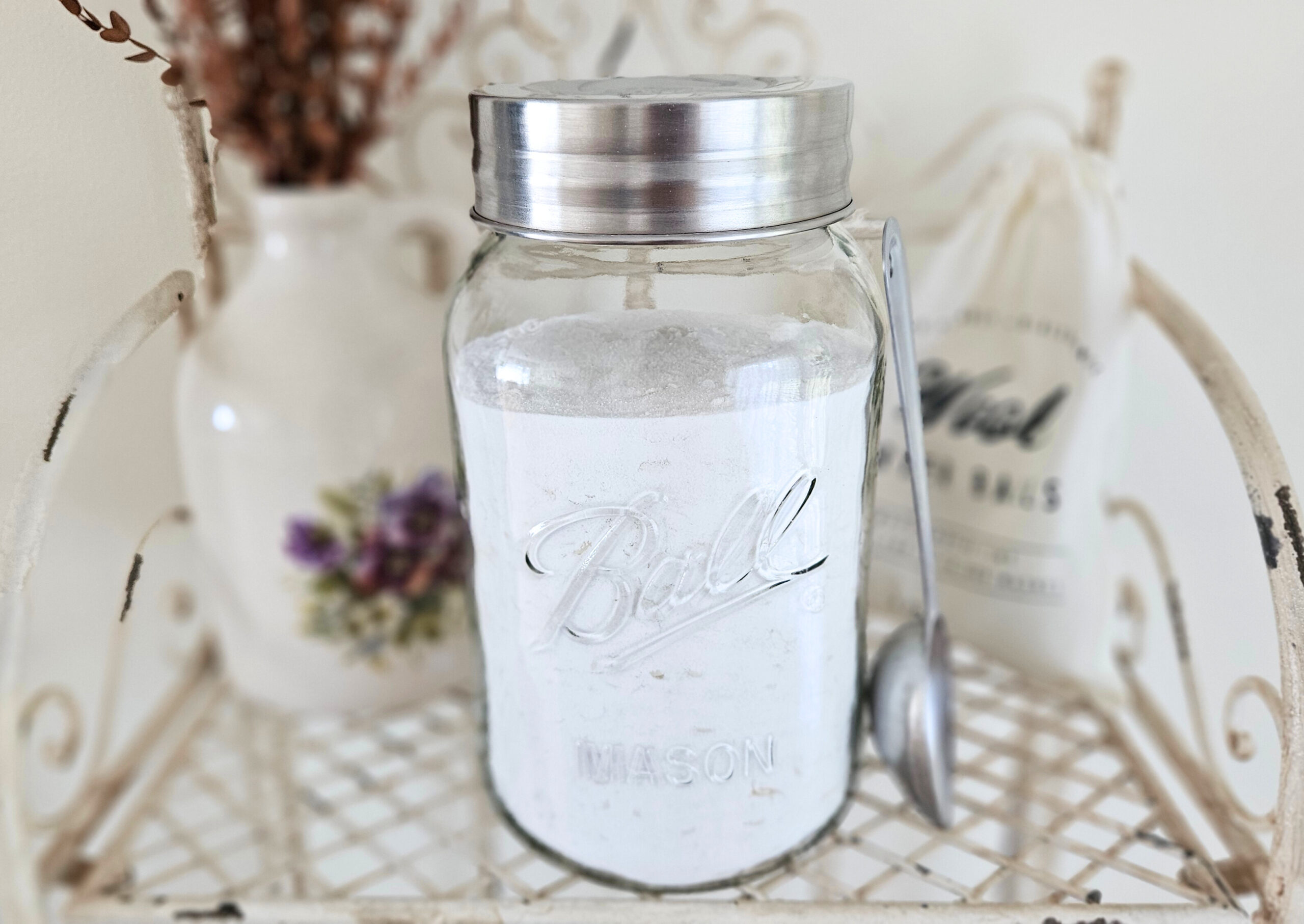
- Transfer the finished mixture to an enclosed container to store.
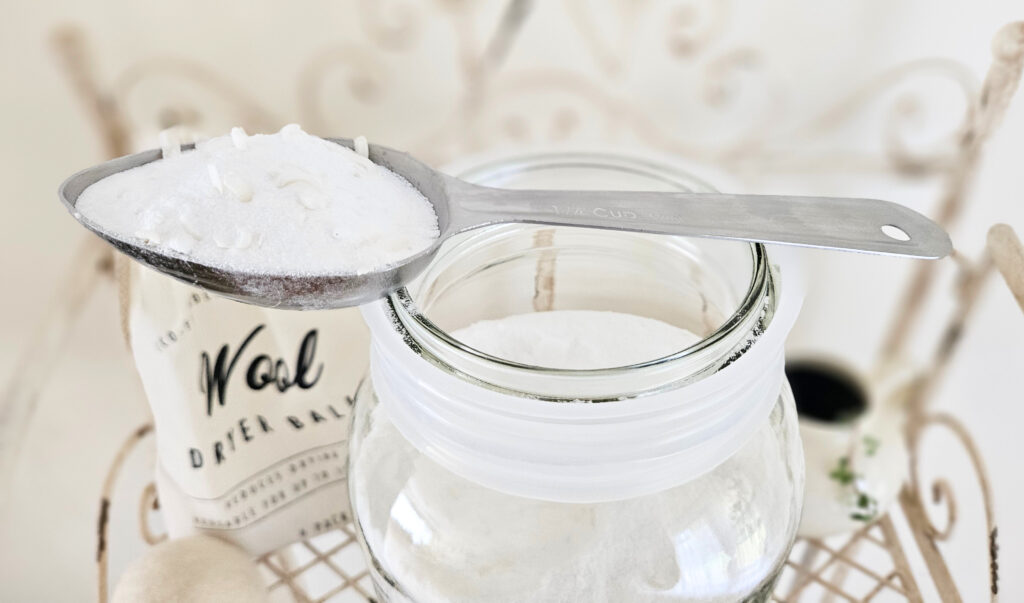
- Most recipes recommend using 2 tablespoons per load for homemade powder laundry detergent. However, I like to use closer to ¼ C (4 tbsp) of powder laundry detergent for every medium-to-large load of laundry.
Tips
- A gallon size container works well to store this powder laundry detergent.
- Mix all the ingredients together very thoroughly before transferring to your storage container so that each load of laundry gets a little of each ingredient.
- This recipe makes approximately 16 cups of powder laundry detergent. If you use ¼ C (4 tbsp) per load of laundry, this should last you 64 loads. If you use 2 tbsp per load, this should last you 128 loads.
- You can easily half or double this recipe, depending on how much you want to make at one time and how big your storage container is.
- I recommend using at least warm water with each load so that the grated castile soap can easily melt and wash away.
- Most instructions for powder laundry detergent recommend either 1 or 2 tablespoons per load, depending on the product or recipe.. Even though my DIY recipe works really well, I usually use 3-4 tablespoons per load. Even though it’s not always correct, I tend to think more is better!
What to Use Along with Powder Laundry Detergent

- Distilled white vinegar
- DIY laundry scent boosters
- Natural fabric softener
- DIY dryer sheets
- Wool dryer balls
Cost-Benefit Analysis

Even though cost isn’t the only factor that I consider when shopping or making a DIY version of something, it is an important piece of information to consider.
For this cost-benefit analysis, I will be comparing my DIY powder laundry detergent to Meliora Laundry Powder Detergent. Meliora seemed to be the closest to mine ingredient-wise, so I think it is a very fair comparison.

Meliora Laundry Powder Detergent
Although I have a vast array of DIY recipes that I make and use around my house, I do still like to try out and purchase various natural cleaning products. This Meliora Laundry Powder Detergent is very similar to my homemade powder laundry detergent. Made from just a few simple ingredients, it is fragrance-free, plastic-free, and dye-free.
As of October 2025 in Tennessee:
DIY Powder Laundry Detergent
4 C borax
- $5.97 for 65oz
- 65oz = 8.125 C
- $0.73 per cup
- 4 cups = $2.92
4 C washing soda
- $4.98 for 55oz
- 55oz = 6.875 C
- $0.72 per cup
- 4 cups = $2.88
4 C baking soda
- $3.34 for 4lb
- 4lb = 64oz
- 64oz = 8 cups
- $0.42 per cup
- 4 cups = $1.68
2 bars castile soap grated
- $9.99
Total: $17.47
- Loads: 64-128 (see FAQs for explanation)
- $0.27-$0.14 per load
Meliora Laundry Powder Detergent* (find here)
Price: $20.99
- Loads: 64-128 (Per manufacturer, you can get either 64 standard loads or 128 high efficiency loads according to their recommended usage.)
- $0.33-$0.16 per load
*Unscented Ingredients: sodium bicarbonate (baking soda), sodium carbonate (washing soda), vegetable soap [sodium cocoate, glycerin, organic cocos nucifera (coconut) oil, water]
*Lavender Ingredients: sodium bicarbonate (baking soda), sodium carbonate (washing soda), vegetable soap [sodium cocoate, glycerin, organic cocos nucifera (coconut) oil, water], organic lavandula hybrid (lavender) oil
There are other scents besides lavender, but I included unscented and lavender because these two variations most resemble the DIY laundry powder detergent recipe.
So, with very similar ingredients, there is a small difference of $3.52 for the price comparison. It’s not much, but as with most homemade versions, you do save money making products at home instead of buying them from a manufacturer.
For an even more economical DIY laundry detergent, please see this post:
FAQs
Related Posts
Making your own powder laundry detergent is so simple and so rewarding. Let me know if you’ve come up with any essential oil combinations that you love! 💛
DIY Powder Laundry Detergent
Ingredients
Equipment
Method
- Grate both bars of soap finely.
- Combine your grated soap with the borax, washing soda, and baking soda in a large bowl. Mix everything together thoroughly.
- Add essential oils if desired. Mix thoroughly again.
- Transfer the finished mixture to an enclosed container to store.
- Use 2-4 tbsp per load.
Notes
- A gallon size container works well to store this powder laundry detergent.
- Mix all the ingredients together very thoroughly before transferring to your storage container so that each load of laundry gets a little of each ingredient.
- This recipe makes approximately 16 cups of powder laundry detergent. If you use ¼ C (4 tbsp) per load of laundry, this should last you 64 loads. If you use 2 tbsp per load, this should last you 128 loads.
- You can easily half or double this recipe, depending on how much you want to make at one time and how big your storage container is.
- I recommend using at least warm water with each load so that the grated castile soap can easily melt and wash away.
- Most instructions for powder laundry detergent recommend either 1 or 2 tablespoons per load, depending on the product or recipe. Even though my DIY recipe works really well, I usually use 3-4 tablespoons per load.
This is a personal blog. All posts, recipes, recommendations, and how-tos are for informational use and personal viewing pleasure only. Blog posts are not written by AI.



Love this
Glad to hear!
What size (weight?) of Castille bars should I use?
Good question! I use 5oz bars
Is this homemade detergent safe for HE washers?
Hey, my washing machine is HE and I’ve been using this for years without any problems!