

How to Make Lavender Vinegar for Natural Cleaning
Lavender vinegar is a great herbal addition to any household focused on natural cleaning.

This post may contain affiliate links. Please see our site disclosure for more information.


Lavender is by far one of my favorite herbs. It smells wonderful, it has so many good qualities attributed to it, and there are a million and one uses for it.
One very practical way I use lavender in my home is by making my own lavender vinegar.
Follow along and I’ll show you why I use lavender for cleaning, where to buy lavender, how to make lavender vinegar, and the numerous ways to use it for cleaning your home naturally.
What is Lavender?

Lavender, also known as Lavandula, grows like an evergreen shrub and is native to countries bordering the Mediterranean. Considered an herbaceous perennial plant, it has been valued since Roman times, when people would use lavender in their baths.
Lavender grows best in full sun, and in dry, well-drained soils. It is resistant to drought, deer, and rabbits. The various types of lavender need little to no fertilizer, making it easy to grow and reducing the urge to use chemical based fertilizers.
Lavender flowers attract bees, making it a great addition to any landscape focused on preserving the vital role bees play in our ecosystem.
Several common cultivated species of lavender are English lavender, French lavender, Spanish lavender, Sweet lavender, Fernleaf lavender, and Woolly lavender.
English Lavender
- Most well-known and widely grown type of lavender in North America
- Doesn’t mind humidity and winter moisture
- Commonly used in cooking and baking
- Sweet, soft fragrance
Spanish Lavender
- Loves hot weather
- Good choice for people who garden in warm, humid climates
- Piney scent
- Flower heads look like tiny pineapples
- Not the first choice for cooking
- Likely the type ancient Greeks and Romans used for bathing
French Lavender
- Blooms from spring to frost
- Pleasant, clean smell
- Not usually used as a cooking herb
- Scalloped leaf shape
Sweet Lavender
- Fast growing and tall
- Flower stalks can reach 2 feet
- Can survive colder temperatures
- Comes from France and Italy
- Not suitable for cooking
- High menthol content
Fernleaf Lavender
- Has a delicate, lacy appearance
- Narrow spikes of fragrant, blue-purple flowers
Woolly Lavender
- Smoky, dark purple flowers
- Blooms later than most lavender plants
What are the Benefits of Lavender?

Besides the beauty and wonderful fragrance, which are benefits in and of themselves, lavender has many benefits for people.
Supports Sleep
- Lavender, in the form of aromatherapy, has a calming scent that people find relaxing
- Lavender can improve melatonin levels
Reduces Pain and Inflammation
- Flavonoids and coumarin have anti-inflammatory and antioxidant properties
- Inhaling lavender essential oil can help reduce migraine headache pain
Mood, Anxiety, and Depression
- Lavender can calm the nervous system
- Linalool can reduce anxiety and lower blood pressure
- Breathing in lavender essential oil helps improve levels of anxiety, depression, and stress
Relieves Menstrual Pain
- Women who smell lavender for 30 minutes per day during the first three days of their menstrual cycle report less pain after two months
- Applying lavender essential oil to the abdomen has been linked to reduced menstrual pain
Kills Viruses and Bacteria
- Hospitals used lavender for cleaning prior to antiseptics
- Antimicrobial and antiviral properties
- Lavender oil aids wound healing by improving the skin’s ability to produce collagen
Reduces Colic Symptoms
- Lavender oil used in aromatherapy message can reduce colic symptoms in infants
(source)
How can Lavender be Used?

There are so many great ways that lavender can be used. Uses range from personal care products, to natural cleaning, to aromatherapy, to even cooking and baking. Check out how you can start incorporating lavender into your life.
Lavender Essential Oil
Essential oils are concentrated plant extracts. Lavender is a very common essential oil due to its fragrant smell. A few ways to use lavender essential oil are:
- Rollerball
- Diffuser
- Massage oil
- Salves
- Wound healing
- Scalp massage
- DIY powder laundry detergent
- Homemade liquid laundry detergent
- DIY hand soap
- Baths
- Room spray
- Lavender vinegar
- All-purpose cleaner
- Soap making
- Insect repellent
Dried Lavender Flowers
Dried lavender flowers are easy to have on hand and can be used in multiple ways.
- Lavender vinegar (infused)
- Lavender infused oil
- Lavender hydrosol
- Sachets
- Potpourri
- Baths
- Soap making
- Tea
- Lavender honey
- Baked goods
- Jellies
- Homemade candy
- Lavender sugar
- Dressings
Where Can I Buy Lavender?

If you don’t have a green thumb, or you don’t live in a climate suitable to growing your own lavender, it can be easily purchased.
My favorite resource for purchasing herbs online is Mountain Rose Herbs. I like to buy various herbs, spices, tinctures, and essential oils from this website. I have never been disappointed in any of my purchases.
The lavender that I purchase from Mountain Rose Herbs is an English lavender that is organic, sustainable, and comes in two size options.
To purchase your own lavender flowers, please see here:
Distilled White Vinegar for Cleaning

Now that we’ve covered all the ins and outs of lavender, let’s get into why distilled white vinegar is a great natural cleaner.
What is Distilled White Vinegar?
Distilled white vinegar is usually made from the fermentation of grain alcohol, and generally contains approximately 4-7% acetic acid. The distilled white vinegar that I purchase from Walmart is diluted to a 5% acidity.
While I usually purchase most things in their highest quality and plastic-free, I am comfortable purchasing distilled white vinegar from Walmart because I use it strictly for cleaning purposes. For times when I want to use white vinegar in the kitchen, I purchase organic white vinegar in a glass container.
How does Distilled White Vinegar Clean?
The acidity of distilled white vinegar helps break down dirt, grease, mold, and mineral deposits.
At 5% acidity, it has some antimicrobial properties, but a 6% acidity cleaning vinegar will accomplish slightly more. However, I have been purchasing 5% acidity distilled white vinegar for years, and I have always been satisfied with how it cleans my home and laundry.
Here is a quick snapshot of different ways you can use distilled white vinegar around your home:
- Laundry
- All-purpose cleaner
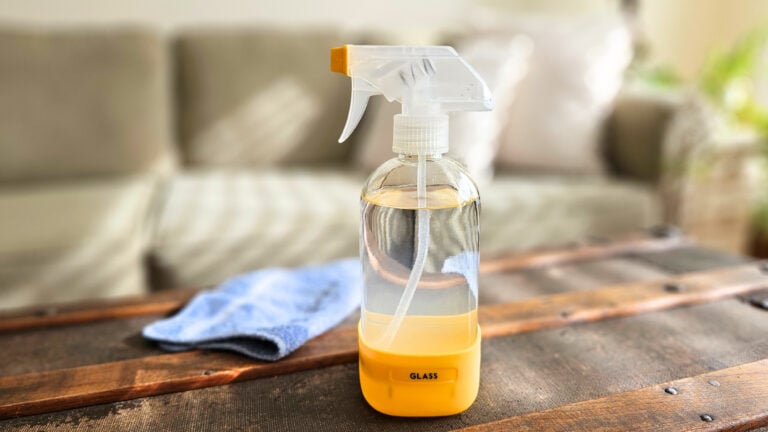
- Glass and mirror cleaner
- Floors
- Dishwasher
- Remove limescale
- Remove soap scum
- Bathtub
- Toilet bowl cleaner
- Odor neutralizer
For a plain distilled white vinegar all-purpose cleaning recipe, please see here:
For a citrus vinegar cleaning recipe, please see here:
Recommended surfaces to avoid using distilled white vinegar on:
- Stone countertops
- Stone flooring
- Hardwood floors
Even though it’s not recommended to use distilled white vinegar on these surfaces, I honestly still do. I currently don’t have stone flooring anywhere, but I do occasionally use my 1:1 distilled white vinegar and water solution on my floors and granite countertops. I don’t do this daily and I don’t let the vinegar sit for long. So far, I have not had any adverse effects.
Why Make Lavender Vinegar?

Even though you can use plain distilled white vinegar for cleaning, I love making lavender vinegar for several reasons.
- Additional antimicrobial properties
- Fresh, calming scent
- Naturally bug-repelling
Lavender vinegar can be made by infusing lavender flowers into distilled white vinegar, or by combining lavender essential oil and distilled white vinegar. Check out both methods below.
How to Make Lavender Vinegar

Ingredients
Lavender Vinegar (Infused)
- 1/2 cup dried lavender flowers
- 2 cups distilled white vinegar
Lavender Vinegar (Essential Oil)
- 30-40 drops lavender essential oil
- 2 cups distilled white vinegar
Equipment
Lavender Vinegar (Infused)
Lavender Vinegar (Essential Oil)
Instructions
Tap/click the images for a description of each step ⬇️
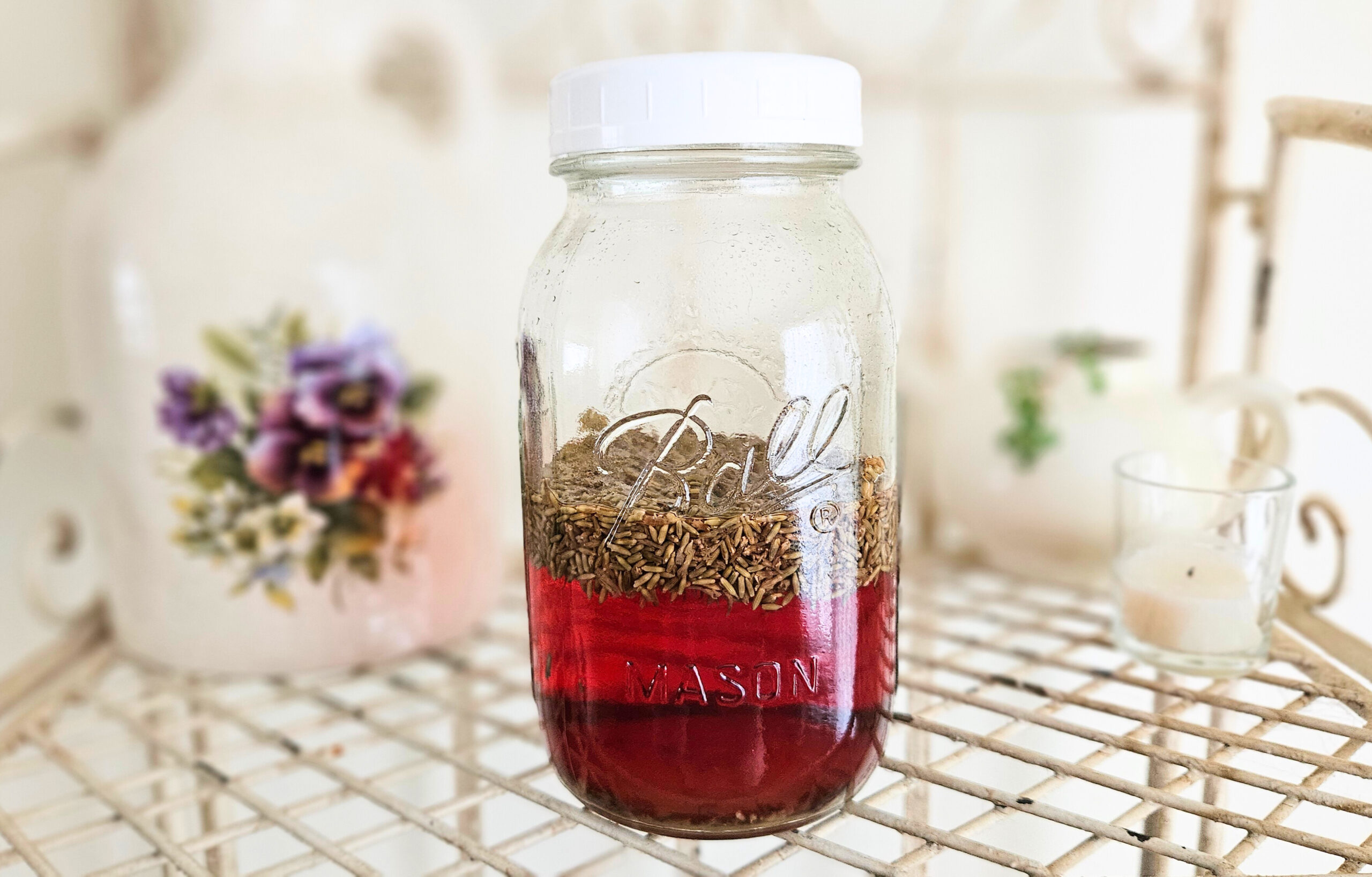
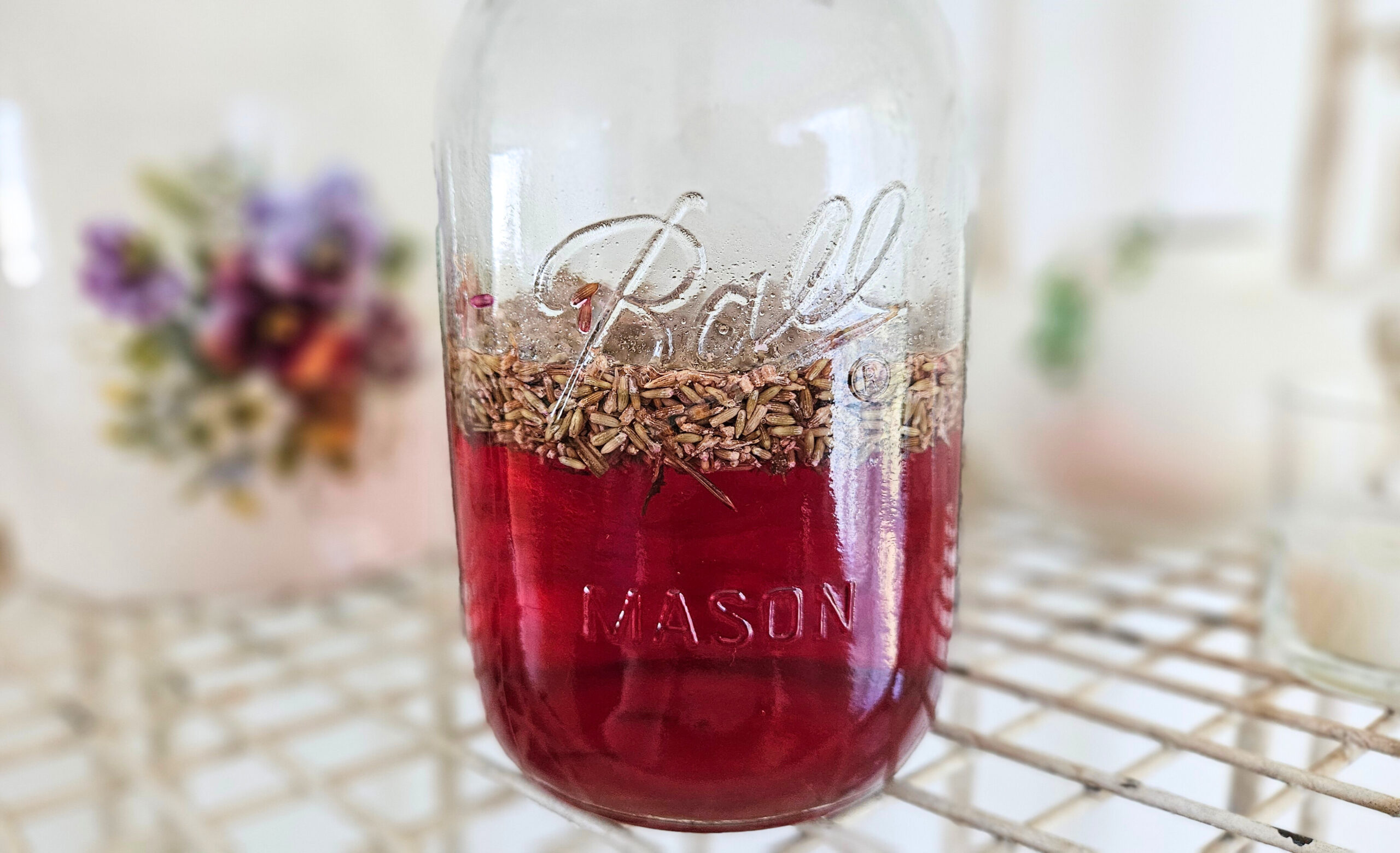
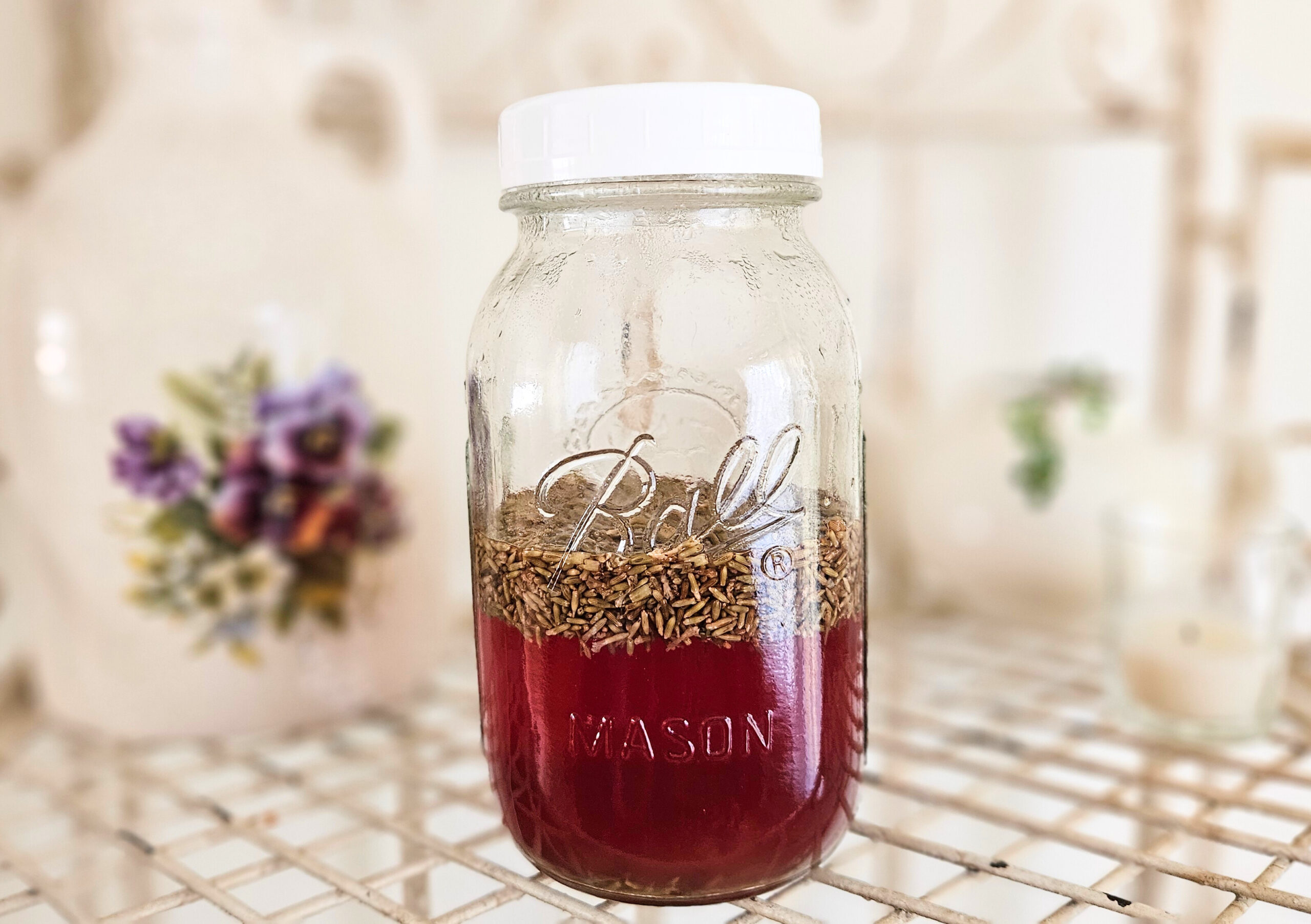
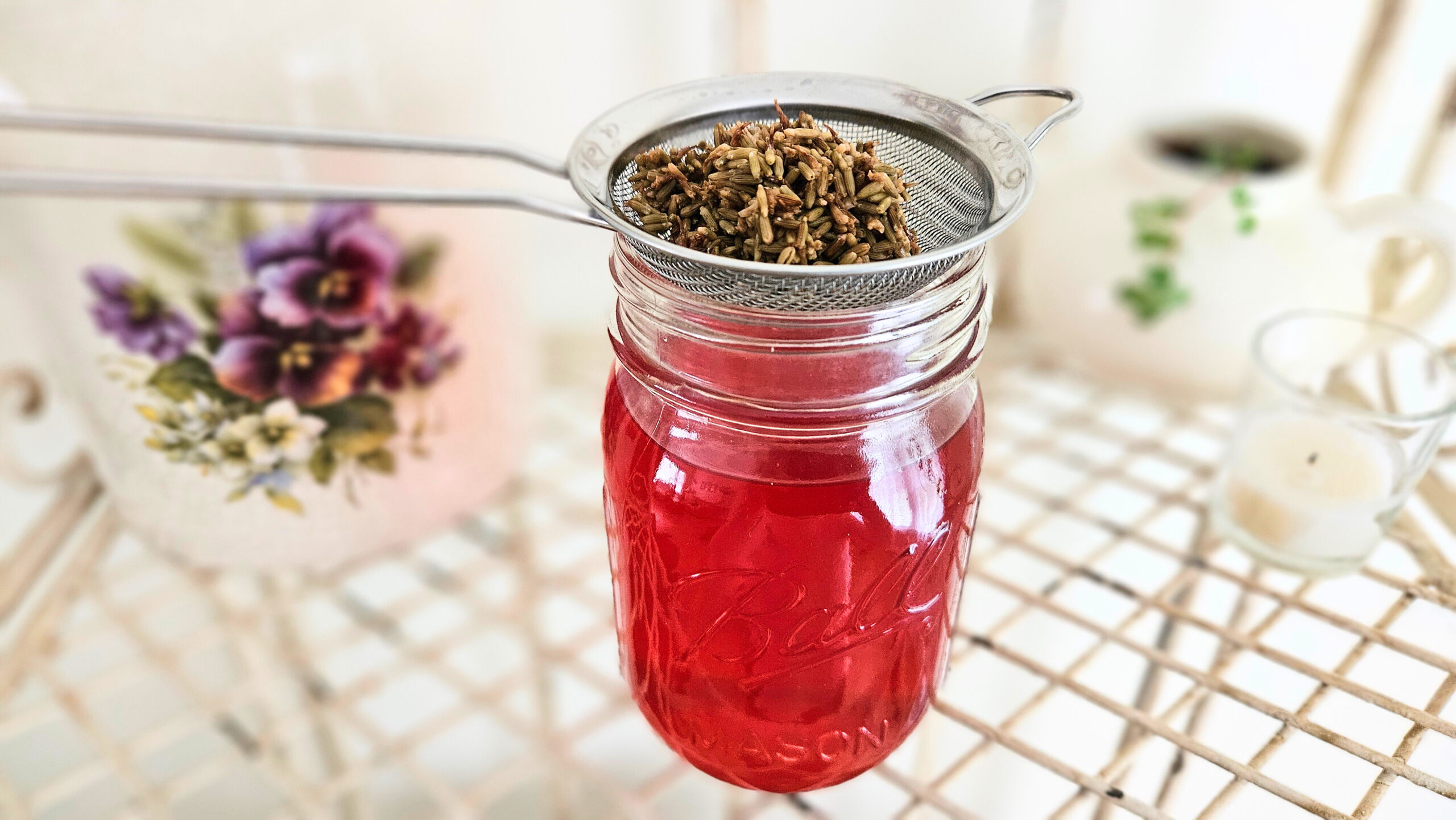

Infused Lavender Vinegar
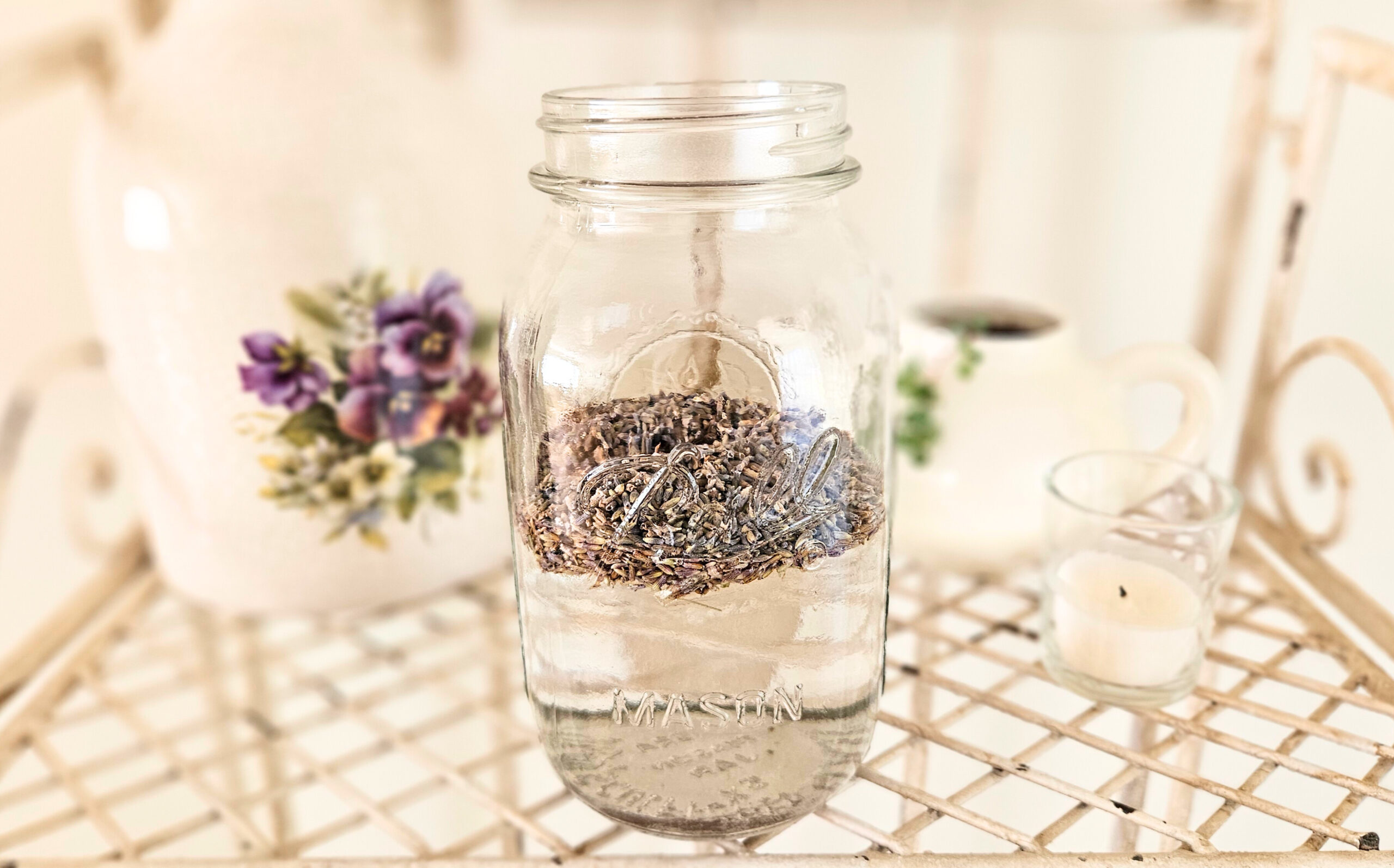
- Place ½ cup dried lavender flowers in a quart size mason jar.
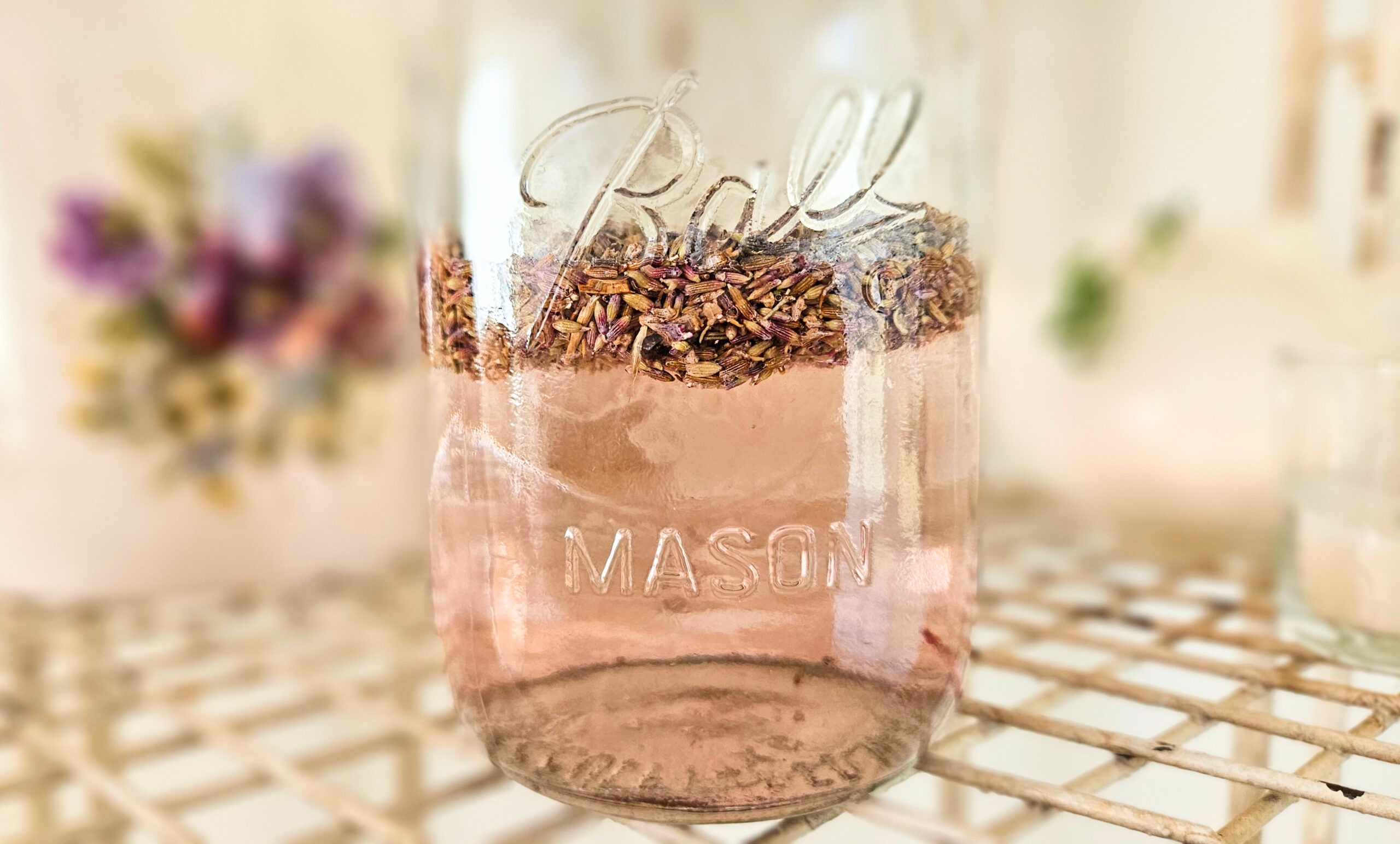
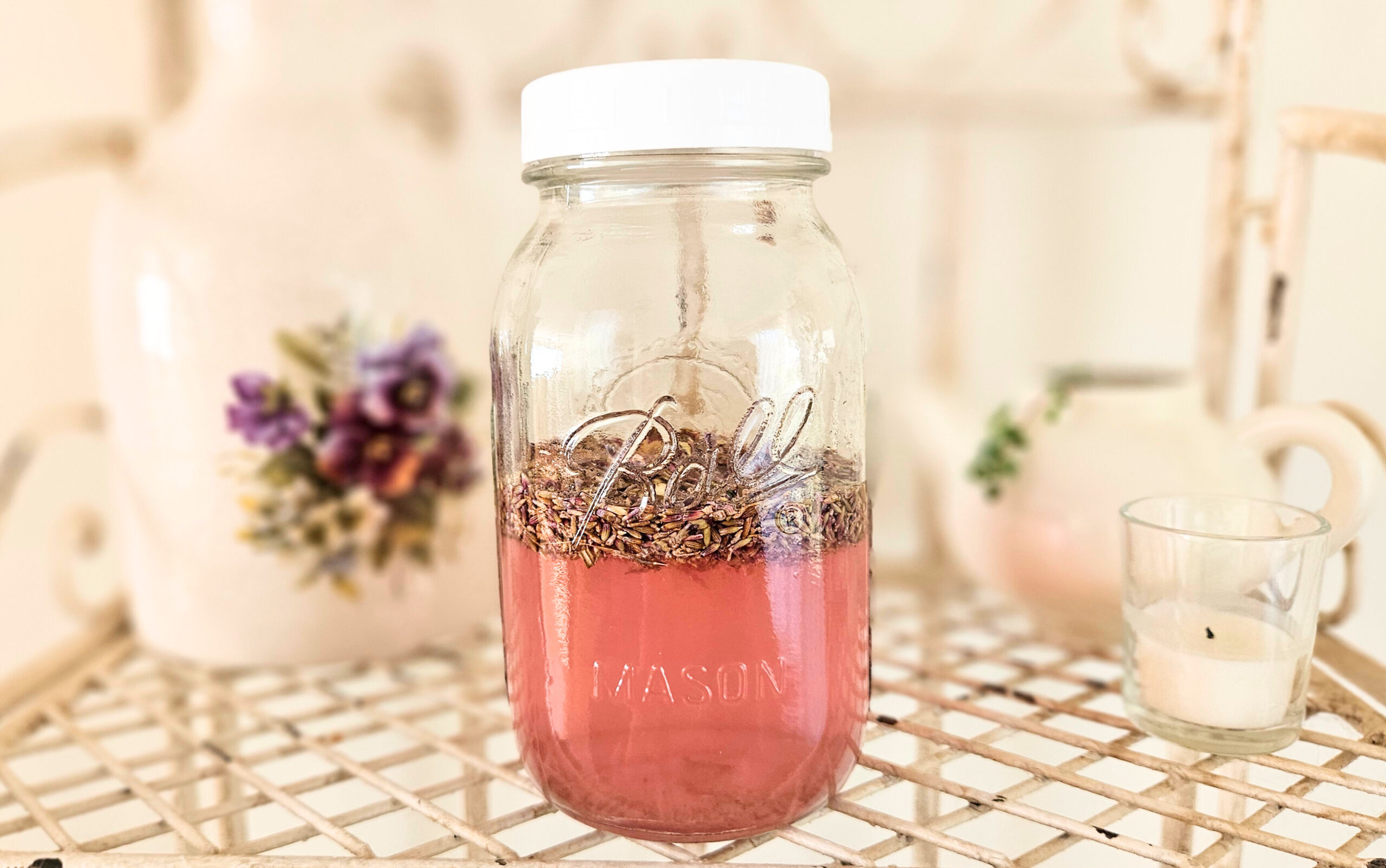
- Add 2 cups of distilled white vinegar. Close with a plastic lid. (A metal lid will corrode over time from the vinegar)
- Stir, swirl, or shake daily for 2-3 weeks.
- Strain lavender flowers from vinegar using a fine mesh strainer.
- Combine 1 part lavender vinegar with 1 part water for your cleaning solution in a glass spray bottle. I do 1 cup of each.
- Use as needed.
Essential Oil Lavender Vinegar
- Combine 2 cups distilled white vinegar and 30-40 drops of lavender essential oil. Shake well.
- Combine 1 part lavender vinegar with 1 part water for your cleaning solution in a glass spray bottle. I do 1 cup of each.
- Use as needed.
Tips
- For the infused lavender vinegar, it is basically at 1:4 ratio. This recipe calls for 1/2 C dried lavender and 2 C of distilled white vinegar, but you can reduce or increase these amounts as long as you keep the 1:4 formula.
- Amber glass bottles are recommended for essential oils to ensure they last without degrading.
- Don’t use lavender vinegar (infused version) directly on fabrics without diluting due to the deep color. After diluting with water I like to spray fabric surfaces in my home like my couch and window curtains, and I haven’t had any trouble with the color transferring.
Ways to Use
- All-purpose cleaner
- Glass and mirror cleaner
- Bathtub cleaner
- Room spray
- Fabric spray
favorite cleaning use
I like to sprinkle my bathtub with baking soda and then spray with lavender vinegar. I let sit for a few minutes and then scrub clean. The lavender smells lasts for days 💜.
The best glass spray bottles for homemade cleaning products:
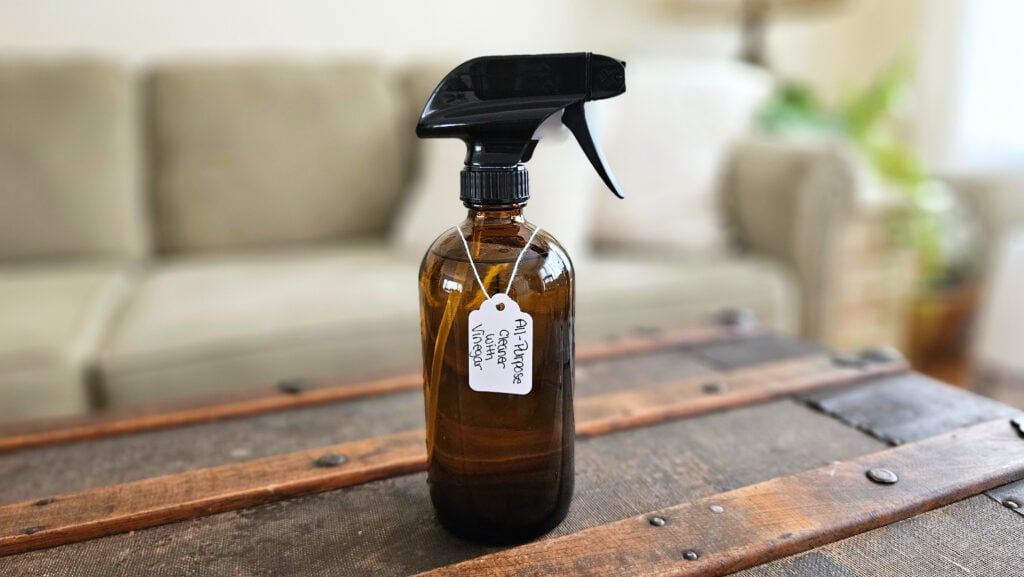
Amber Glass Spray Bottles
Glass spray bottles are a must-have for anyone who makes their own homemade cleaning products. You’ll definitely want to use glass over plastic, so that plastic doesn’t leech into your cleaning solutions over time. Also, the amber glass is great for anyone who uses essential oils as a means to protect your essentials from degradation over time. These bottles are well-made, meaning you won’t have to keep buying them!
Cost-Benefit Analysis

Being financially minded, I love seeing how taking the time to make something myself has financial benefits.
As of October 2025 in Tennessee:
Homemade Lavender Vinegar
- $50.00 for 1lb bag
- 1lb = 16oz
- $3.13 per oz
- ½ C = 0.65oz
- ½ C = $2.03
30-40 drops lavender essential oil
- $19.90 for 1oz
- 1oz = 30mL
- 30mL = approx. 600 drops
- $0.03 per drop
- 30-40 drops = $0.90-$1.20
- $3.94 for 1 gallon
- 1 gallon = 16 cups
- $0.25 per cup
- 2 C = $0.50
Infused Lavender Vinegar Total: $2.53
- Yield: 2 cups
Essential Oil Lavender Vinegar: $1.40-$1.70
- Yield: 2 cups
Harris Cleaning Lavender Vinegar (find here)
- $24.99 for 1 gallon
- 1 gallon = 16 cups
- $1.56 per cup
- 2 C = $3.12
As you can see, making your own lavender vinegar, whether infused or made with essential oil, saves you money and gives you control over the strength and quality of your lavender vinegar.
FAQs
Related Posts
I hope you enjoy a simple way to have a naturally clean home 💜.

Lavender Vinegar
Ingredients
Equipment
Method
- Place ½ cup dried lavender flowers in a quart size mason jar.
- Add 2 cups of distilled white vinegar. Close with a plastic lid.
- Stir, swirl, or shake daily for 2-3 weeks.
- Strain lavender flowers from vinegar using a fine mesh strainer.
- Combine 1 cup lavender vinegar with 1 cup water for your cleaning solution in a glass spray bottle.
- Use as needed.
- Combine 2 cups distilled white vinegar and 30-40 drops of lavender essential oil. Shake well.
- Combine 1 cup lavender vinegar with 1 cup water for your cleaning solution in a glass spray bottle.
- Use as needed.
Notes
- For the infused lavender vinegar, it is basically at 1:4 ratio. This recipe calls for 1/2 C dried lavender and 2 C of distilled white vinegar, but you can reduce or increase these amounts as long as you keep the 1:4 formula.
- Amber glass bottles are recommended for essential oils to ensure they last without degrading.
- Don’t use lavender vinegar (infused version) directly on fabrics without diluting due to the deep color. After diluting with water I like to spray fabric surfaces in my home like my couch and window curtains, and I haven’t had any trouble with the color transferring.
This is a personal blog. All posts, recipes, recommendations, and how-tos are for informational use and personal viewing pleasure only. Blog posts are not written by AI.


subscribe