

Muscadine Vinegar Recipe (The Easy Way)
Muscadines are the superfood of the South. Learn a creative way to preserve your hand-picked muscadines with this muscadine vinegar recipe.

This post may contain affiliate links. Please see our site disclosure for more information.



Being a born and raised Jersey Girl, I am still new to the ways of the South. Besides being introduced to a whole new dialect 😂, I have learned of foods that I have never heard of before moving here.
One of those foods is muscadines. Sure, I have eaten table grapes my whole life, but muscadines were completely new to me.
Follow along as I share an easy muscadine vinegar recipe that is my new go-to when I have an abundance of muscadines.
What are Muscadines?

Muscadines, aka the “grape of the South”, are native to the Southeast region of the United States. They are round, shiny, and range in color from green, to golden, to purplish-red, to deep purple, and even black. They have a thick skin, a sweet pulp, and small seeds in the center.
Muscadines thrive in hot temperatures with plenty of rain. They ripen between late summer and early fall. You know muscadines are ripe when the skin develops a deep, rich color, they are slightly soft to the touch, and they easily detach from the vine.
How to Grow Muscadines

Driving through Tennessee, it is very common to see muscadine vines. Below are the conditions muscadines like to grow in.
Temperature and Humidity
Muscadines love full sun and hot temperatures. They thrive in a humid environment with good air circulation.
Light
Muscadines need to be planted in a location that gets at least six hours of full sun each day. You will know if they aren’t getting enough sun because they will start to move in the direction of the sun.
Soil
Even though muscadines need plenty of rainfall, they do not like the ground to be constantly soggy. They do best in well-draining soil.
Water
Muscadines need most of their water when getting their roots established. Once the plant matures, about one inch of water every week will do. After about two years, the vines are generally drought-tolerant and only need to be watered during dry spells.
Vertical Support
Muscadines grow best on a trellis or fence, which gives them stability and good air circulation. It is best to establish your vertical support prior to planting your muscadines.
Where Can I Purchase Muscadines?

If you live in the Southeastern region of the United States, it is likely that you may know someone who grows muscadines. If you do not know anyone personally, local farmers markets are probably your best bet for purchasing muscadine grapes.
A few online directories that may help point you in the right direction are:
If you are unable to purchase muscadines in person, check out these websites to order muscadines directly when they are in season:
How to Use Muscadines

Muscadines are a southern fruit with many uses. Besides muscadine vinegar, check out some other ways you can start using them today:
- Eating them fresh and raw
- You can either eat them whole with the skin and seeds, or you can squeeze out the pulp from the skin and spit out the seeds
- Muscadine jelly
- Made with muscadine juice
- Muscadine jam
- Made with crushed muscadines
- Muscadine preserves
- Made with crushed muscadines plus muscadine chunks
- Muscadine juice
- Muscadine cider
- Muscadine wine
- Muscadine syrup
- Muscadine pie
- Muscadine cobbler
Why are Muscadines a Superfood?

Muscadines are a nutritional powerhouse, which is why I have dubbed them the superfood of the South. Even without turning them into muscadine vinegar, raw muscadines offer a wealth of health benefits.
Muscadines are fat free, cholesterol free, sodium free, and an excellent source of manganese and fiber.
Muscadines are also a great source for polyphenols, especially in their skins and seeds. The two polyphenolic compounds present in muscadines that offer the most benefits are resveratrol and ellagic acid. They contain much higher concentrations of polyphenols in comparison to other grape varieties.
Polyphenols are highly complex chemicals that support the functions of the brain, heart, liver, joints, muscle recovery, and other organs. As antioxidants, they support the body’s cellular function and recovery, and they reduce oxidative stress and inflammation.
Resveratrol is an antioxidant shown to extend the lifespan of animals and improve the metabolic function of mitochondria. Ellagic acid is a potent antioxidant that has metabolic, anti-inflammatory, and anti-cancer activities.
Muscadines also contain anthocyanins and quercetin, which are flavonoids. They possess anti-oxidative and anti-microbial properties, they improve visual and neurological health, and they protect against various non-communicable diseases.
(source)
What are the Health Benefits of Muscadines?

By regularly consuming muscadines, you have the ability to improve your health in several key areas.
Brain Health
Polyphenols present in muscadines are linked with positive effects on cognition and memory. These polyphenols are also associated with reducing the risk of neurodegenerative diseases such as Alzheimer’s and Parkinson’s.
Heart Health
Anthocyanins and resveratrol help improve cardiovascular health by reducing inflammation and oxidative stress. Being low in sodium and high in potassium, muscadines may help lower blood pressure and reduce the risk of stroke.
Skin Health
The antioxidants present in muscadines help protect the skin from damage caused by free radicals. They help to improve the overall appearance of skin and help to reduce the signs of aging. Muscadines are also high in vitamin C, which is necessary for collagen production and skin elasticity.
Antioxidants
Antioxidants are needed for neutralizing free radicals and reducing oxidative stress. They are linked to improving overall health and may even prevent some chronic diseases. Antioxidants also support the immune system, reduce inflammation, and slow the aging process.
Potential Cancer Protection
Polyphenols present in muscadines may help prevent the growth and spread of cancer cells. Resveratrol has also been show to potentially have anti-tumor properties.
(source)
Why Make Muscadine Vinegar?

You may be wondering why you should go through the hassle of making muscadine vinegar if you can just pop them in your mouth and eat them fresh. Let me show you why!
Natural Preservation
Fermentation has been used for thousands of years as a means of food preservation. Fermentation allows you to extend the shelf life of food without modern conveniences.
Waste Reduction
Just like apple cider vinegar, muscadine vinegar is a no-waste recipe. If your muscadines are imperfect or starting to spoil, there is no need to throw them away. Everything gets utilized when you have vinegar-making as a part of your food preparation routine.
Greater Health Benefits
Homemade vinegars allow you to avoid store-bought vinegars which may contain potentially harmful chemicals, along with lower antioxidant levels.
Versatility
Having homemade muscadine vinegar in your pantry allows you to have a healthy ingredient on hand that is perfect for homemade salad dressings, sauces, marinades, and cocktails.
For another recipe similar to muscadine vinegar, please see this post:
What is a Vinegar SCOBY?


SCOBY stands for a symbiotic culture of bacteria and yeast. It is a gelatinous cellulose-based biofilm, which varies in thickness and color.
Kombucha SCOBYs are commonly purchased dehydrated and then reactivated to make your own kombucha at home.
SCOBYs can also occur naturally during the wild fermentation process when making your own vinegar, such as in the process of making homemade muscadine vinegar.
The SCOBY that forms can be saved and used to help culture your next batch of vinegar. Take your SCOBY and simply store it in a sealed glass container with vinegar until you are ready for your next batch of homemade vinegar.
How to Make Muscadine Vinegar

Making muscadine vinegar is very similar to making homemade apple cider vinegar. It is mostly hands off, which makes it a great recipe for someone with limited time in the kitchen.
Ingredients
- Muscadines
- Raw honey (or organic cane sugar)
- Filtered water
Equipment
- Half gallon mason jar
- Quart size mason jar
- Fermentation weight (optional)
- Breathable cloth
- Rubber band
- Fine mesh strainer
Instructions
Tap/click the images for a description of each step ⬇️


NOTE: Even though I enjoy being creative in the kitchen, I do like to cut down on unnecessary steps if possible. Many muscadine vinegar recipes will instruct you to either slice or crush the muscadines prior to fermenting. While that is good to do, it is also not necessary. For this recipe, I used fresh, clean muscadines fully intact.
- Start by washing your freshly picked muscadines with filtered water. You want to ensure there is no dirt or debris on them.
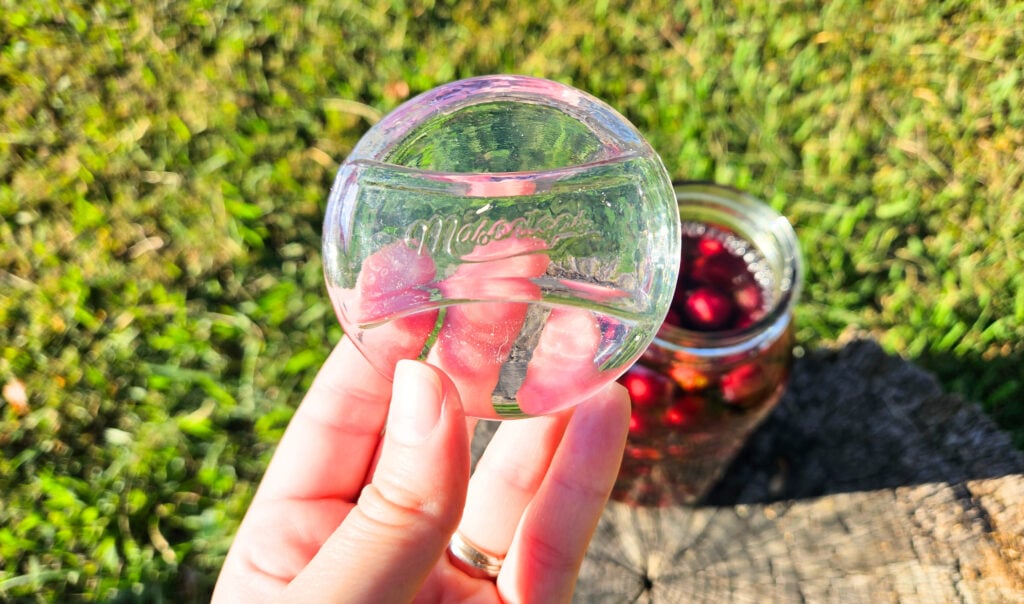
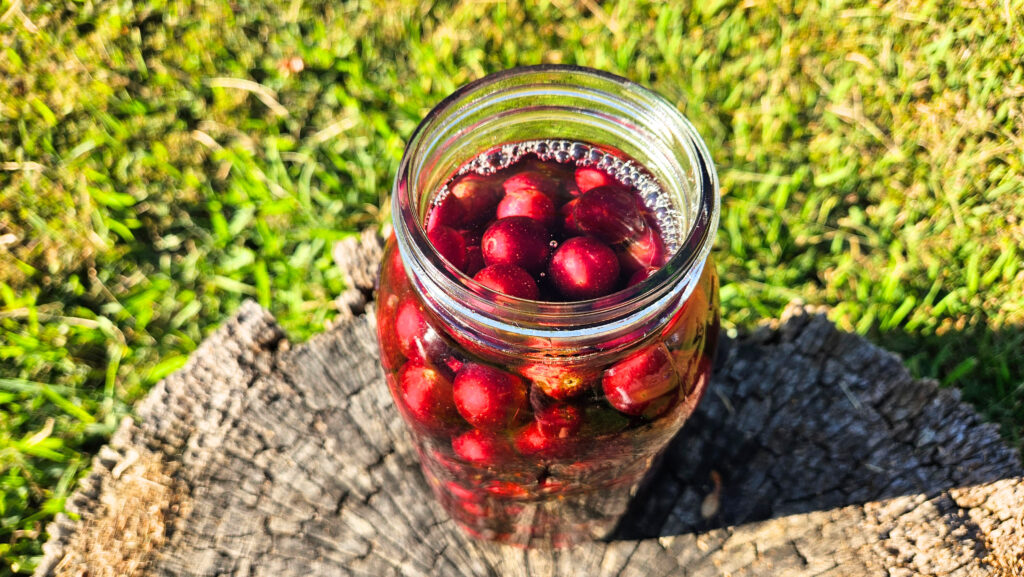
- Next, add them to your half gallon mason jar. For this batch, I used 7 cups of muscadines.
- Even though muscadines have a good sugar content, I still like to add honey to help the fermentation process. For this batch I used 2 tablespoons of raw honey.
- After you have your muscadines and honey in your jar, add enough filtered water to fill the jar, leaving about two inches of open space from the top. It is very important to use filtered water any time you are fermenting. The chlorine that is present in tap water can kill the microbes that help the fermentation process.
- Stir everything together and add a fermentation weight on top. It is important to push the fermentation weight down so that your muscadines are fully submerged under the water. If you do not have a fermentation weight, be sure to stir the jar 1-2 times per day, every single day.
- Cover your half gallon mason jar with a breathable cloth and secure with a rubber band.
- Allow the muscadines to go through the first fermentation process on your counter at room temperature for about 2-3 weeks. During this time bubbles should be forming and the smell should turn into a sweet slightly alcoholic smell. You may also have a vinegar SCOBY form. Be sure to save this for future vinegar batches!
- Once the first ferment is complete, strain the liquid from the muscadines using a fine mesh strainer and pour into a clean mason jar. Cover again with a breathable cloth secured by a rubber band.
- Keep this mason jar in a dark place and allow to go through the second fermentation process for at least another 4-6 weeks. Taste and smell along the way to see when it has reached your desired stage of vinegar. The longer is sits, the more acidic it becomes. You may also have a vinegar SCOBY form during this fermentation stage as well. Save this SCOBY as well.
- Once the second fermentation process is complete, jar with a sealed lid and begin incorporating into your culinary adventures! It will yield about 3 cups and it can be stored at room temperature.
Tips
- If you are using a fermentation weight and the muscadines stay fully submerged under the water, you do not have to stir daily. You can still stir occasionally if you’d like.
- If you do not use a fermentation weight, you MUST stir the mixture 1-2 times per day. Stirring prevents mold growth.
- You can add a splash of apple cider vinegar at the beginning to boost the fermentation process if you’d like, but it is not necessary.
- If you have frozen muscadines, simply thaw them in the refrigerator prior to starting the process of turning them into muscadine vinegar.
- When you jar the final muscadine vinegar, I’d recommend using a plastic lid. The acidity of the muscadine vinegar will likely corrode a metal lid.
Ways to Enjoy
- Homemade salad dressings
- Sauces
- Marinades
- Cocktails (ever heard of a shrub?!)
- Natural facial toner
- Natural household cleaning
Cost-Benefit Analysis

While I like to always add a cost-benefit analysis to any recipes that I make at home, there isn’t much to say about this one!
Since my husband and I know someone who grows muscadines, we were able to pick them completely for free. So, besides a little bit of time and honey, this homemade muscadine vinegar virtually costs nothing for me to make.
Sorry to disappoint with a FREE recipe! 😉
FAQs
Related Posts
If you love the taste and health benefits of muscadines, I hope you have learned a new way to prolong using them throughout the year!
Muscadine Vinegar
Ingredients
Equipment
Method
- Wash your freshly picked muscadines with filtered water.
- Add 7 cups of muscadines to a half gallon mason jar.
- Add 2 tablespoons of raw honey or organic cane sugar.
- Add enough filtered water to fill the jar, leaving about two inches of open space from the top.
- Stir everything together and add a fermentation weight on top. Push the fermentation weight down so that your muscadines are fully submerged under the water. If you do not have a fermentation weight, be sure to stir the jar 1-2 times per day, every single day.
- Cover your half gallon mason jar with a breathable cloth and secure with a rubber band.
- Allow the muscadines to go through the first fermentation process on your counter at room temperature for about 2-3 weeks. During this time bubbles should be forming and the smell should turn into a sweet slightly alcoholic smell. You may also have a vinegar SCOBY form. Be sure to save this for future vinegar batches!
- Once the first ferment is complete, strain the liquid from the muscadines using a fine mesh strainer and pour into a clean mason jar. Cover again with a breathable cloth secured by a rubber band.
- Keep this mason jar in a dark place and allow to go through the second fermentation process for at least another 4-6 weeks. Taste and smell along the way to see when it has reached your desired stage of vinegar. The longer is sits, the more acidic it becomes. You may also have a vinegar SCOBY form during this fermentation stage as well. Save this SCOBY as well.
- Once the second fermentation process is complete, jar with a sealed lid. It will yield about 3 cups and it can be stored at room temperature.
Notes
- It is very important to use filtered water any time you are fermenting. The chlorine that is present in tap water can kill the microbes that help the fermentation process.
- If you are using a fermentation weight and the muscadines stay fully submerged under the water, you do not have to stir daily. You can still stir occasionally if you’d like.
- If you do not use a fermentation weight, you MUST stir the mixture 1-2 times per day. Stirring prevents mold growth.
- You can add a splash of apple cider vinegar at the beginning to boost the fermentation process if you’d like, but it is not necessary.
- If you have frozen muscadines, simply thaw them in the refrigerator prior to starting the process of turning them into muscadine vinegar.
- When you jar the final muscadine vinegar, I’d recommend using a plastic lid. The acidity of the muscadine vinegar will likely corrode a metal lid.
This is a personal blog. All posts, recipes, recommendations, and how-tos are for informational use and personal viewing pleasure only. Blog posts are not written by AI.

subscribe