



Homemade Citrus Vinegar Cleaning Spray
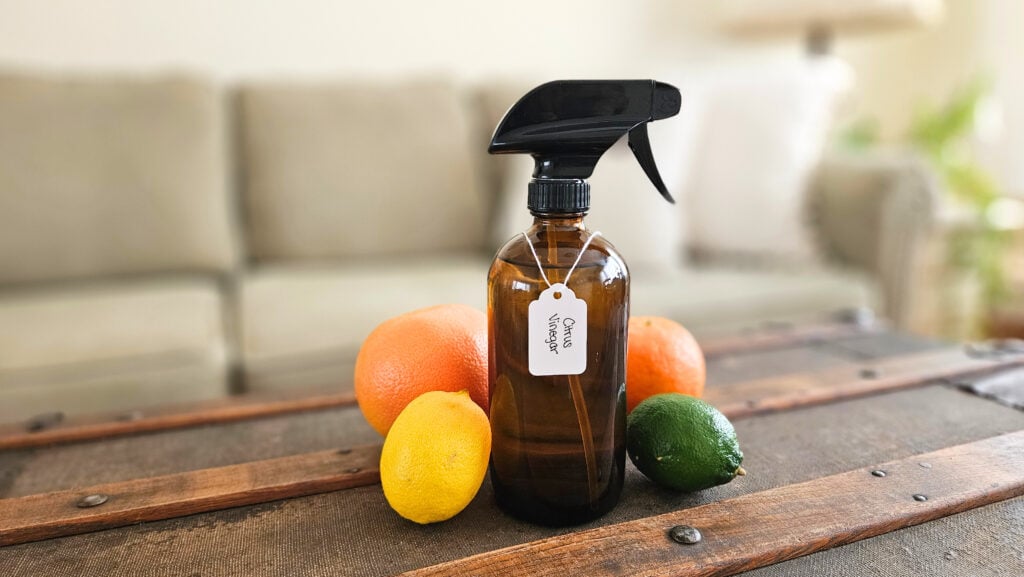
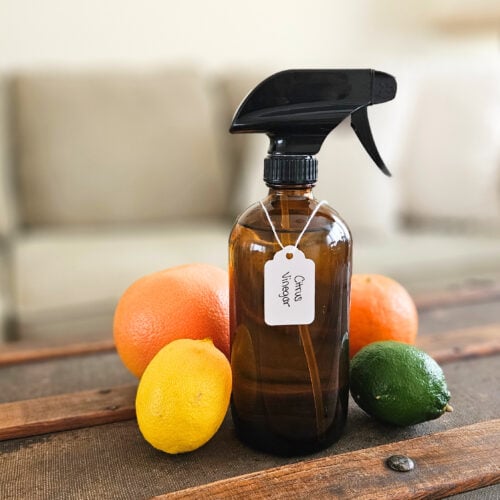
Homemade citrus vinegar cleaning spray is an easy and effective all-purpose cleaner that will put even the scraps to good use!
This post may contain affiliate links. Please see our site disclosure for more information.
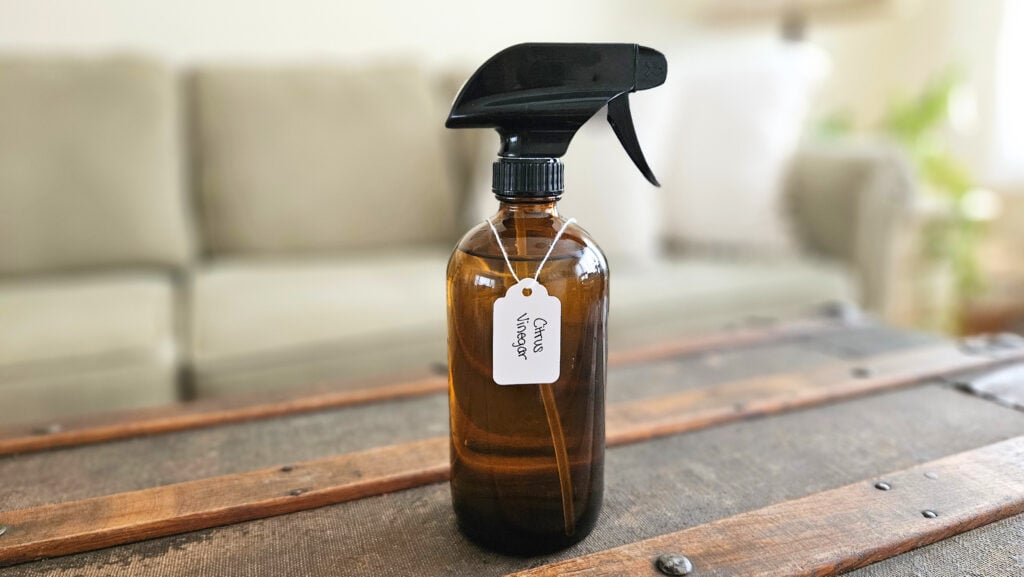

Whether you want to create a natural home through non-toxic cleaning, or you simply want to save money on your cleaning supplies, homemade cleaning products like this citrus vinegar cleaning spray will be sure to make your weekly cleaning routine that much better.
I have been making my own DIY cleaners for several years now. My very first recipe was my DIY powder laundry detergent. I had been buying laundry detergent from a local farmer’s market when I decided I could save money and reduce plastic waste by just making my own homemade laundry detergent. I first tried a powder laundry detergent recipe, and then created a liquid laundry detergent recipe as well.
Here are my two homemade laundry detergent recipes:
Once I began using natural laundry detergents, I also started using distilled white vinegar in my rinse cycle, as opposed to synthetic fabric softener. Since I always had distilled white vinegar on hand because of that, I began making various DIY cleaners with it.
My first two vinegar based household cleaners were:
Since then, I have been saving all of my citrus fruit scraps and turning them into a homemade citrus vinegar cleaning spray. This is definitely my favorite all-purpose cleaner so far.
Why Switch to Natural Cleaning?
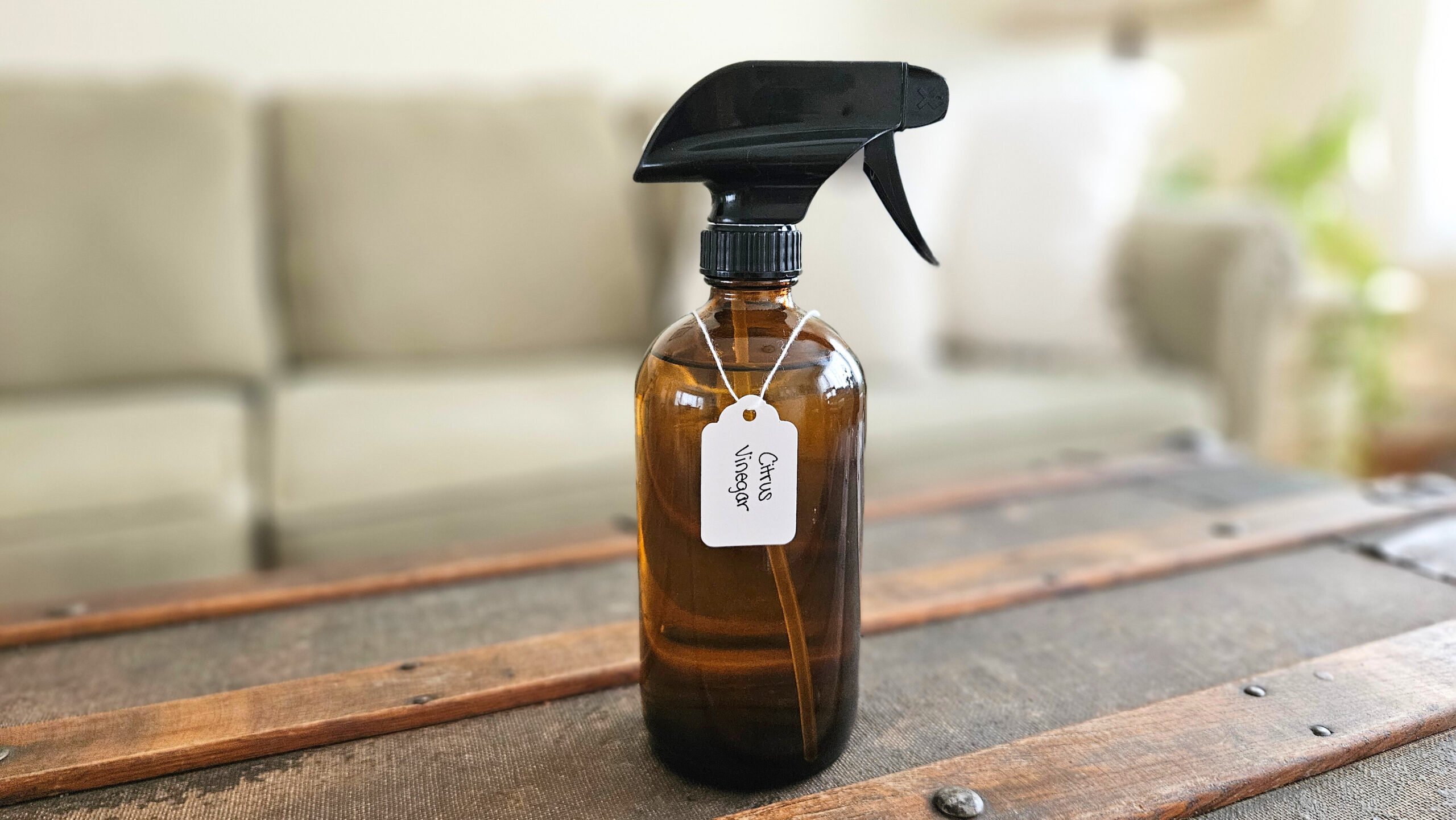
There are a lot of things in this world that many of us would like to see change. As far as health and wellness is concerned, it would be great if our crops were no longer sprayed with glyphosate or atrazine. It would be great if formaldehyde wasn’t off-gassing from manufactured products that we buy at the store. It would also be great if our drinking water was free from chemicals and impurities straight from the tap (since it definitely is not, I use ProOne filters). However, we can’t let what we can’t change at the moment, stop us from what we can change.
How we take care of our homes matters for all those who live in our home and all those who visit our home. Whether it’s the food we serve or the environment that we create, we should always strive for the best. Our homes are a reflection of our beliefs and values.
A few of the major things that I value in my home are order, beauty, and health. I am one of those people that has a place for everything. No object that I own is without a designated place to be put away. I love the order that that creates. I also love the beauty that things like plants, nice pictures, and furnishings bring to my home.
Lastly, I am always striving for health, meaning full-body holistic health covering all areas such as physical, mental, emotional, and spiritual health. As far as physical health goes, I try to eat well, spend time outside, and I try to maintain a clean home environment.
Like I said in my last post, I have since repented of using toxic cleaners in my weekly cleaning routine 😂. Through natural cleaning, I now enjoy having a clean home that isn’t just free of bacteria and viruses, but also free of harsh and unnecessary toxic chemicals.
For more information on toxic household cleaners and chemicals that should be avoided, please see this post:
Natural cleaning isn’t a matter of compromise. You don’t have to have a semi-clean home to avoid toxic cleaning products. Natural cleaning is a choice to choose what is best. It is a choice to not let toxic chemicals absorb into your hands as you clean. It is a choice to not breathe in anything unhealthy as you spray your cleaning products. It is also a choice to improve your indoor air quality by not letting conventional household cleaner VOCs linger in a home that is closed up 99% of the time (open your windows every now and then!!).
Natural cleaning products, such as this citrus vinegar cleaning spray, allow you to have a truly clean and healthy home environment.
Why Make Your Own Household Cleaning Products?
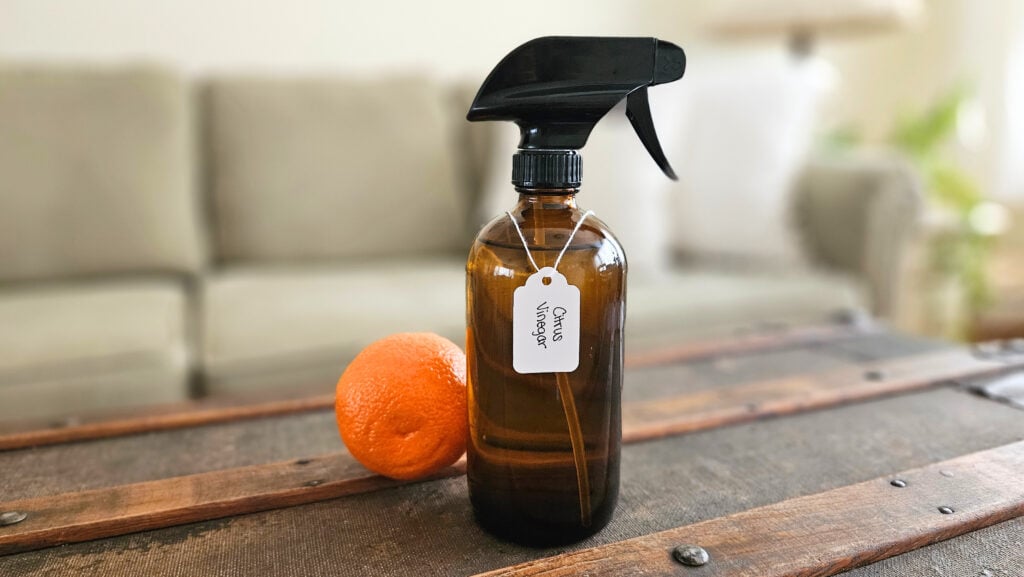
Homemade cleaning products are one of the best ways to level up your cleaning supplies. There are many benefits for yourself, and your wallet, when you switch to making your own DIY cleaners.
Save Time
This may sound counterintuitive, but you actually save time by making your own homemade cleaning products. If your goal is natural cleaning, instead of doing tons of research into a million different ingredients to determine what is safe and what isn’t, combined with research into a million different products until you finally find something you are comfortable using, you can simply keep a few basic ingredients on hand and call it a day.
Basic cleaning ingredients such as distilled white vinegar, borax, baking soda, washing soda, essential oils, and natural herbs can be used in various ways and various recipes.
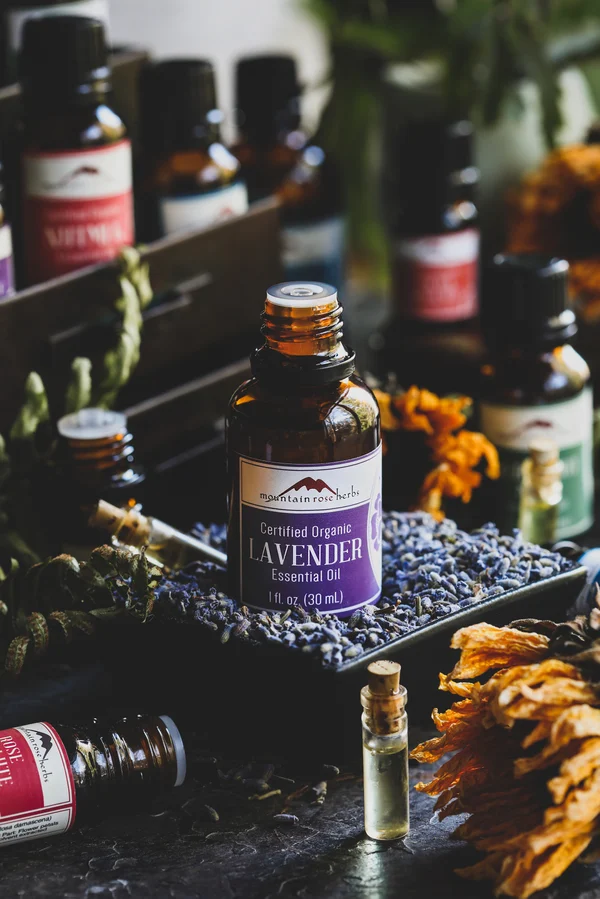
Mountain Rose Herbs
Mountain Rose Herbs is one of my favorite online shops for all things natural. They offer a wide variety of products from essential oils, herbs and spices, tinctures, teas, kitchen supplies, books, and more! The herbs and spices is what I order the most. I love their stinging nettle leaf and root, rose petals, sea kelp, and spirulina. Highly recommend the company and their products!
Save Money
I love that there are natural and safe household cleaning options that can be purchased in store or online. I love that Meliora has a great powder laundry detergent. I love that Branch Basics has a multi-purpose concentrate that can be used for various cleaning needs. These options are great.
However, in my calculations, I do save money when I choose to make my own homemade cleaning products. In addition to the cost-benefit analysis for this citrus vinegar cleaning spray, here are some other cost-benefit analyses for my other homemade cleaning products:
Additionally, I don’t have to play the game of waiting for anything to go on sale or scouring the internet looking for a coupon code, only for it to be rejected. My basic cleaning supplies are well-priced as is.
Customization
One of the best parts of making your own homemade cleaning products is the ability to customize them according to your cleaning needs and preferences. Whether you want to make a general all-purpose cleaner or a more powerful disinfectant, you can choose between basic ingredients like distilled white vinegar, rubbing alcohol, or hydrogen peroxide.
You can also choose between scented or unscented. This citrus vinegar cleaning spray is obviously scented, as well as the lavender vinegar cleaning spray, but you can also make a basic unscented all-purpose cleaner. It’s totally up to you.
Herbs and essential oils are another way you can customize your homemade cleaning products. Whether you like them strictly for scent or you look into their individual cleaning benefits, you can choose exactly what is in your DIY cleaner.
For information on the benefits of many essential oils for the purpose of cleaning, please see here:
Eco-Friendly
Even if you do find affordable natural cleaning products, a lot of them are kept in plastic bottles. Between buying basic cleaning ingredients in bulk and then using reusable containers like these amber glass spray bottles or this large glass storage container, you can greatly reduce your landfill contribution.
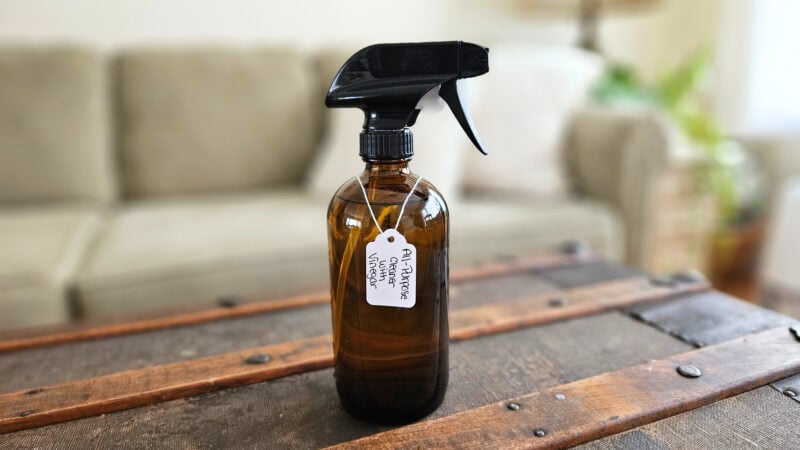
Amber Glass Spray Bottles
Glass spray bottles are a must-have for anyone who makes their own homemade cleaning products. You’ll definitely want to use glass over plastic, so that plastic doesn’t leech into your cleaning solutions over time. Also, the amber glass is great for anyone who uses essential oils as a means to protect your essentials from degradation over time. These bottles are well-made, meaning you won’t have to keep buying them!
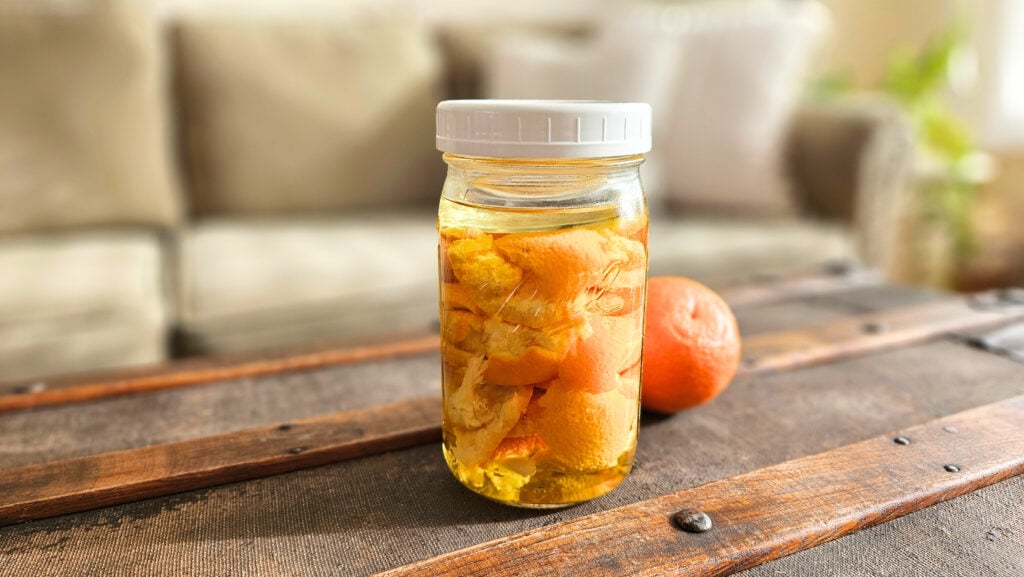
Additionally, you can repurpose even food scraps with this citrus vinegar cleaning spray. Instead of immediately throwing away those orange peels the next time you have a snack, you can let them soak in vinegar for a couple of weeks and extract their cleaning abilities before tossing or composting them.
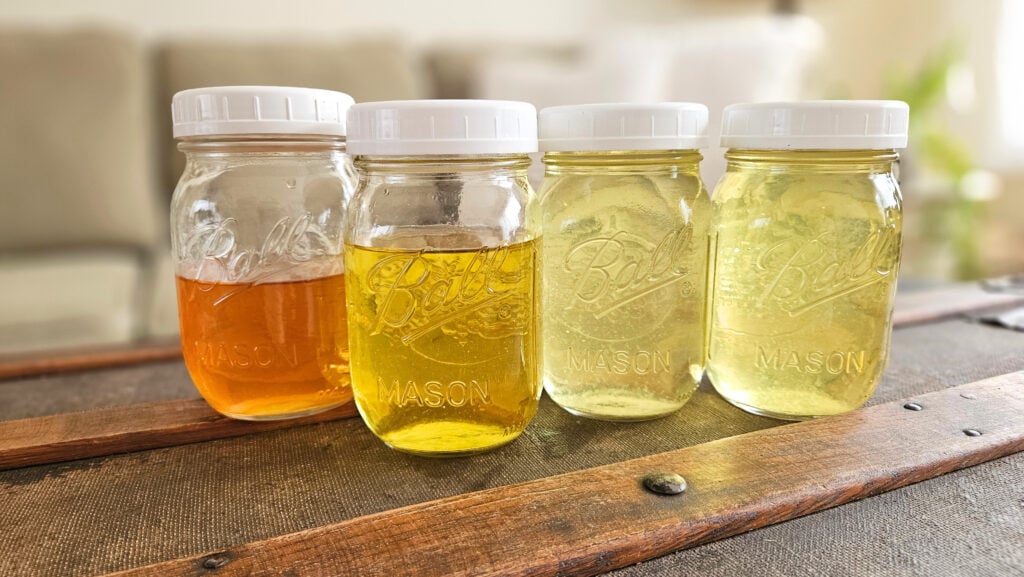
4 Types of Citrus Vinegar Cleaner
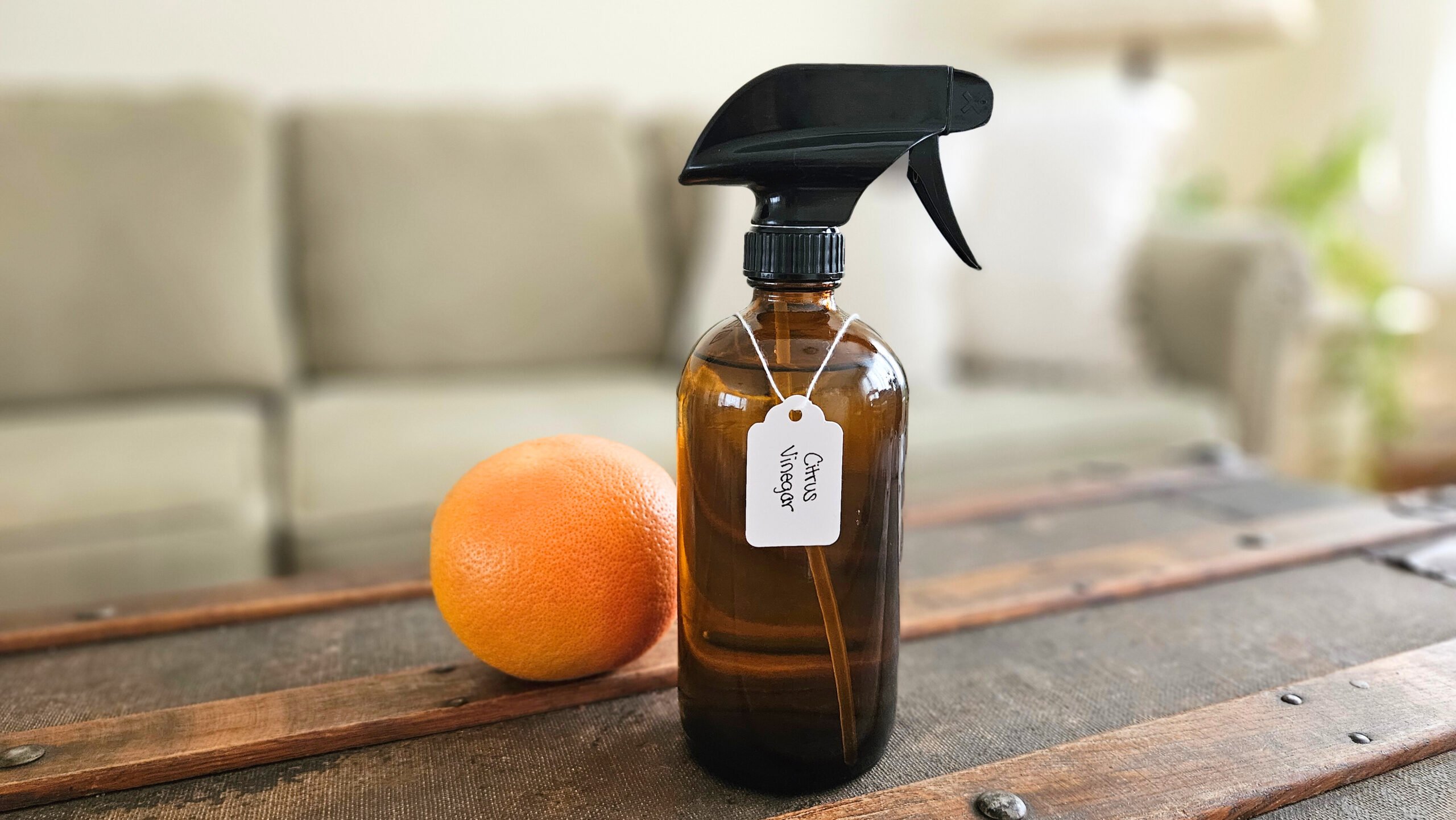
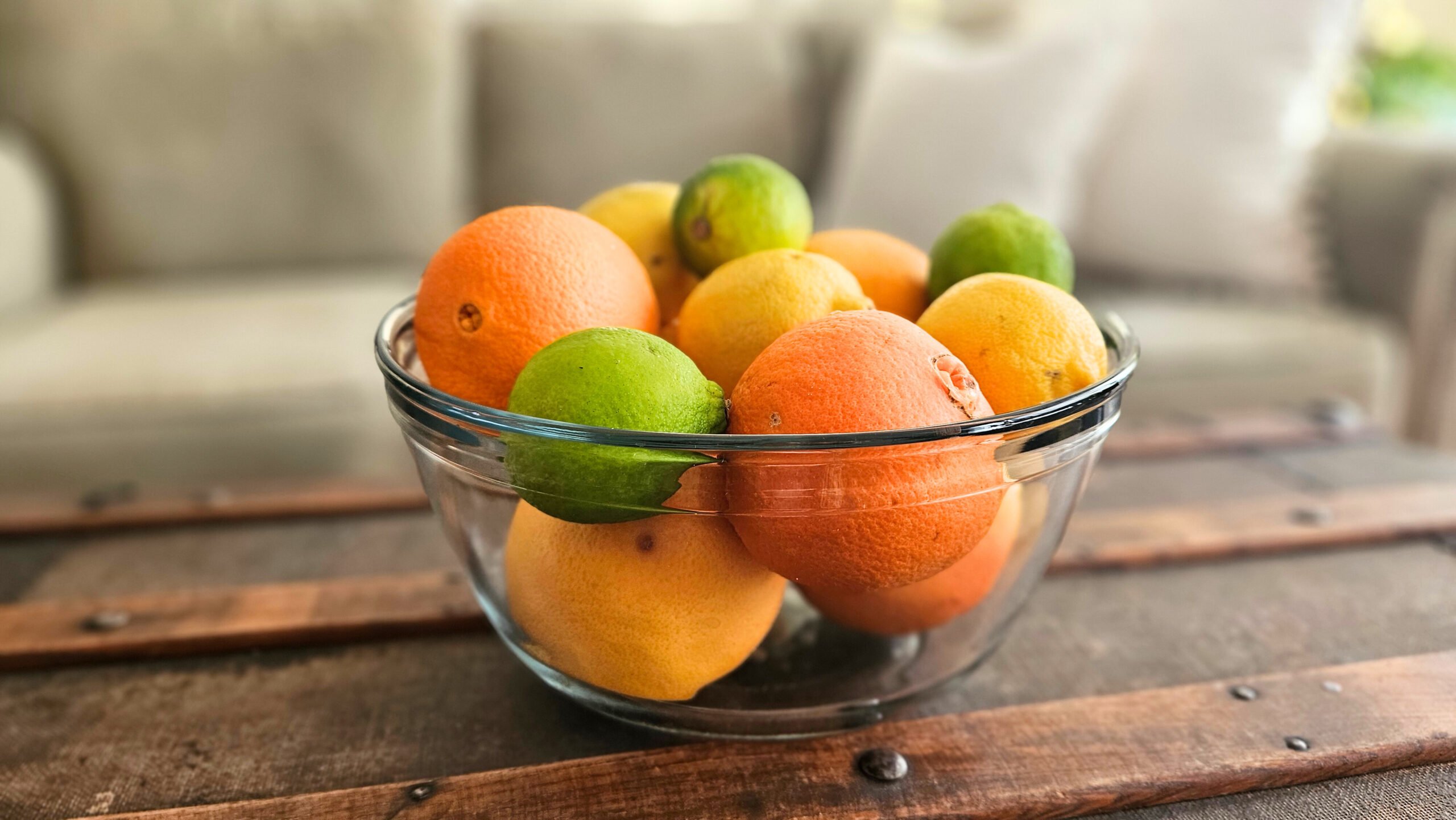
For this citrus vinegar cleaning spray, I am going to cover four basic types. For all four of these recipes, you’ll be able to turn food scraps you would normally throw away into useful cleaners.
Lemon Vinegar
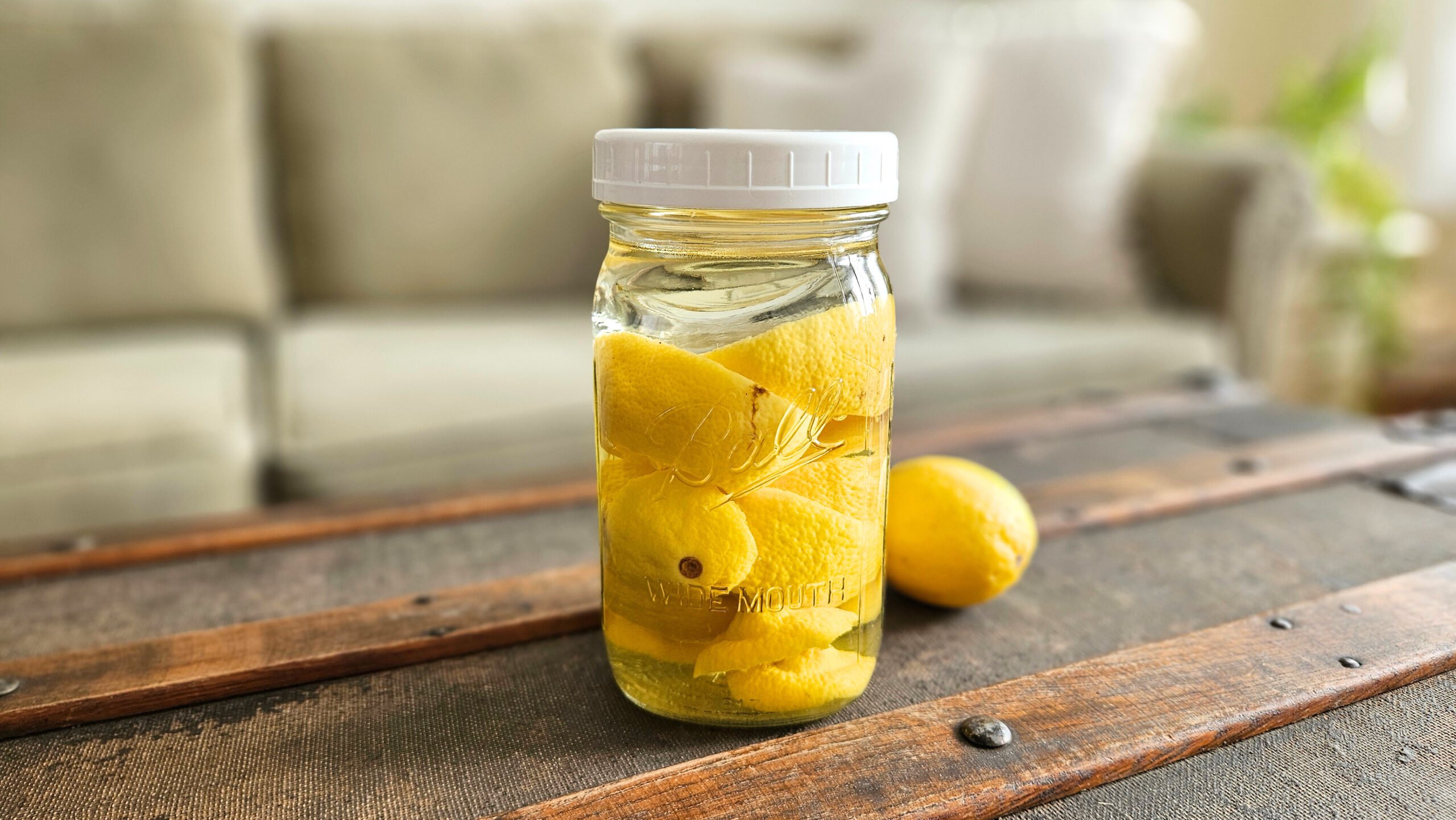
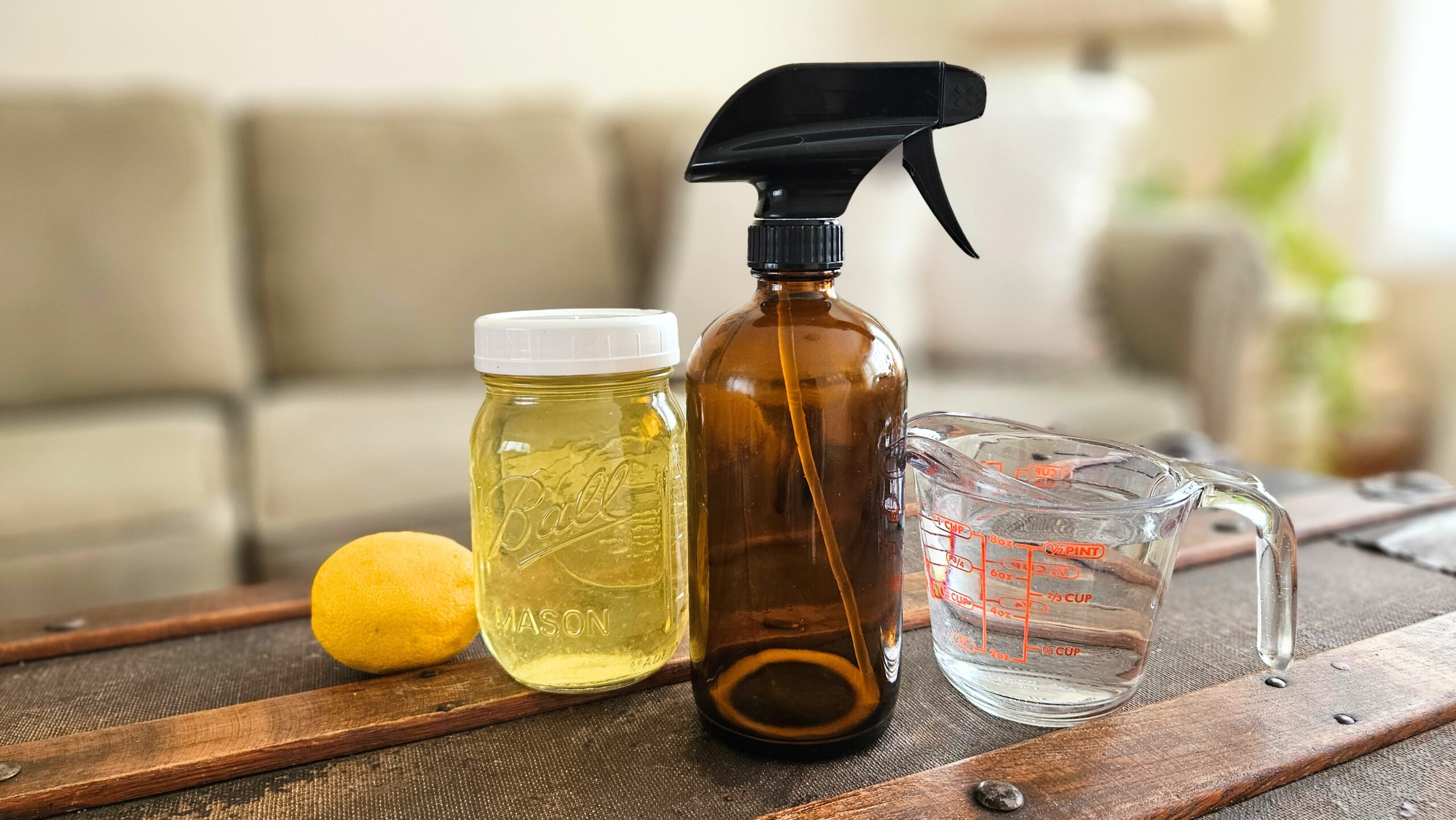
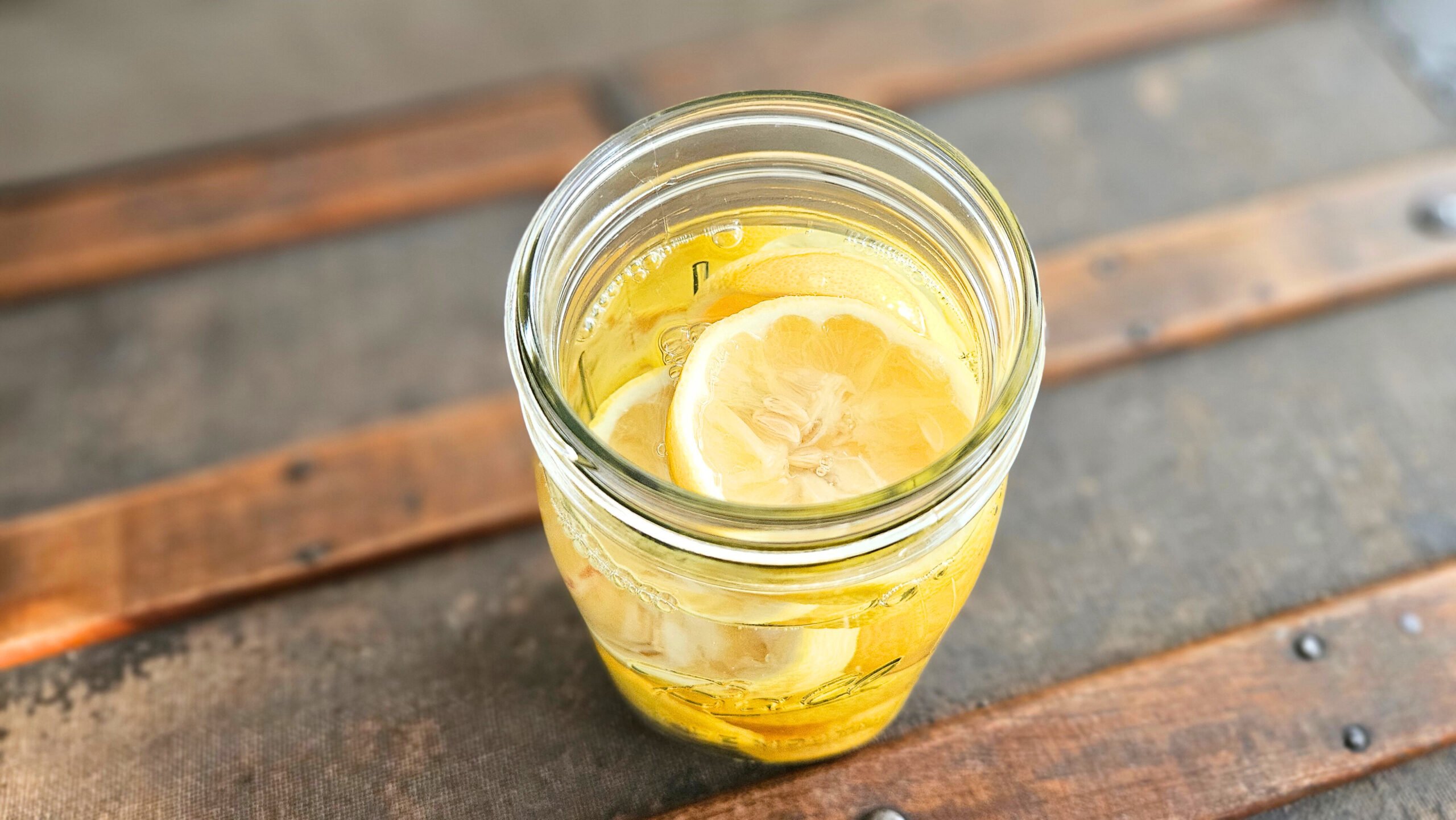
I love to create a basic tea in the morning that consists of a freshly squeezed lemon, hot water, and honey. Instead of throwing away my lemons after making this tea, I add them to a mason jar with distilled white vinegar.
Benefits of cleaning with lemon include:
Orange Peel Vinegar
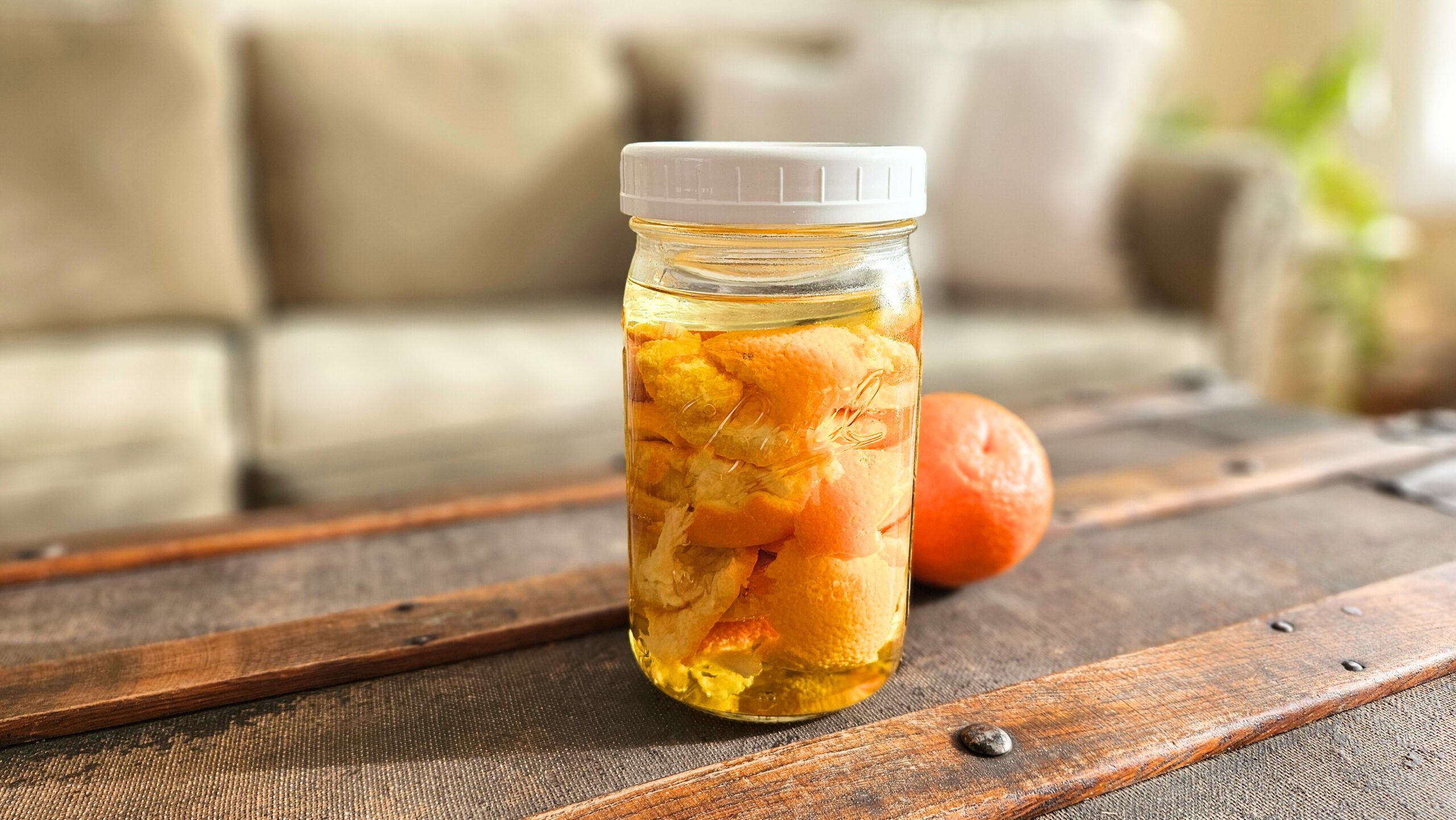
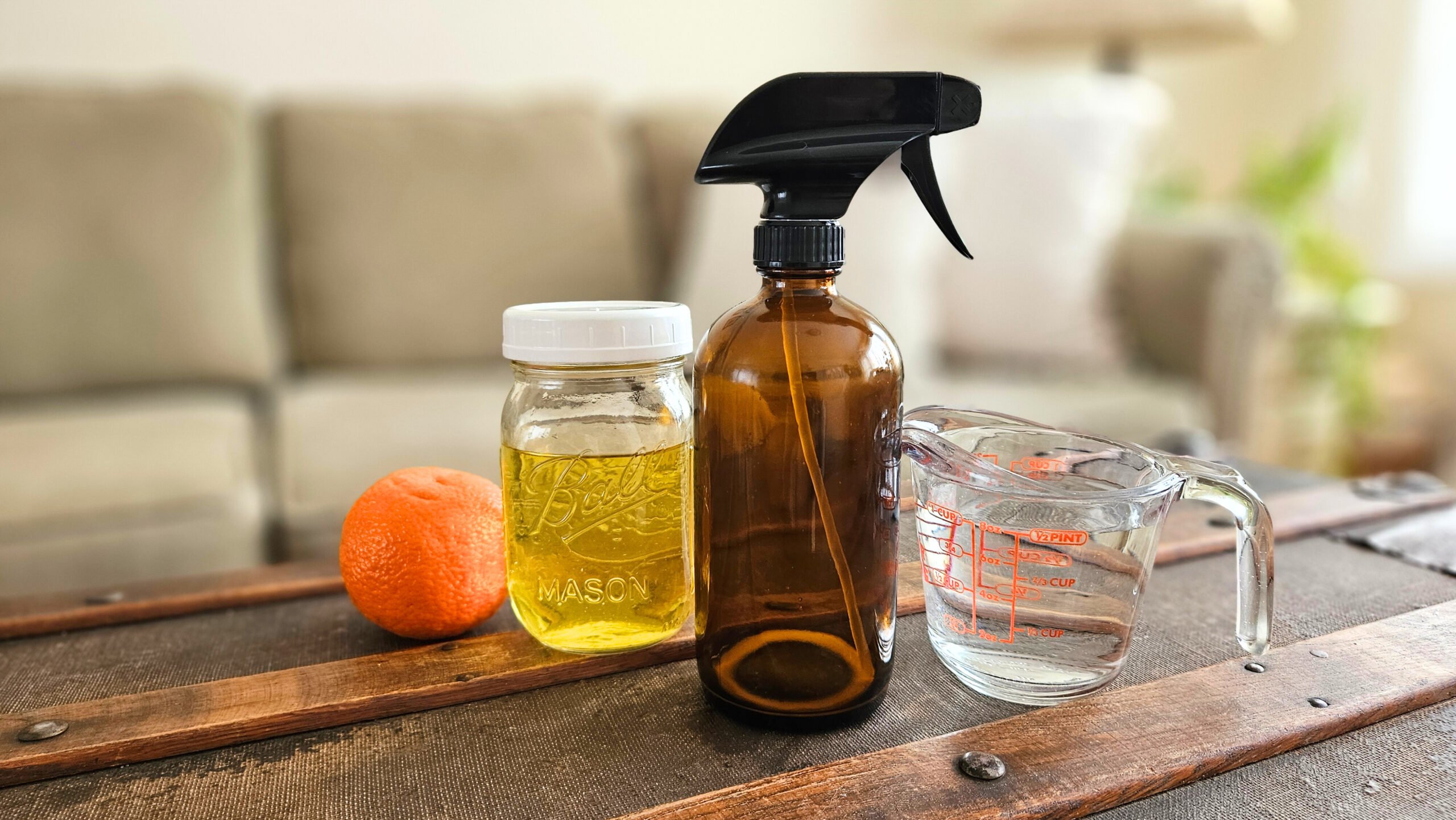
When I can find organic oranges in my local stores, I love to buy them as a quick and healthy snack.
Benefits of cleaning with orange peels include:
Grapefruit Vinegar
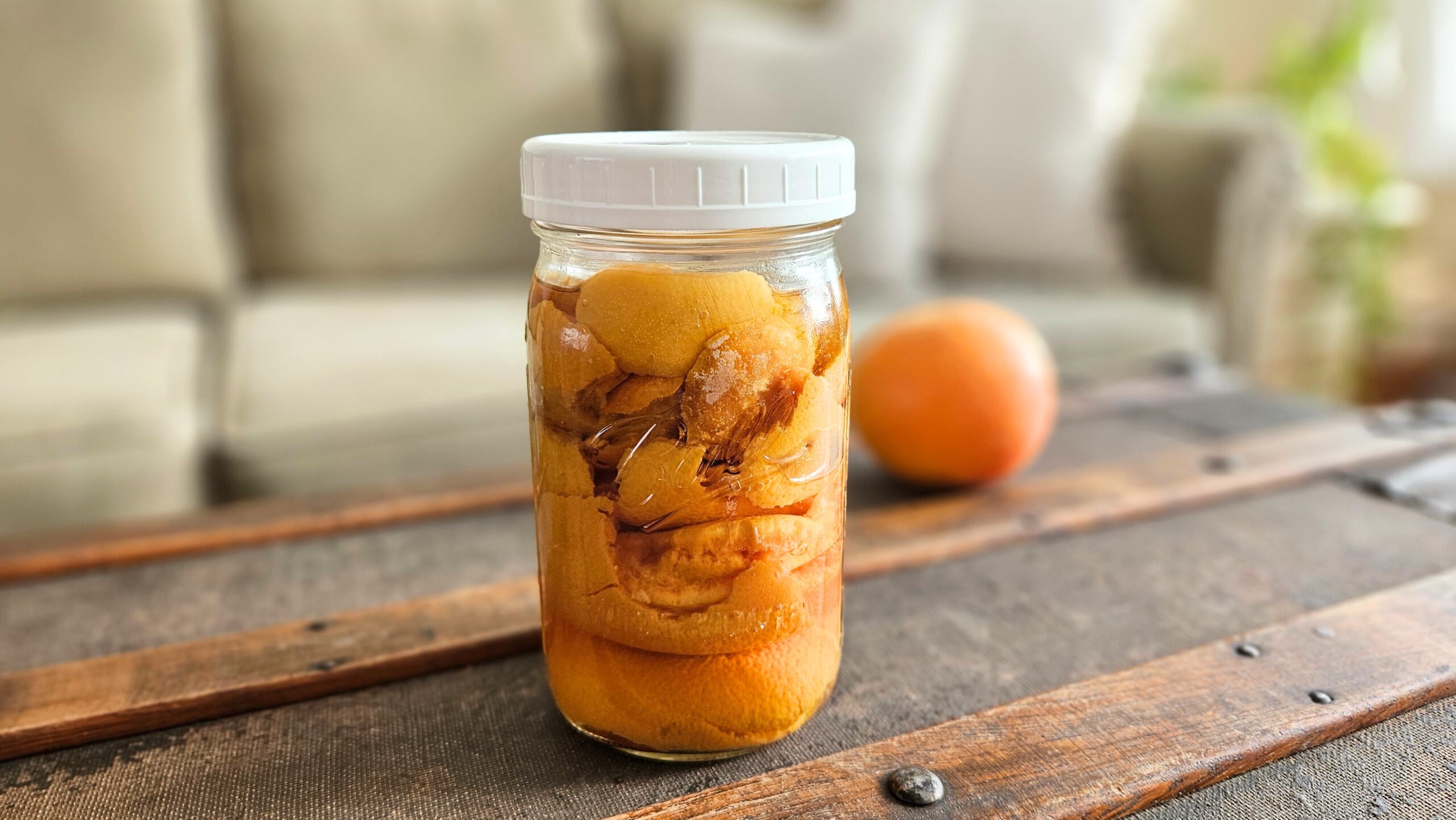
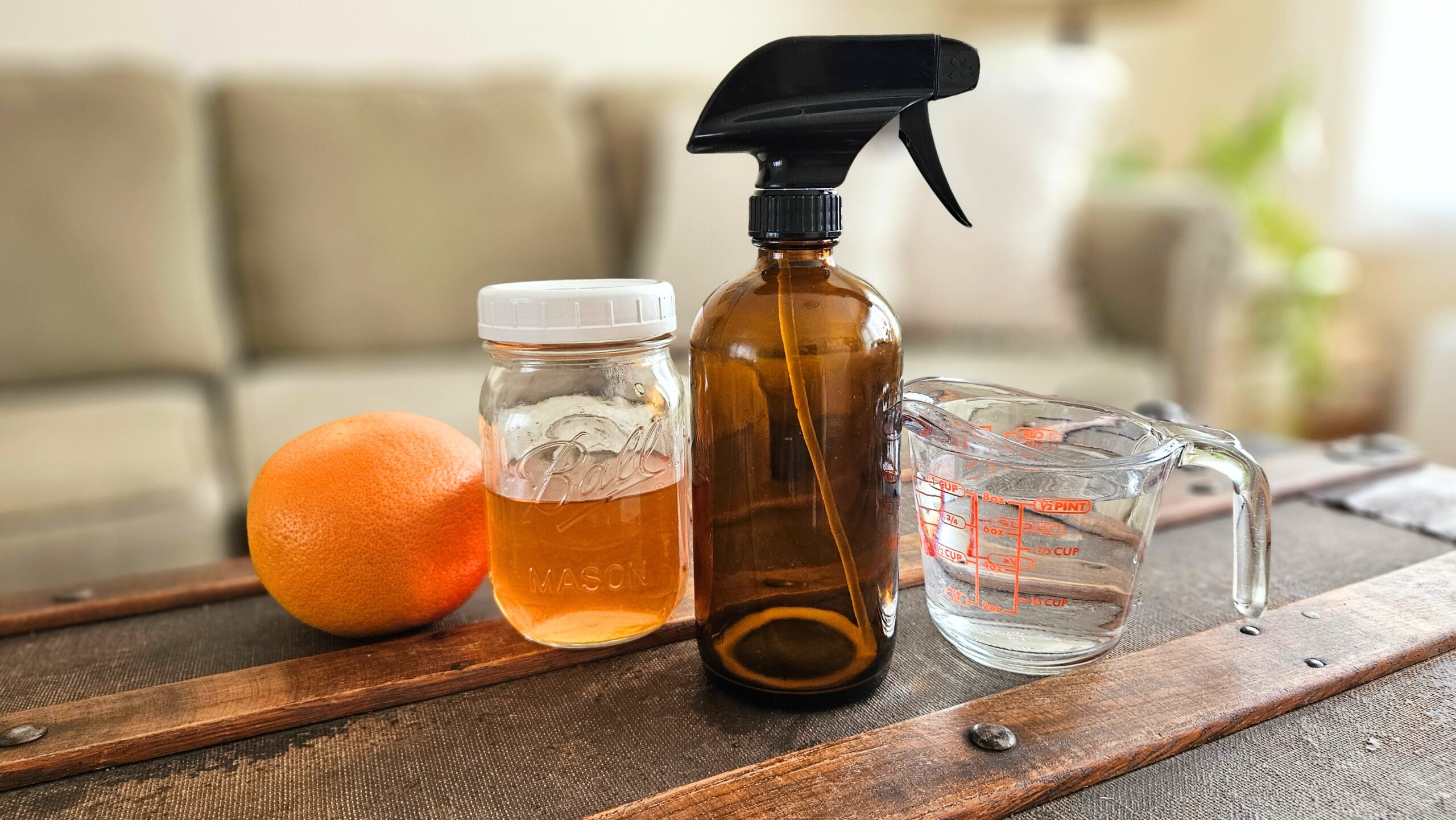
I am honestly not a fan of grapefruit, but this citrus fruit is great for cleaning!
Benefits of cleaning with grapefruit:
Lime Vinegar
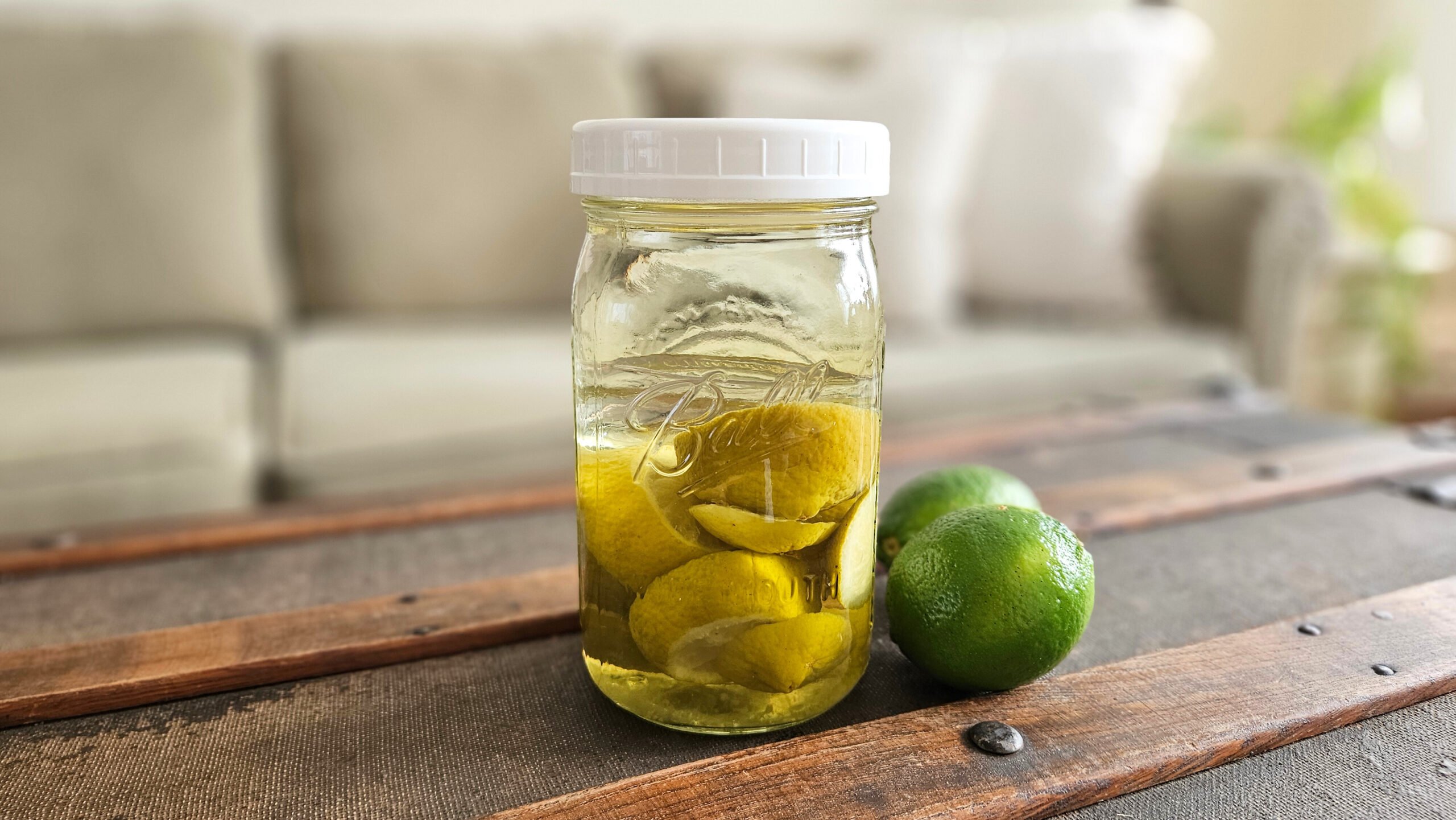
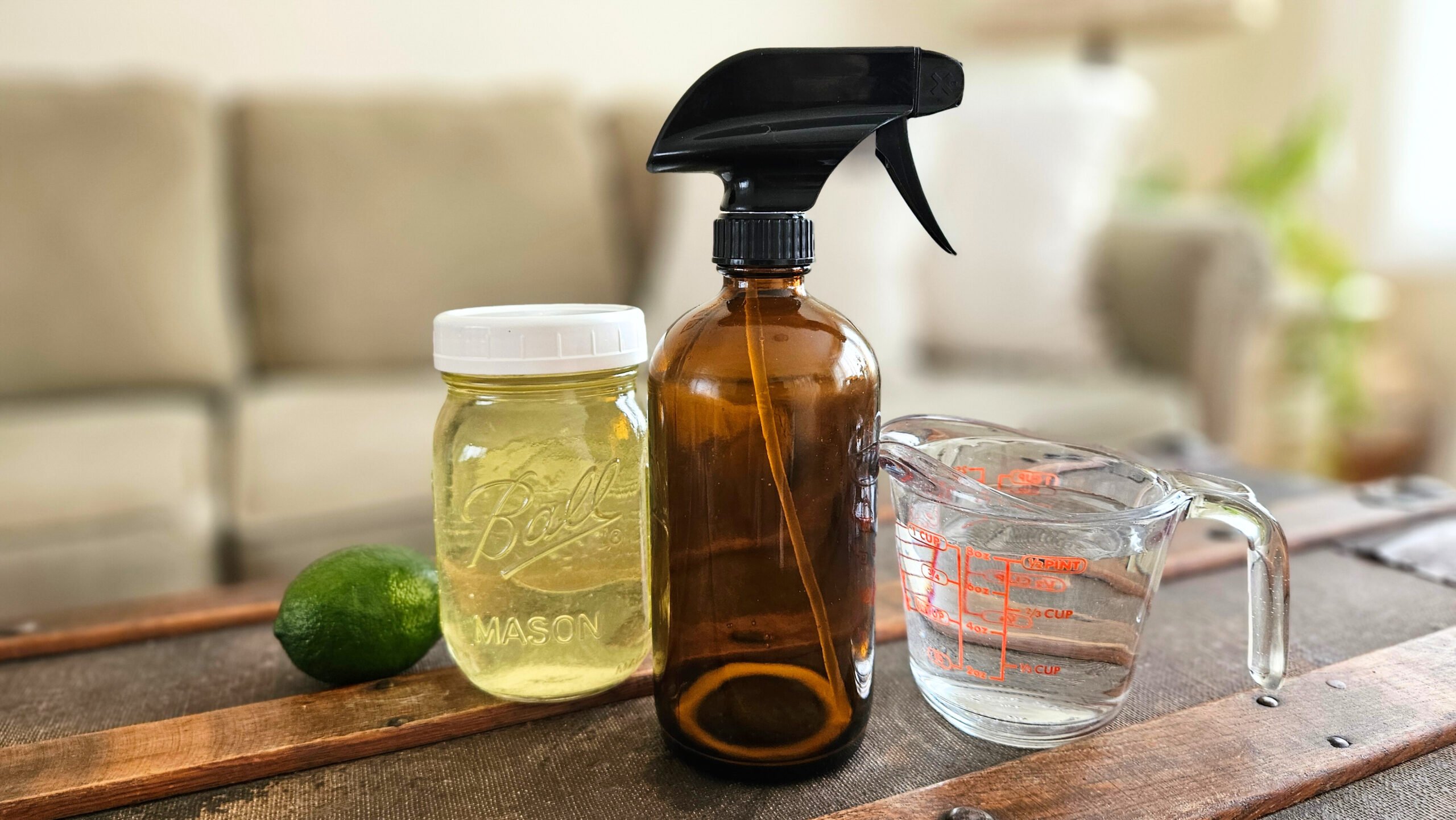
I like to combine lemon juice, lime juice, coconut water, and several different powder supplements as a daily boost of hydration, minerals, and electrolytes. Just like with my lemons, I like to save my limes and repurpose them for cleaning.
Benefits of cleaning with limes:
All four of these variations for this citrus vinegar cleaning spray are all very similar. Therefore, they can all basically be used in the same ways. It’s just a matter of what you usually use in your kitchen and choosing to repurpose your scraps.
How to Make Citrus Vinegar Cleaning Spray
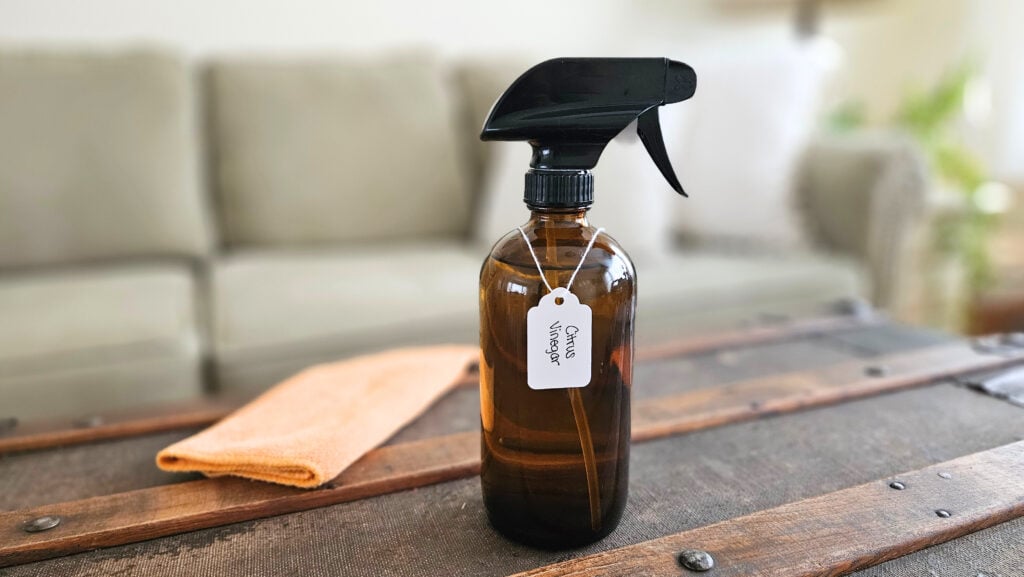
Since I like to save money and repurpose my kitchen scraps, I like to make this DIY cleaner by infusing distilled white vinegar. However, you can also use essential oils for the same effect.
Ingredients
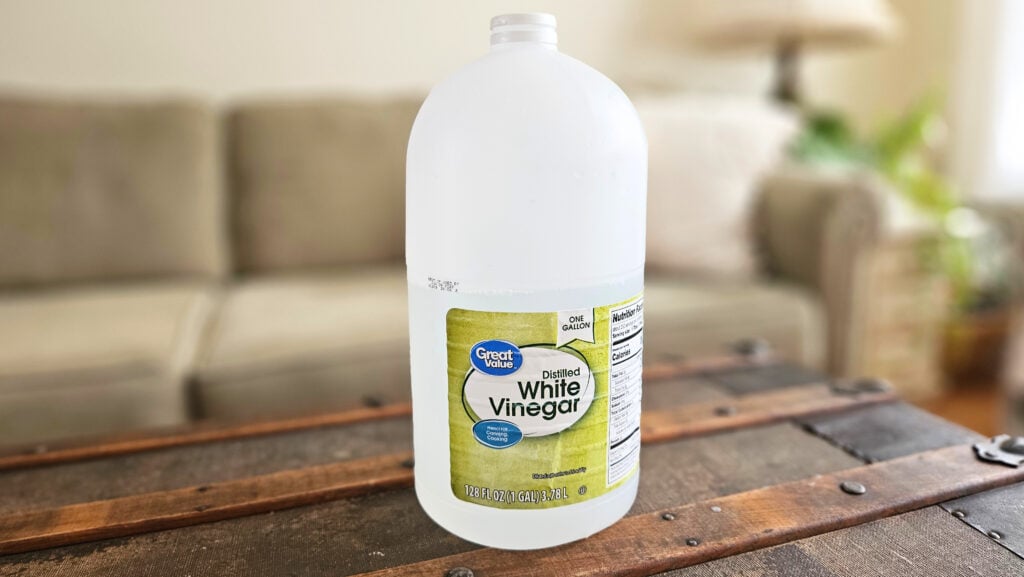
- Distilled white vinegar
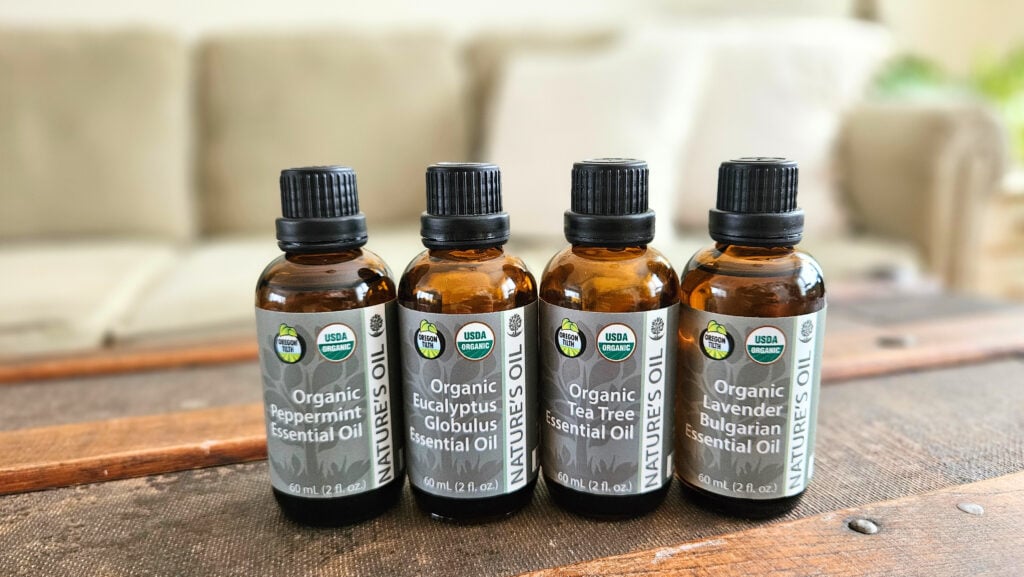
- Scraps/peels from lemons, limes, grapefruit, or oranges OR 15-20 drops essential oils (lemon, lime, grapefruit, or orange)
- 1 cup water
Equipment
- 1 quart size mason jar
- 1 fermentation weight
- 1 plastic lid
- 1 fine mesh strainer
- 1 pint size mason jar
- 1 16oz glass spray bottle
Instructions
Tap/click the images for a description of each step ⬇️
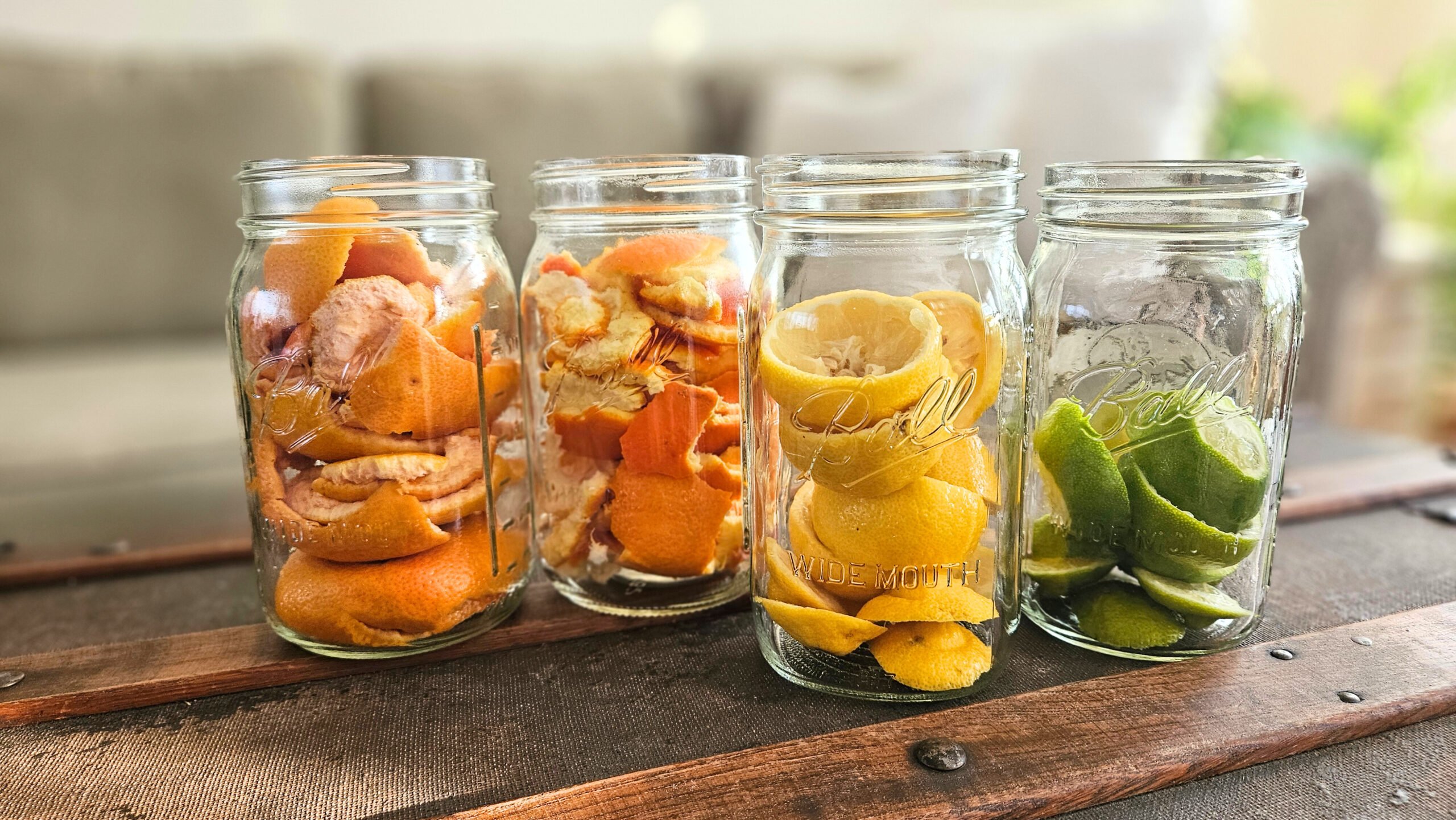
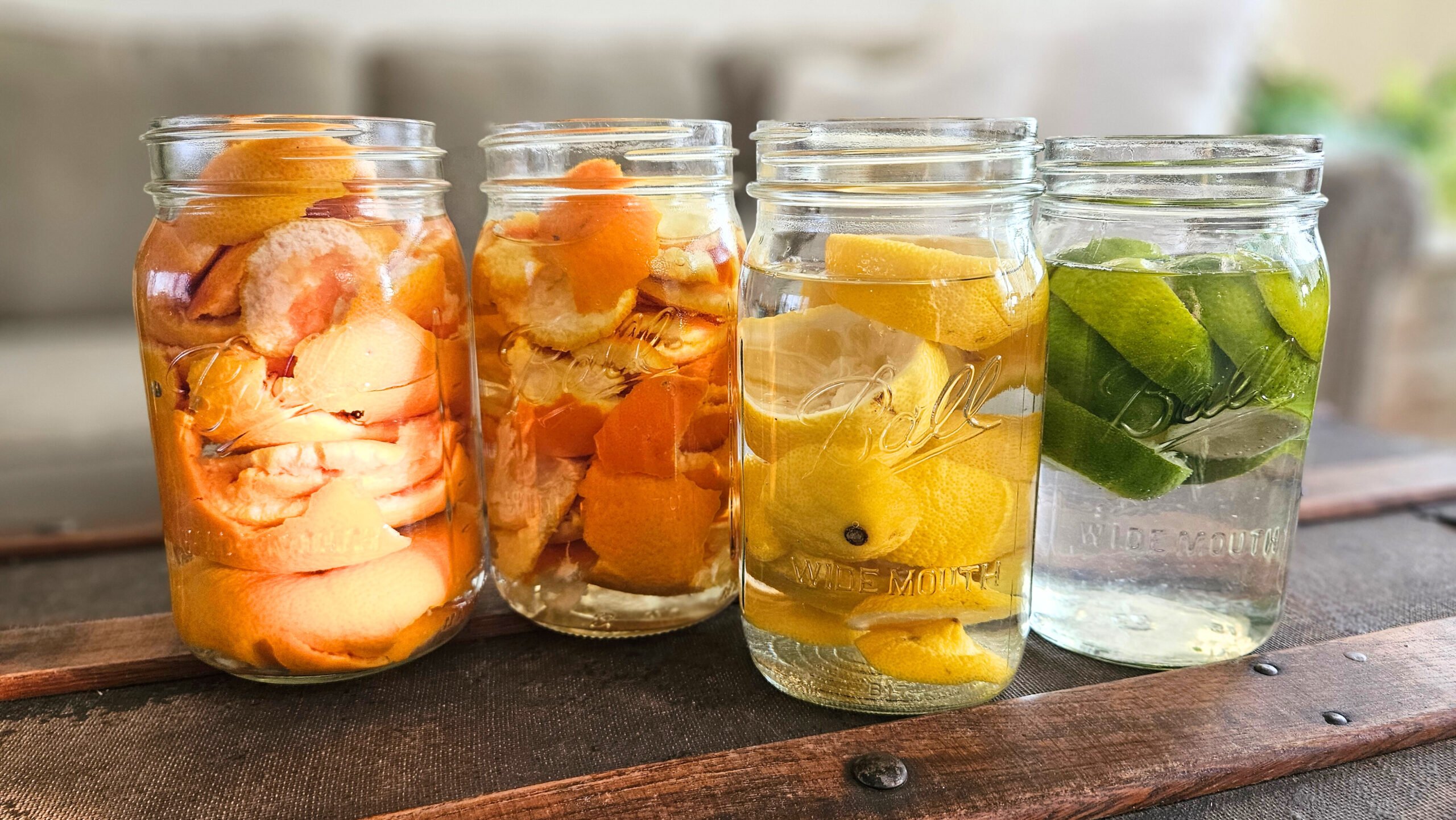
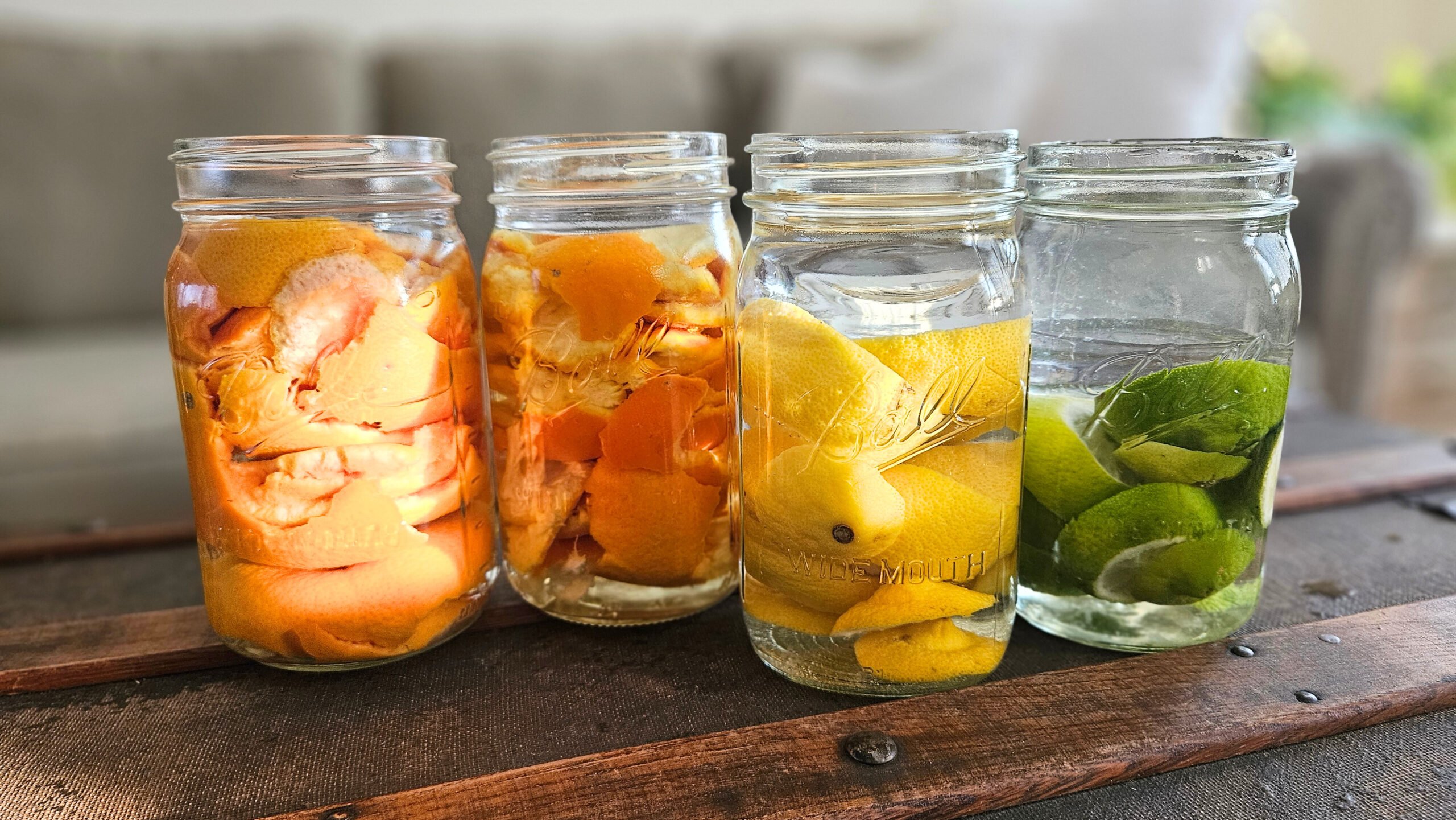
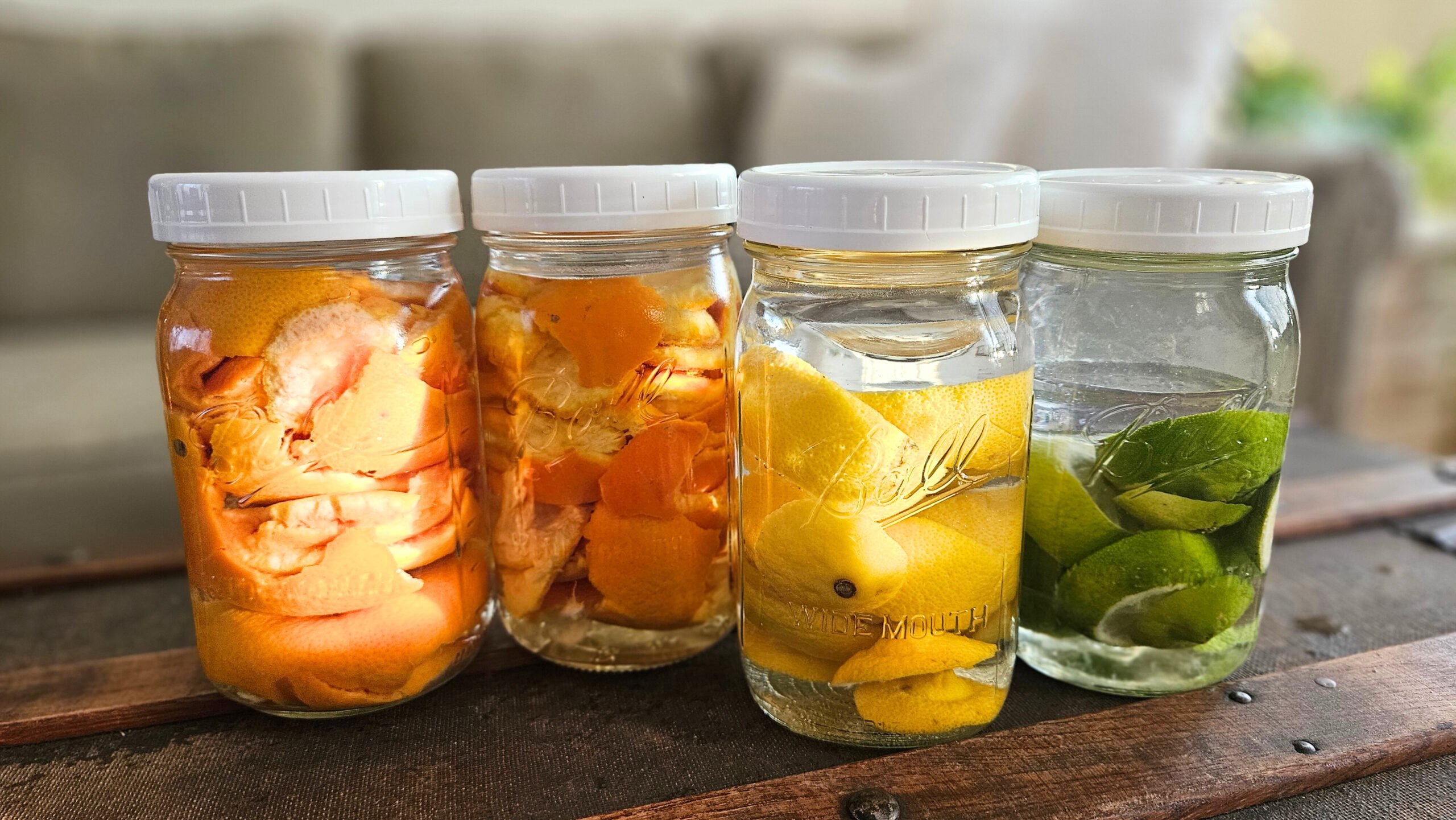
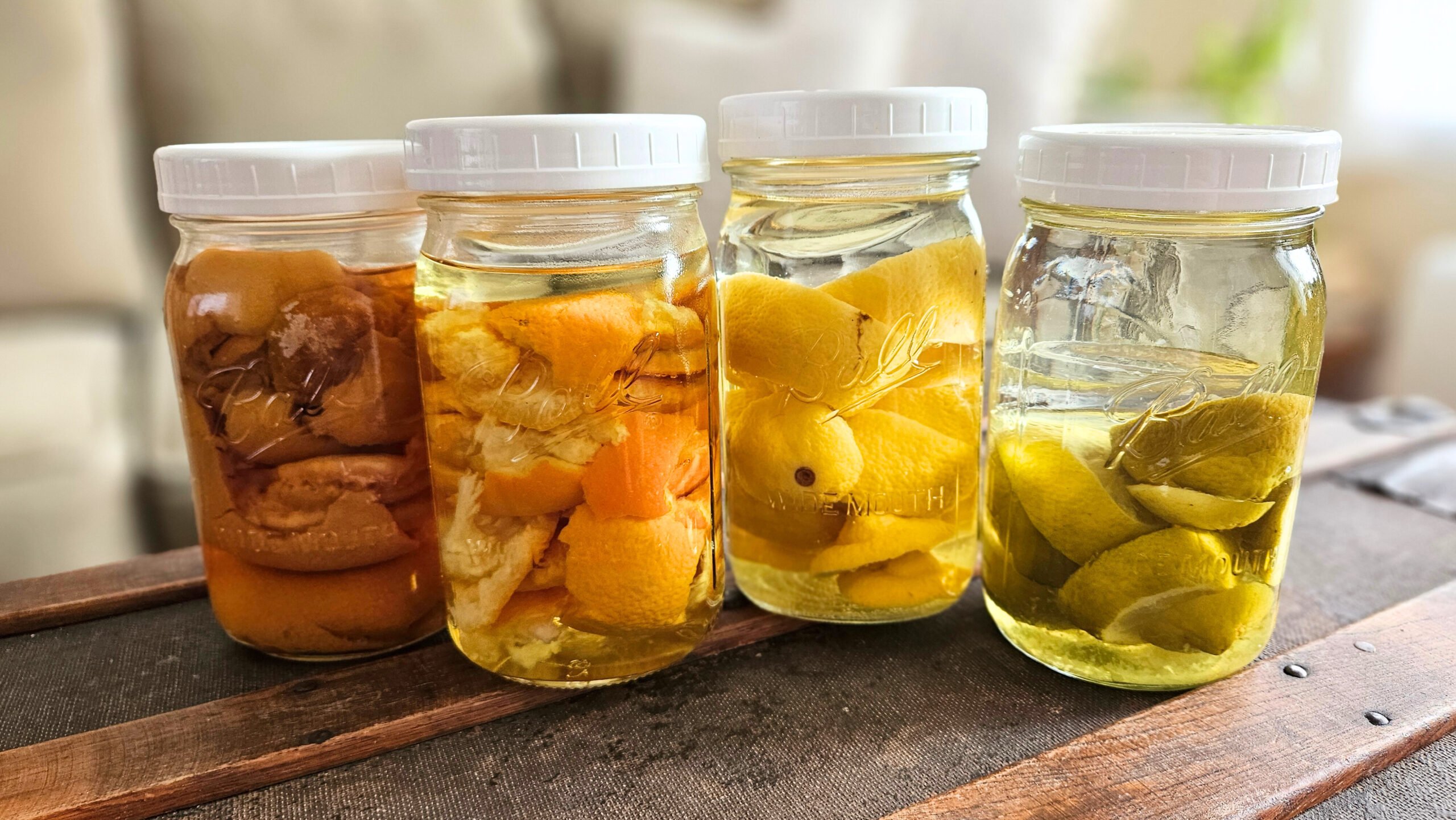
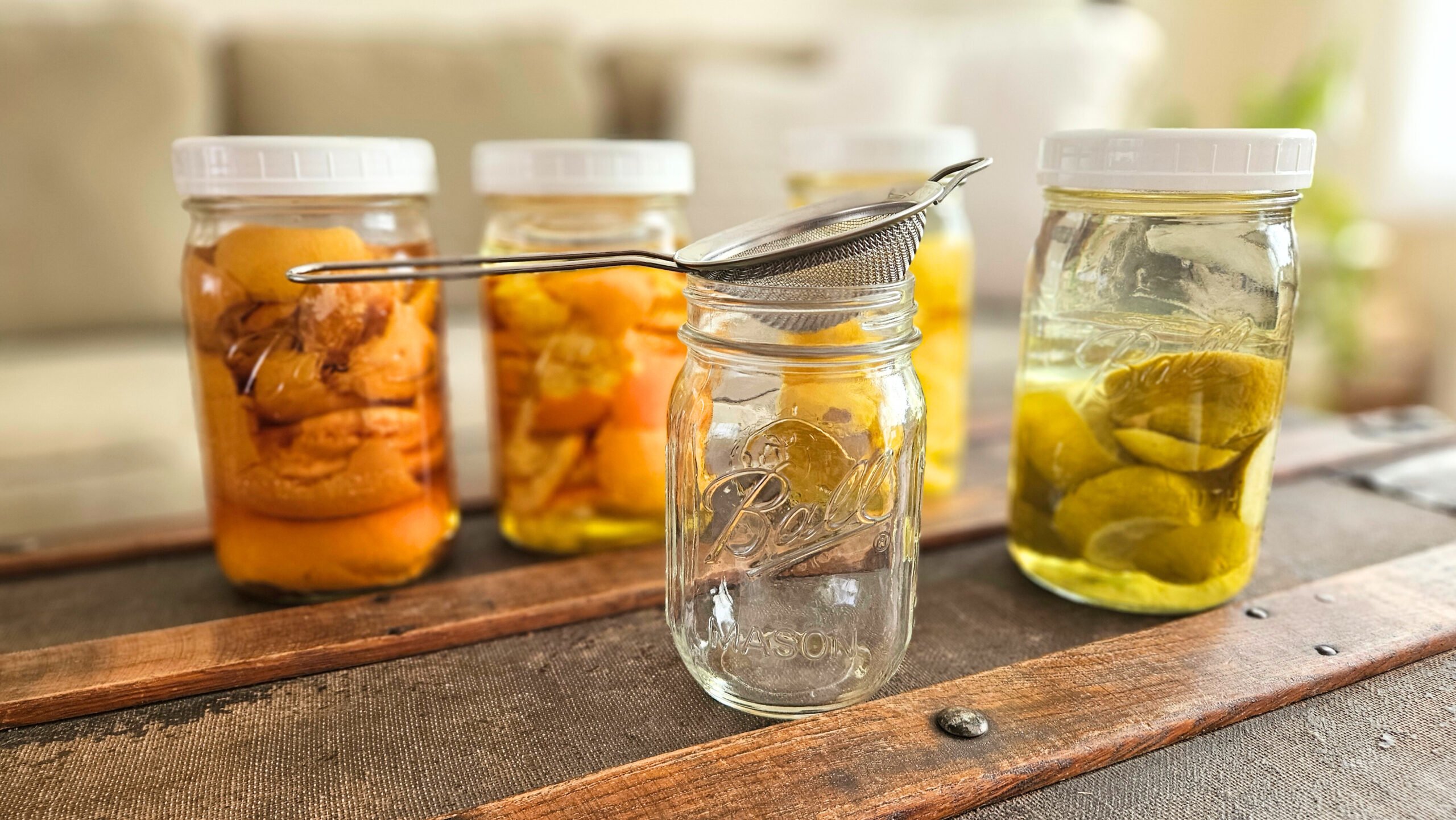
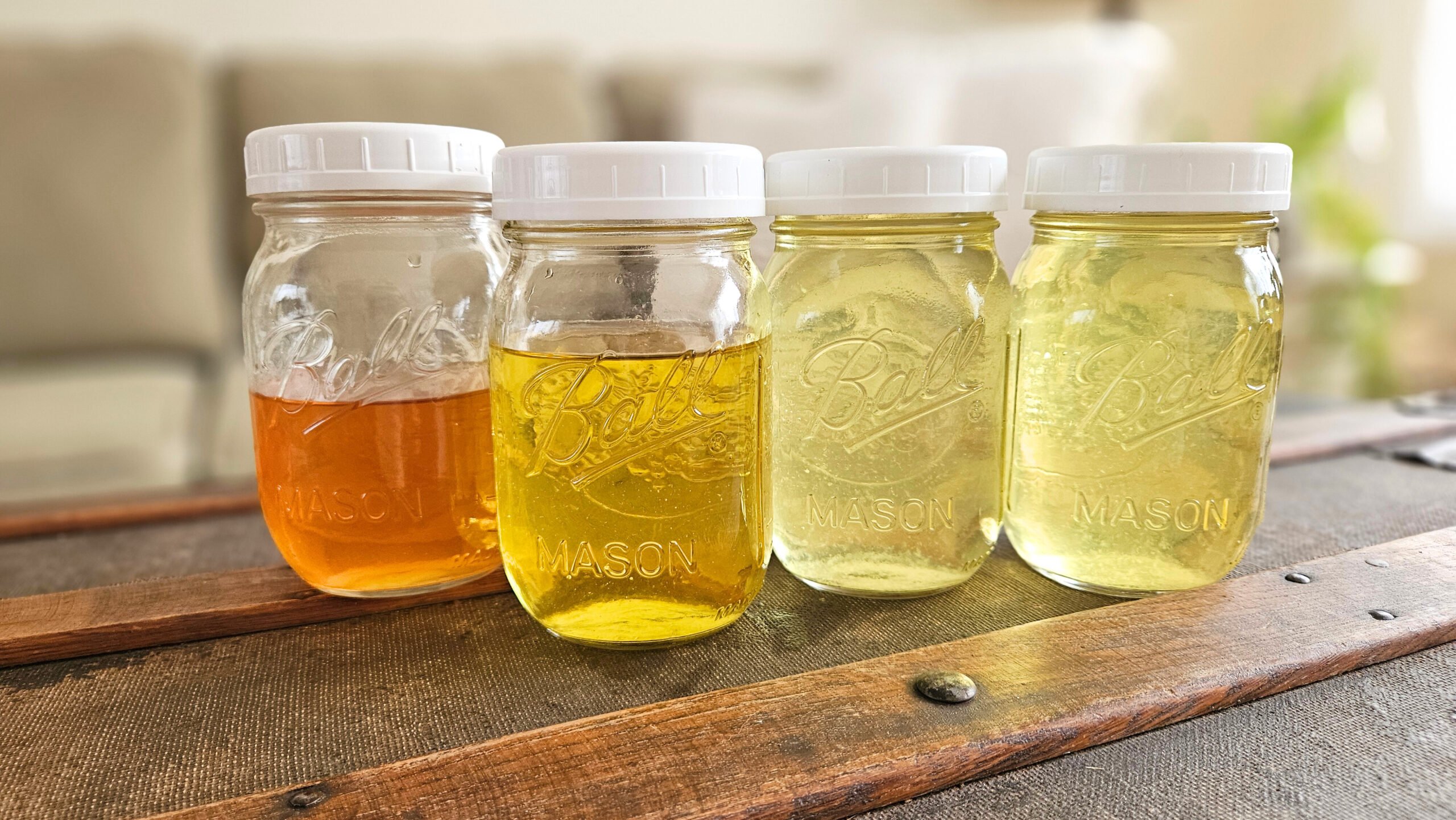
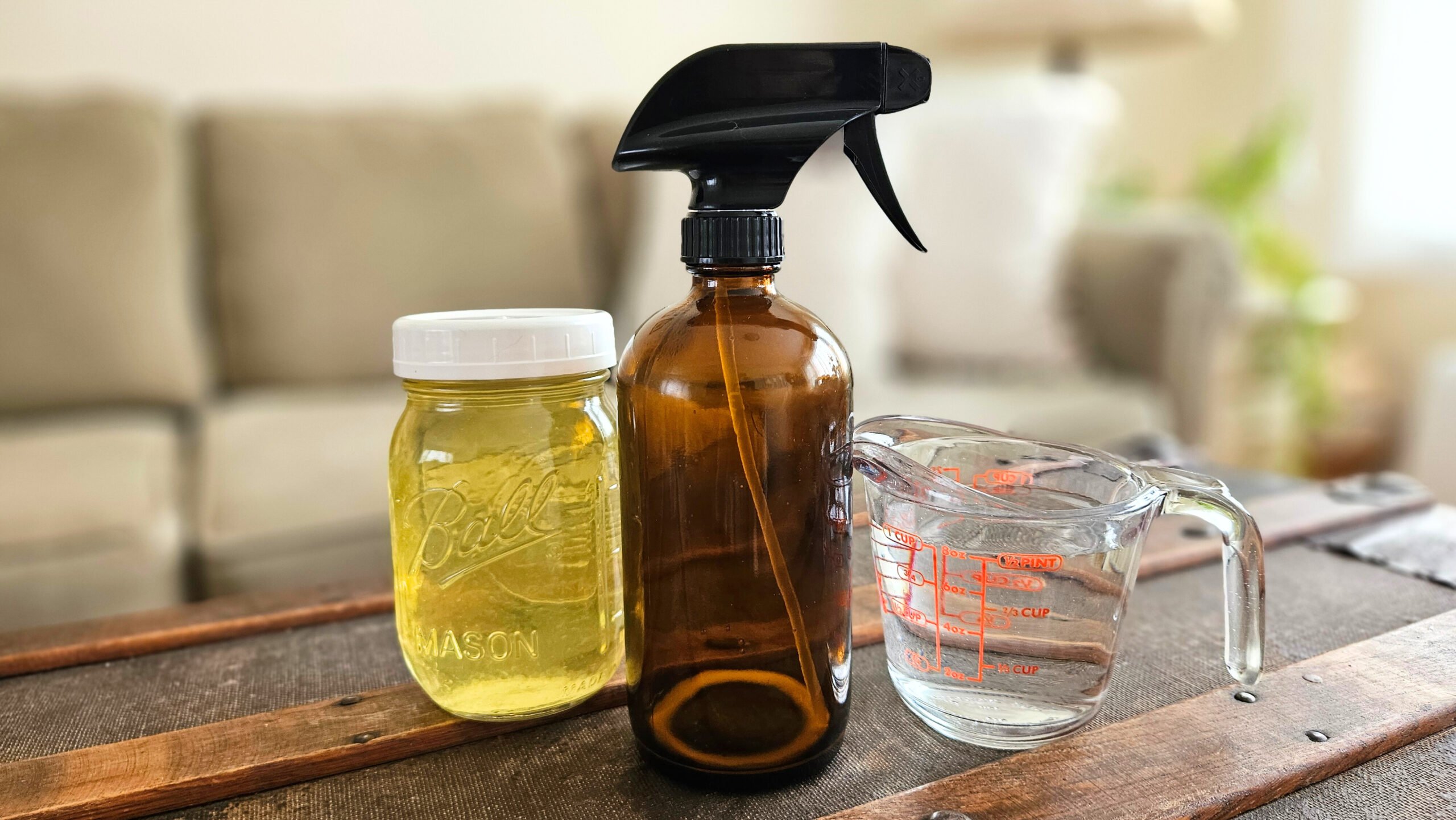
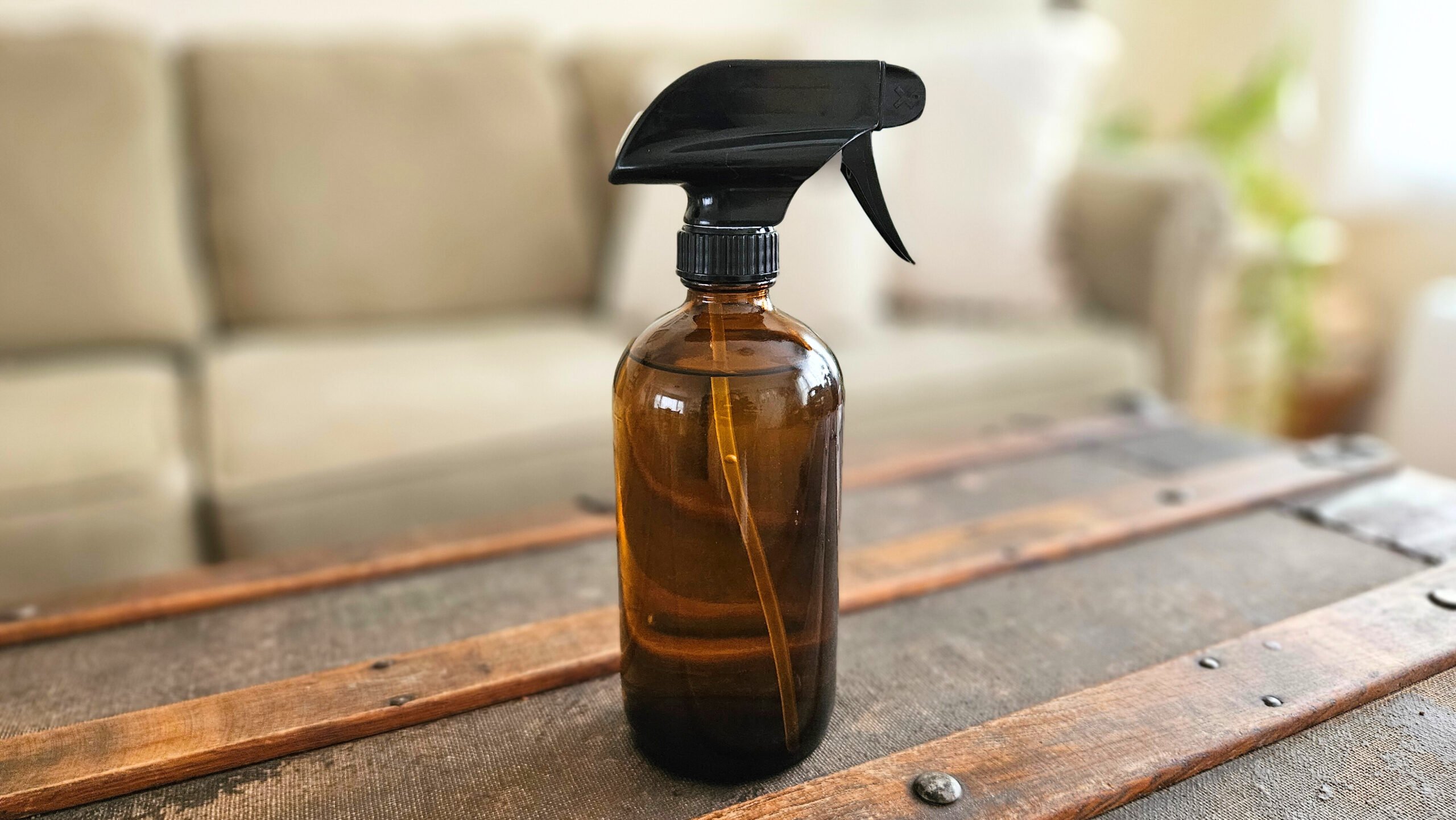
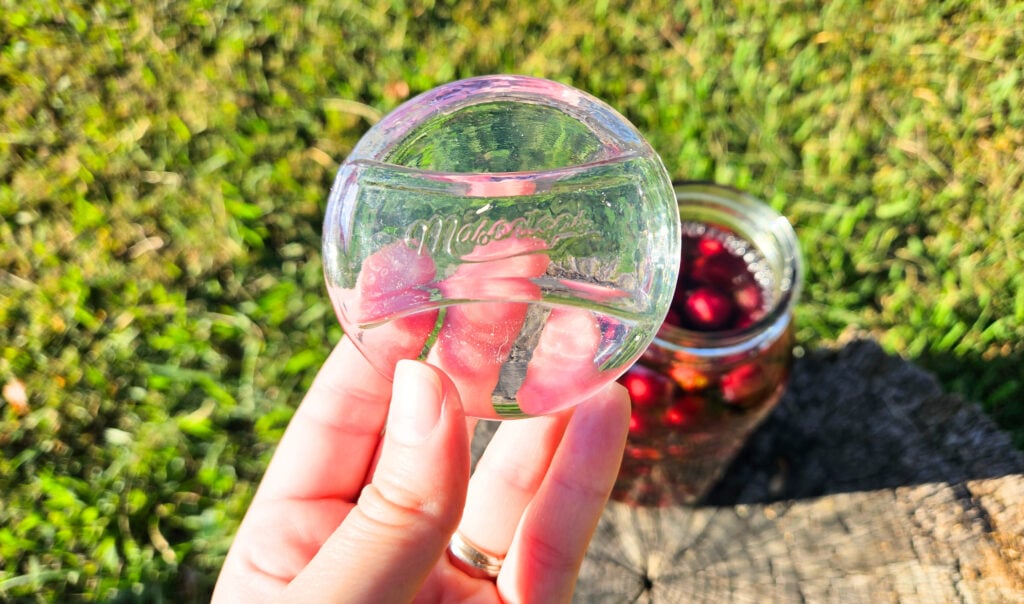
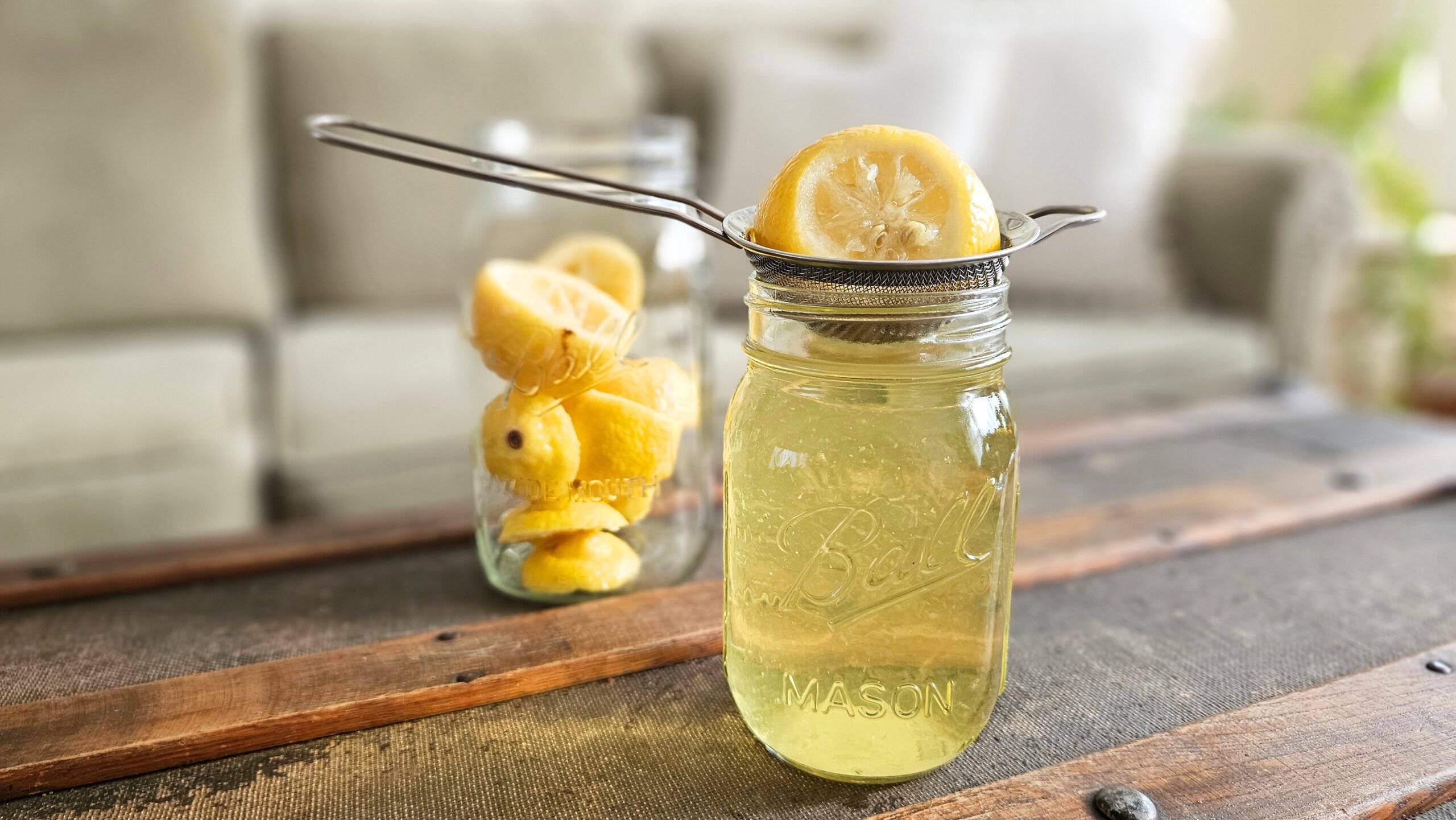
- Add scraps and/or peels from lemons, limes, grapefruit, or oranges to a quart size mason jar. Then fill the mason jar with distilled white vinegar, leaving 1-2 inches of space from the top. Place a fermentation weight on top and push down so that the fruit scraps are completely submerged. Close with a plastic lid. I use plastic instead of metal for this because the acidity of the vinegar will corrode a metal lid.
- Allow the fruit to infuse the vinegar for the next two weeks. You’ll notice the vinegar change from clear to being tinted.
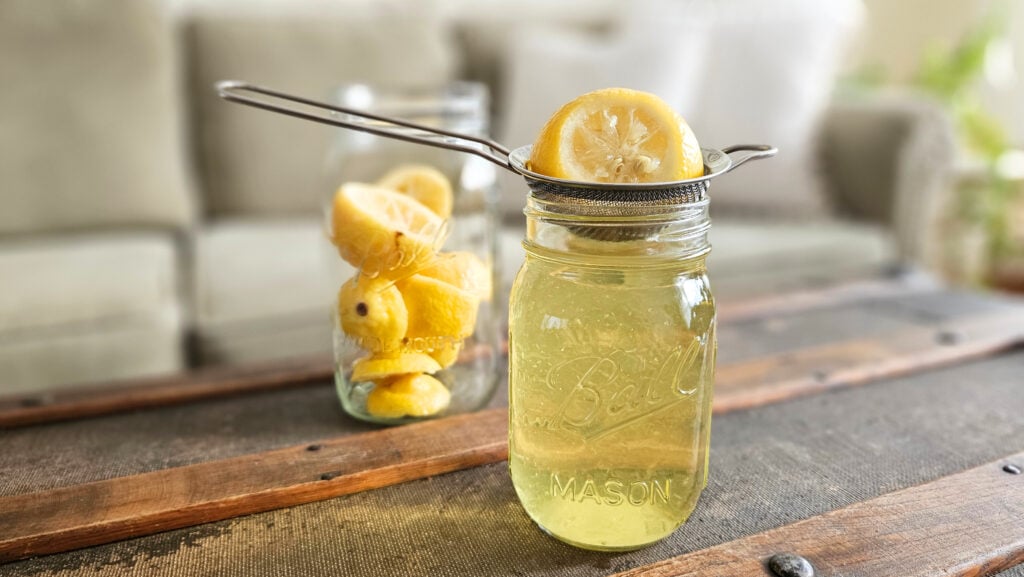
- After two weeks, use a fine mesh strainer to strain the fruit from the infused vinegar. Store your infused vinegar in a mason jar.
- Combine 1 cup of water and 1 cup of your citrus vinegar in a 16oz glass spray bottle. Shake and begin using!
- Alternatively, if you do not want to infuse your distilled white vinegar with fruit, you can combine 1 cup of water, 1 cup of distilled white vinegar, and 15-20 drops of your favorite citrus essential oil in a 16oz glass spray bottle. Shake to combine and begin cleaning.
Tips
- Be sure to check here for surfaces that are not recommended for cleaning with vinegar.
- The ratio of water to vinegar that I use is 1:1, but you can change that to make this citrus vinegar cleaning spray weaker or stronger depending on your needs.
- Make sure you add enough distilled white vinegar in the first step to make sure the fruit is completely covered.
- If you do not have a fermentation weight, be sure to shake the mason jar daily.
Ways to Use
Cost-Benefit Analysis
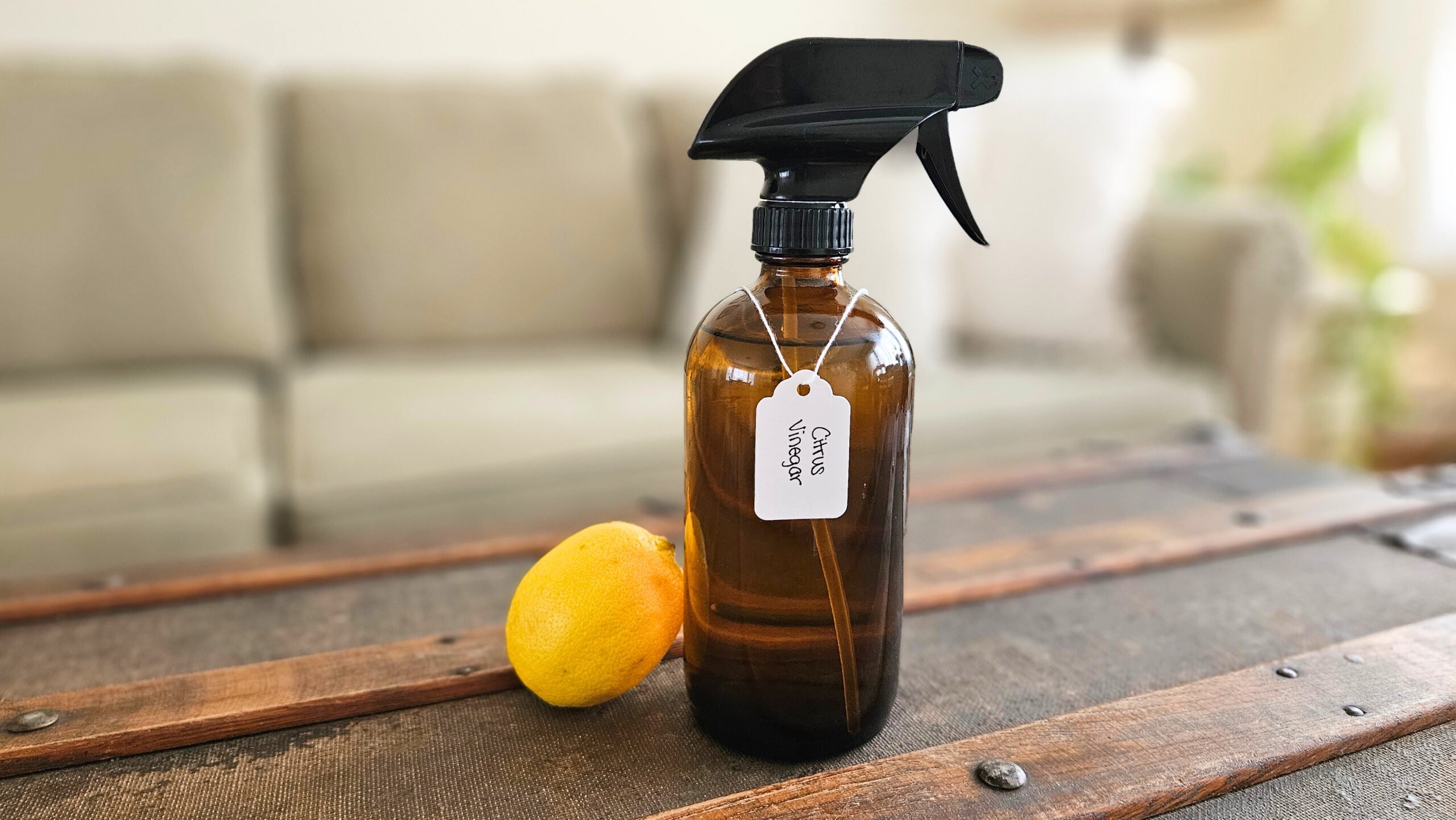
For this cost-benefit analysis, I will be using the lemon version (infused) to compare my homemade citrus vinegar cleaning spray vs. a store-bought lemon vinegar spray.
As far as ingredients go, the closest product I found online was White House All Natural Lemon Cleaning Vinegar Multipurpose Spray. The ingredients for this spray are white distilled vinegar, water, and natural lemon extract.
As of February 2026 in Tennessee:
Homemade Citrus Vinegar Cleaning Spray
1 cup water
- FREE
1 cup distilled white vinegar
- $3.94 for 1 gallon
- 1 gallon = 16 cups
- $0.25 per cup
- 1 cup = $0.25
3 organic lemons
- $1.29 per lemon
- 3 lemons = $3.87
Total: $4.12
- Yield: 16oz
White House All Natural Lemon Cleaning Vinegar Multipurpose Spray (find here)
- $12.99 for 32oz
- 16oz = $6.50
Total: $6.50
- Yield: 16oz
As usual, my homemade version saves money as compared to buying a comparable product. Additionally, I didn’t just use those three lemons for this citrus vinegar cleaning spray, I also got several cups of tea out of them. I can also use my amber glass spray bottles instead of buying and throwing away a plastic spray bottle every time I run out of this household cleaner.
FAQs
Related Posts
I hope you benefit from making your own homemade cleaning products!
Citrus Vinegar Cleaning Spray
Equipment
- 1 quart size mason jar
- 1 fermentation weight (optional)
- 1 plastic lid
- 1 fine mesh strainer
- 1 pint size mason jar
- 1 16oz glass spray bottle
Ingredients
- distilled white vinegar
- lemon, lime, grapefruit, and/or orange scraps/peels
- 15-20 drops essential oils (optional)
- 1 cup water
Instructions
- Add scraps and/or peels from lemons, limes, grapefruit, or oranges to a quart size mason jar.
- Add distilled white vinegar, leaving 1-2 inches of space from the top. Place a fermentation weight on top and push down so that the fruit scraps are completely submerged. Close with a plastic lid.
- Allow the fruit to infuse the vinegar for the next two weeks.
- Use a fine mesh strainer to strain the fruit from the infused vinegar. Store the citrus vinegar in a pint size mason jar.
- Combine 1 cup of water and 1 cup of your citrus vinegar in a 16oz glass spray bottle. Shake and begin using!
- Optionally, you can combine 1 cup of water, 1 cup of distilled white vinegar, and 15-20 drops of your favorite citrus essential oil in a 16oz glass spray bottle. Shake to combine and begin cleaning.
Notes
- Be sure to check here for surfaces that are not recommended for cleaning with vinegar.
- The ratio of water to vinegar that I use is 1:1, but you can change that to make this citrus vinegar cleaning spray weaker or stronger depending on your needs.
- Make sure you add enough distilled white vinegar in the first step to make sure the fruit is completely covered.
- If you do not have a fermentation weight, be sure to shake the mason jar daily.
This is a personal blog. All posts, recipes, recommendations, and how-tos are for informational use and personal viewing pleasure only. Blog posts are not written by AI.




subscribe