
Ingredients
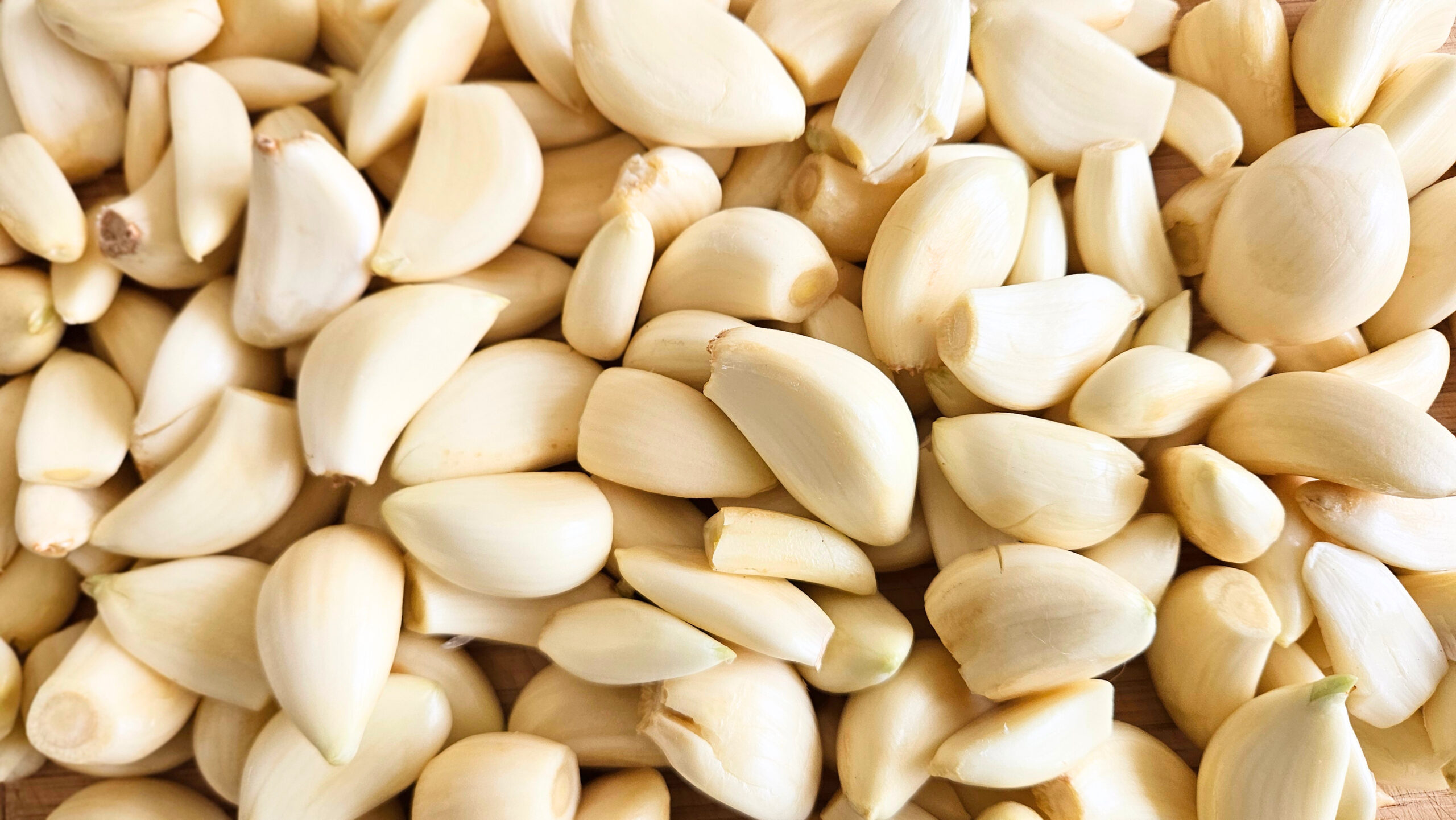
- whole peeled raw garlic
- 23.6 grams Himalayan pink salt
- 4 cups filtered water (944 grams)
Equipment
- 2 wide mouth quart size mason jars
- 1 fermentation weight
- 1 digital kitchen scale
Instructions
- You want to begin by making your salt brine so that it has time to cool down by the time you need it. Measure your water and salt. Add your salt to a quart size mason jar, and heat your water up on the stove. Once your water reaches a low simmer, pour it in the mason jar to help dissolve the salt. Allow to cool down.
- Gather all of the garlic that you wish to ferment and being peeling. Be sure to discard any cloves that have gone bad.
- Add peeled whole garlic cloves to a quart size mason jar, leaving a couple of inches of space from the top of the jar.
- Pour the room temperature salt brine into the mason jar with the peeled garlic. Pour just enough to cover the garlic, leaving a couple of inches of space below the top of the jar.
- Place a fermentation weight on top of the garlic. Gently push down to submerge the garlic beneath the liquid level. Close the jar with a lid.
- Allow the garlic to ferment at room temperature on your counter for about 4 weeks. Each day, open the jar to release gas build-up and check to make sure the garlic, plus any small pieces, are staying submerged in the salt brine. You also want to be sure that you are seeing bubbles form throughout this fermentation process.
- After 4 weeks, remove the fermentation weight, close with a lid, and store in the refrigerator. Use as you would use any whole garlic cloves.
Notes
- Even though I mostly try to avoid plastic, when it comes to fermenting, it is best to use a plastic lid to close the mason jar. The acidity produced by the fermentation process will quickly break down a metal lid.
- Remove any garlic pieces that float to the top of the salt brine or stick to the lid. Anything that isn’t submerged underneath the liquid runs the risk of molding.
- Bubbles are an easy visual clue that the fermentation process is working as intended. If for some reason no bubbles are formed, I would re-evaluate what may have gone wrong.
- Due to bubbling and gas formation, liquid will likely leak from the mason jar. To avoid a messy counter, place your jar on a plate (or something similar) to catch the excess liquid.
- If you want to be extra sure that everything has gone well with the fermentation process, you can purchase pH test strips. An ideal pH for lacto-fermented garlic is about 4.
- The salt brine that is made in this recipe is actually enough to ferment two jars of garlic.
Comment and Rate
If you enjoyed this recipe, please give it a 5 star rating below!
